menu

TPO vs EPDM Roofing Guide for Miami | Expert Material Analysis for Coastal Flat Roofs

Get the technical breakdown of thermoplastic polyolefin versus rubber roofing membranes from professionals who understand Miami's unique hurricane codes, saltwater exposure, and year-round UV intensity.

Slider Image 1
Slider Image 2
Slider Image 3
Slider Image 4
Slider Image 5
Slider Image 7
Slider Image 8
Slider Image 9
Slider Image 10
Slider Image 11

Why Your Material Choice Determines Your Roof's Lifespan in Miami's Climate

The difference between TPO and EPDM matters more in Miami than almost anywhere else in the country. Both single-ply membranes serve flat and low-slope commercial roofs, but they react differently to the specific environmental stressors you face here.

Miami sits directly in the hurricane belt. Your flat roof must withstand sustained winds exceeding 140 mph. Miami-Dade County enforces the most stringent wind load requirements in the nation through its Notice of Acceptance system. Both TPO and EPDM can meet these standards, but the installation methods differ significantly.

Beyond wind, Miami's relentless UV exposure degrades roofing materials faster than northern climates. You get roughly 250 days of full sun annually. The subtropical humidity creates constant thermal cycling. Your roof membrane expands in 95-degree afternoons and contracts during overnight temperature drops. This daily stress pattern continues year-round.

Saltwater corrosion affects every structure within five miles of Biscayne Bay or the Atlantic. The salt-laden air reacts differently with thermoplastic polyolefin versus rubber roofing compounds. Your material choice determines whether you replace your roof in 12 years or 25 years.

The TPO vs EPDM pros and cons shift when you factor in Miami's specific conditions. EPDM handles ponding water better, which matters for older buildings with settling concrete decks. TPO reflects more UV radiation, which reduces cooling loads in buildings running air conditioning 10 months annually.

Your EPDM vs TPO cost comparison must account for local labor rates, material availability through Port Miami, and the specific attachment method your building code requires. A membrane that works in Atlanta might fail catastrophically here during the next major storm.

Why Your Material Choice Determines Your Roof's Lifespan in Miami's Climate
How We Evaluate Which Membrane System Works for Your Specific Building

How We Evaluate Which Membrane System Works for Your Specific Building

Ironwood Roofing Miami does not recommend materials based on profit margin. We assess your building's structural characteristics, intended use, and exposure conditions.

We start with a comprehensive roof deck evaluation. Is your substrate structural concrete, lightweight concrete over metal deck, or wood framing? EPDM requires different attachment methods than TPO. Concrete decks typically receive fully adhered installations using low-VOC adhesives. Metal decks often require mechanically attached systems with specific fastener patterns engineered for Miami's wind zones.

We measure your roof's slope using digital levels. True flat roofs (less than 0.25 inches per foot) accumulate standing water. EPDM's rubber composition resists degradation from prolonged water exposure better than TPO. If your roof has adequate slope for positive drainage, TPO's heat-welded seams create superior waterproofing compared to EPDM's tape or adhesive seams.

We examine your HVAC configuration. Buildings with rooftop equipment need membrane systems that resist punctures from foot traffic during maintenance. TPO's 60-mil thickness provides better puncture resistance than standard 45-mil EPDM. We evaluate walkway pad requirements and equipment curb details.

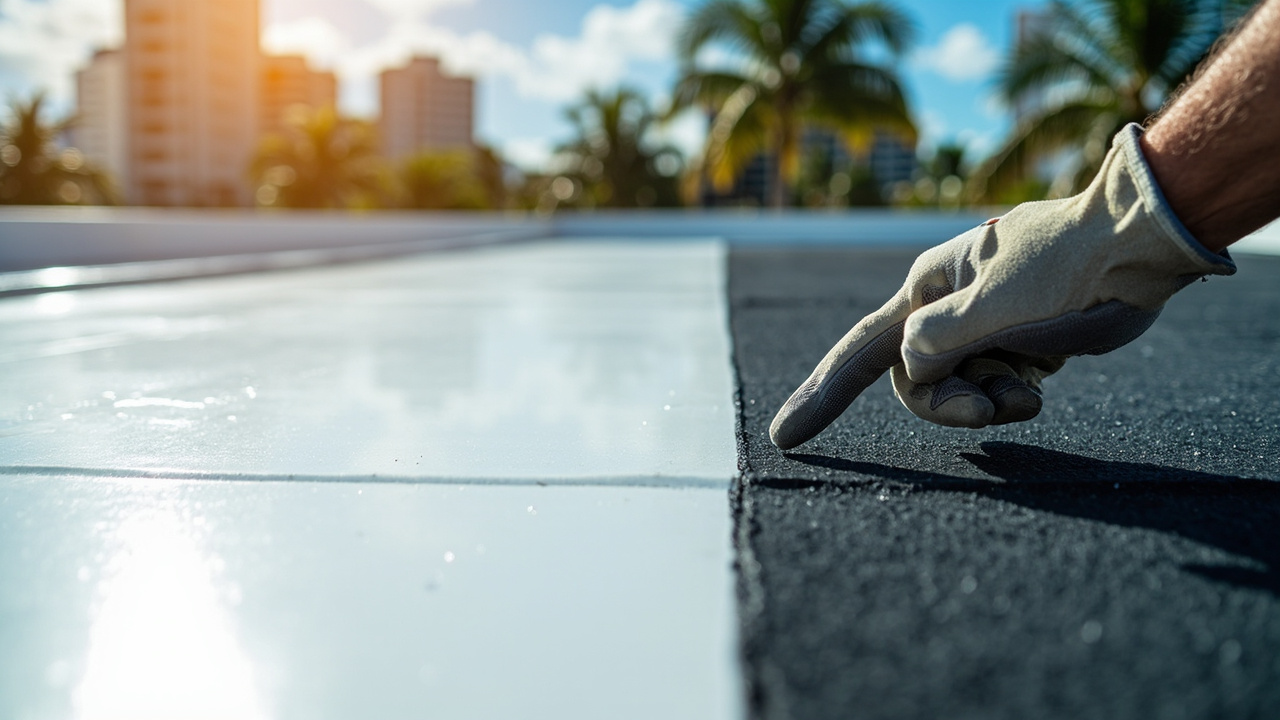
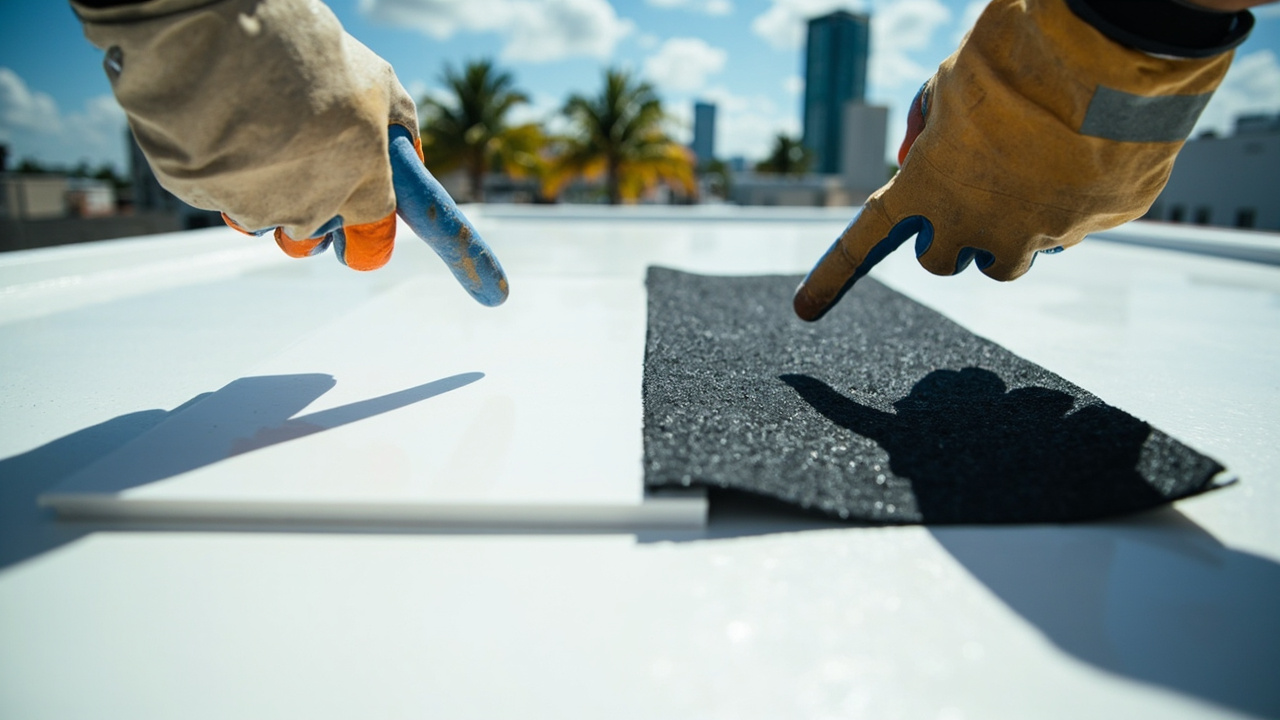
We review your building's energy profile. White TPO membranes reflect up to 87% of solar radiation. This reduces cooling loads in retail spaces, warehouses, and office buildings. Dark EPDM absorbs heat, which can benefit buildings in northern climates but increases energy consumption in Miami's climate.

We analyze your existing roof assembly. Recovering over an old built-up roof requires different considerations than new construction. Compatibility between old and new materials determines whether we recommend TPO or EPDM. Some adhesives react poorly with aged asphalt, causing delamination.

The decision requires engineering analysis, not marketing literature from manufacturers.

How We Guide Your Material Selection Decision

TPO vs EPDM Roofing Guide for Miami | Expert Material Analysis for Coastal Flat Roofs
01

Building Assessment

We conduct a structural survey of your roof deck, examining substrate condition, drainage patterns, and existing penetrations. This includes core samples if recovering over an existing membrane. We document roof slope measurements, identifying areas prone to ponding water. We photograph all equipment curbs, HVAC units, and parapet conditions. This data determines which membrane system your building can physically support and which attachment method meets wind load requirements for your specific address.
02

Performance Modeling

We calculate thermal performance differences between white TPO and black EPDM based on your building's square footage and usage. You receive projected energy savings over a 20-year lifespan. We model maintenance requirements, including frequency of seam inspections and typical repair scenarios. We compare lifecycle costs accounting for Miami's labor rates, not national averages. We present material warranties from manufacturers like Firestone, GAF, and Johns Manville, explaining what coverage actually means in practical terms.
03

Installation Planning

Once you select a membrane system, we engineer the attachment pattern for your building's wind zone classification. Miami-Dade County requires Product Control Approved installations. We submit your specific roof design for approval before ordering materials. We schedule installation during Miami's dry season when possible, avoiding afternoon thunderstorms that halt roofing work. You receive a detailed timeline showing tearoff, insulation placement, membrane installation, and final inspection. We coordinate with your building operations to minimize business disruption.

Why Local Experience Changes Your Material Selection Outcome

National roofing contractors follow manufacturer guidelines designed for average conditions. Miami's conditions are not average. The hurricane codes here exceed standards in Houston, Charleston, and even other Florida cities outside Miami-Dade and Broward counties.

Ironwood Roofing Miami has installed both TPO and EPDM systems on commercial buildings from Coral Gables to Aventura. We understand how salt air from Biscayne Bay affects membrane longevity differently than ocean exposure on Miami Beach barrier islands. These micro-climate differences matter when you are investing six figures in a roof replacement.

We know which local suppliers stock Miami-Dade approved materials with current NOA certificates. Not all TPO or EPDM products carry the required approvals for installation here. Ordering non-compliant materials delays your project and creates permitting problems.

We maintain relationships with building inspectors throughout the county. When your roof requires variance approval or engineering certification, we navigate that process efficiently. A contractor from Orlando or Tampa does not have these relationships and will learn the local bureaucracy on your dime.

We have repaired failed installations from out-of-state contractors who did not understand Miami's specific requirements. We have seen TPO membranes with inadequate fastener density that peeled back during tropical storms. We have found EPDM seams that failed because installers used northern-climate adhesives that break down in high humidity.

The TPO or EPDM for flat roof debate has different answers in Minneapolis versus Miami. Temperature ranges differ by 100 degrees between climates. UV intensity varies by 40%. Humidity levels are incomparable. Wind loads are in different engineering categories entirely.

Your roof consultant should have installed hundreds of systems in your specific climate zone. Geographic experience matters more than company size.

What Your Material Selection Process Actually Involves

Evaluation Timeline

We schedule roof assessments within 48 hours of your call. The physical inspection takes 2-4 hours depending on building size. You receive a preliminary material recommendation within one business day. Detailed analysis with cost comparisons arrives within one week. This includes infrared moisture scanning if you suspect existing leaks. We do not rush material decisions that will affect your building for two decades. If your roof is actively leaking, we provide temporary repairs while completing the full evaluation. Emergency patches do not obligate you to use us for replacement.

Technical Assessment Details

We perform pull tests on your existing roof to verify deck attachment strength. We measure insulation R-values if you are recovering over an existing system. We identify all roof penetrations including vents, drains, and conduit runs. You receive photographs documenting current conditions. We provide written analysis explaining why we recommend TPO or EPDM for your specific building. This includes manufacturer specification sheets showing Miami-Dade NOA numbers. We explain seam welding techniques for TPO versus adhesive application for EPDM. You understand what you are buying before signing any contract.

Installation Quality Standards

TPO installations use hot-air welding equipment calibrated daily. We test every seam with a probe after welding. EPDM installations follow strict primer application protocols. Ambient temperature and humidity affect adhesive curing times, so we adjust schedules based on weather conditions. All fastener patterns match engineered drawings approved by Miami-Dade Building Department. We install walkway pads around all rooftop equipment to protect the membrane from maintenance traffic. You receive photographs documenting each installation phase. Final inspection includes water testing of all penetrations and seams before we request your certificate of completion.

Post-Installation Support

Manufacturer warranties require annual inspections to remain valid. We provide this service for both TPO and EPDM systems. Inspections identify minor issues before they become major leaks. We clean drains, check flashing, and verify seam integrity. You receive written documentation meeting warranty requirements. Most TPO manufacturers offer 15-20 year material warranties. EPDM typically carries similar coverage. These warranties cover material defects, not installation errors or storm damage. We maintain detailed installation records so warranty claims process smoothly. Emergency repair service remains available 24/7 if you experience storm damage or unexpected leaks.

Frequently Asked Questions

You Have Questions,
We Have Answers

Why choose TPO over EPDM? +

TPO reflects heat better than EPDM, which matters in Miami's intense sun. You get lower cooling costs because TPO roofs stay cooler. TPO seams are heat-welded, creating a watertight bond that resists wind-driven rain during hurricane season. EPDM uses glued or taped seams that can fail under Miami's humidity and thermal expansion cycles. TPO also resists UV degradation better, extending your roof life in South Florida's relentless climate. If energy efficiency and storm performance matter to you, TPO makes more sense for flat or low-slope commercial buildings in the Miami metro.

Which lasts longer, a TPO or epdm roof? +

Both systems last 20 to 30 years when installed correctly, but Miami's climate shifts the advantage. TPO holds up better under constant UV exposure and heat cycling. EPDM can shrink in high heat, pulling away from fasteners and flashing over time. Miami's afternoon thunderstorms and salt air also stress seams. TPO's heat-welded seams outlast EPDM's adhesive bonds in coastal conditions. If your building sits near Biscayne Bay or Miami Beach, expect TPO to maintain waterproofing integrity longer. Proper installation and maintenance matter more than membrane choice alone.

What are the disadvantages of TPO roofing? +

TPO requires skilled installers because seam welding demands precision. Poor installation leads to premature failure, especially in Miami's wind conditions. TPO membranes expand and contract more than EPDM during temperature swings, stressing fasteners and seams. You need proper detailing at penetrations and roof edges. TPO also costs more upfront than EPDM. Some TPO formulations had durability issues in early years, though manufacturers improved chemistry. If you hire inexperienced contractors in Miami, you risk leaks, blow-offs, and warranty voids. Always vet installers for TPO-specific training and local commercial roofing experience.

Which is cheaper, EPDM or TPO? +

EPDM costs less upfront, typically 20 to 30 percent cheaper than TPO per square foot. Material costs favor EPDM because it has been manufactured longer and comes in wider sheets, reducing seams. Labor costs differ too. EPDM installs faster with adhesive or mechanical fasteners, while TPO requires heat-welding equipment and trained crews. In Miami, factor in long-term costs. TPO's energy savings from heat reflection can offset the higher initial price within five to seven years. Insurance discounts for wind-resistant installations also apply. Choose based on total cost of ownership, not just installation price.

How Miami's Hurricane Building Codes Affect Your TPO vs EPDM Decision

Miami-Dade County enforces the Florida Building Code with additional High Velocity Hurricane Zone provisions. Your roof membrane, insulation, and attachment method must carry a current Notice of Acceptance from the county's Product Control Division. This approval process tests materials to wind speeds exceeding 180 mph. Both TPO and EPDM systems can achieve approval, but the fastener density requirements differ significantly. Mechanically attached TPO typically requires fasteners every 12 inches around the perimeter in high-wind zones. Fully adhered EPDM distributes wind resistance differently across the membrane surface. Your building's wind zone classification determines which system meets code most efficiently. Buildings in Coconut Grove face different requirements than structures in Hialeah due to exposure categories.

Ironwood Roofing Miami maintains current Product Control Approval documentation for all systems we install. We verify NOA numbers before ordering materials. Many national suppliers stock TPO and EPDM products approved for Georgia or Texas but not Miami-Dade County. Using non-approved materials creates permitting problems and voids insurance coverage after storms. We work directly with local building inspectors who review our installation plans. This relationship speeds permit approval and reduces project delays. Our crews receive ongoing training on Miami-Dade specific installation requirements. When you hire local contractors who install roofs here year-round, you get expertise that protects your investment and ensures code compliance.
Roofing Services in The Miami Area

Ironwood Roofing Miami is proud to service the entire Miami-Dade County area, including South Beach, Coral Gables, Doral, and beyond. We are a local company deeply familiar with the region, allowing us to respond quickly to your emergency needs and schedule non-urgent services with efficient turnaround. View our location on the map to see where our trusted professionals operate and invite us to your neighborhood for the area's most reliable roofing expertise.

Address:
Ironwood Roofing Miami, 2214 Biscayne Blvd, Miami, FL, 33131

Additional Services We Offer

Our news updates

Latest Articles & News from The Blogs

The Real Cost Difference Between Concrete and Clay Tiles for Hammock Lakes Homes Choosing between concrete and clay roof tiles…

The Real Cost Difference Between Concrete and Clay Tiles for Hammock Lakes Homes

The Real Cost Difference Between Concrete and Clay Tiles for Hammock Lakes Homes Choosing between concrete and clay roof tiles…

Managing Parapet Wall Leaks and Cap Flashing Issues for Brickell Townhomes

Managing Parapet Wall Leaks and Cap Flashing Issues for Brickell Townhomes Parapet walls create a critical vulnerability in Brickell townhome…

Why Your Ponce Davis Home Needs Heavy Duty Drip Edges to Prevent Wood Rot

Why Your Ponce Davis Home Needs Heavy Duty Drip Edges to Prevent Wood Rot The heavy afternoon thunderstorms that roll…

Contact Us

Stop guessing which membrane system works best for your property. Call (645) 231-4888 for a professional roof assessment. We provide honest material recommendations based on your building's specific conditions, not sales quotas. Schedule your evaluation today.