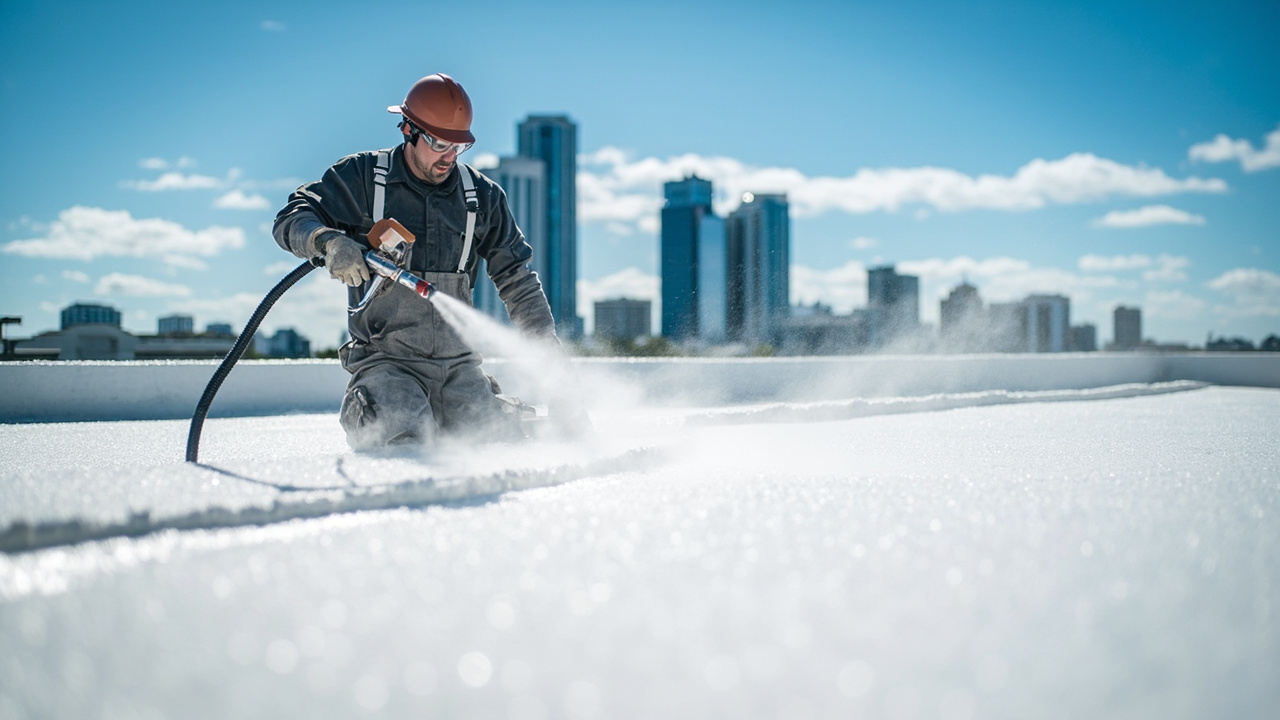
menu

Spray Foam Roofing in Miami | Minimize Downtime and Extend Asset Life for Commercial Properties

Ironwood Roofing Miami delivers monolithic SPF roof systems engineered for South Florida's tropical climate, reducing maintenance cycles and protecting your facility investment with industrial-grade polyurethane foam roofing.

Slider Image 1
Slider Image 2
Slider Image 3
Slider Image 4
Slider Image 5
Slider Image 7
Slider Image 8
Slider Image 9
Slider Image 10
Slider Image 11

Why Commercial Spray Foam Roofing is Critical for Miami Facilities

Miami's commercial roofs endure relentless UV exposure, torrential rainfall averaging 60 inches annually, and hurricane wind loads exceeding 140 mph in coastal zones. Traditional built-up roofing and single-ply membranes degrade rapidly under this assault, creating liability exposure and unplanned downtime.

Spray polyurethane foam roofing addresses these vulnerabilities through a seamless, self-adhering membrane that eliminates the seams and fastener penetrations where leaks originate. The SPF roof system creates a monolithic barrier that expands and contracts with your building envelope, critical for structures in Miami-Dade County where thermal cycling between air-conditioned interiors and exterior heat creates constant movement.

Commercial spray foam roofing also provides measurable R-value improvements. A two-inch SPF application delivers R-13 insulation, reducing HVAC loads by 20 to 30 percent in warehouse and industrial applications. For cold storage facilities in Doral or distribution centers near the Airport West submarket, this translates directly to operating cost reduction.

The material addresses ponding water, a chronic issue on low-slope commercial roofs throughout Brickell and Downtown Miami. Polyurethane foam roofing can be tapered during application to create positive drainage, eliminating standing water that accelerates membrane degradation and creates vector breeding grounds.

Miami's salt air environment corrodes metal fasteners and degrades adhesives in conventional roofing assemblies. SPF roofing bonds directly to substrates without mechanical attachment, eliminating corrosion pathways and reducing long-term maintenance requirements for facilities in Edgewater, Wynwood, and other waterfront districts.

Why Commercial Spray Foam Roofing is Critical for Miami Facilities
The SPF Application Process for Commercial Buildings

The SPF Application Process for Commercial Buildings

Proper SPF roof system installation requires substrate analysis, environmental controls, and precision application that separates professional contractors from applicators treating it as commodity work.

We begin with adhesion testing on your existing roof deck. Commercial spray foam roofing bonds to concrete, metal, modified bitumen, and EPDM substrates, but surface contamination from silicone coatings or biological growth will cause delamination. We perform pull tests to verify bond strength exceeds 20 psi before mobilization.

Substrate preparation removes loose material, oils, and moisture. Metal decks in Miami's humid climate often harbor concealed condensation. We use infrared scanning to identify wet insulation and address it before foam application. Applying polyurethane foam roofing over saturated substrates traps moisture and voids your system integrity.

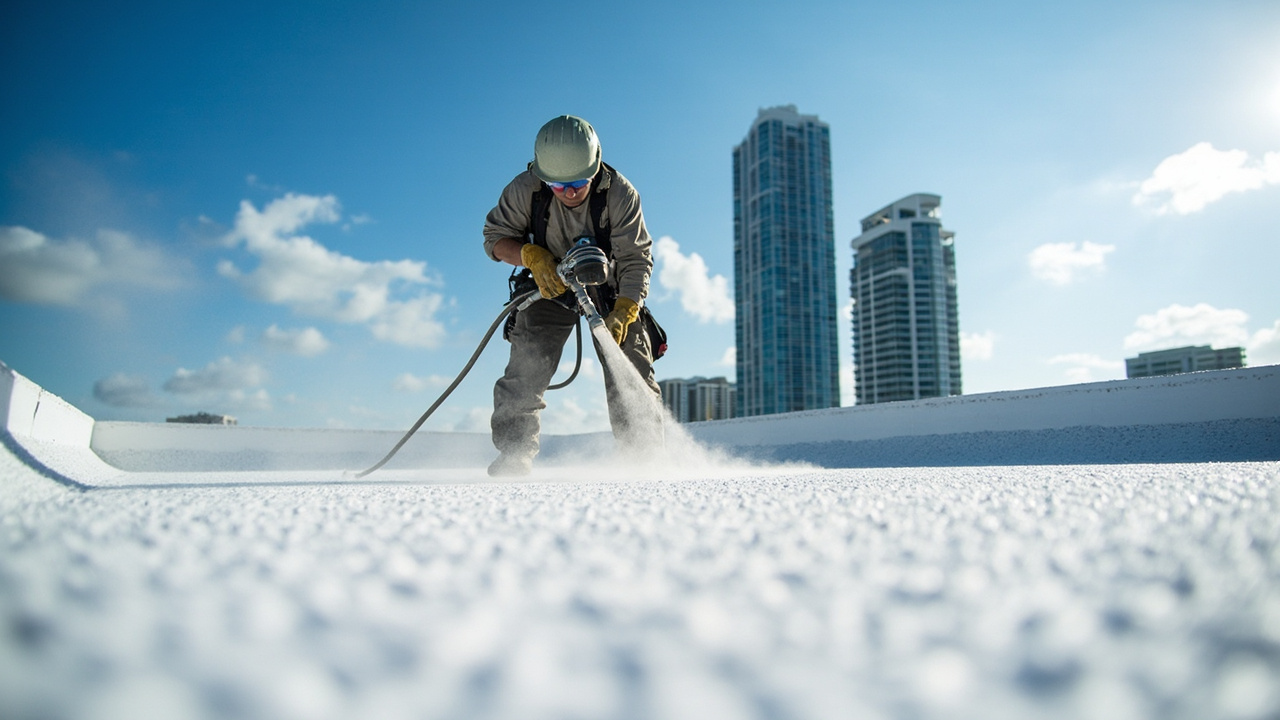
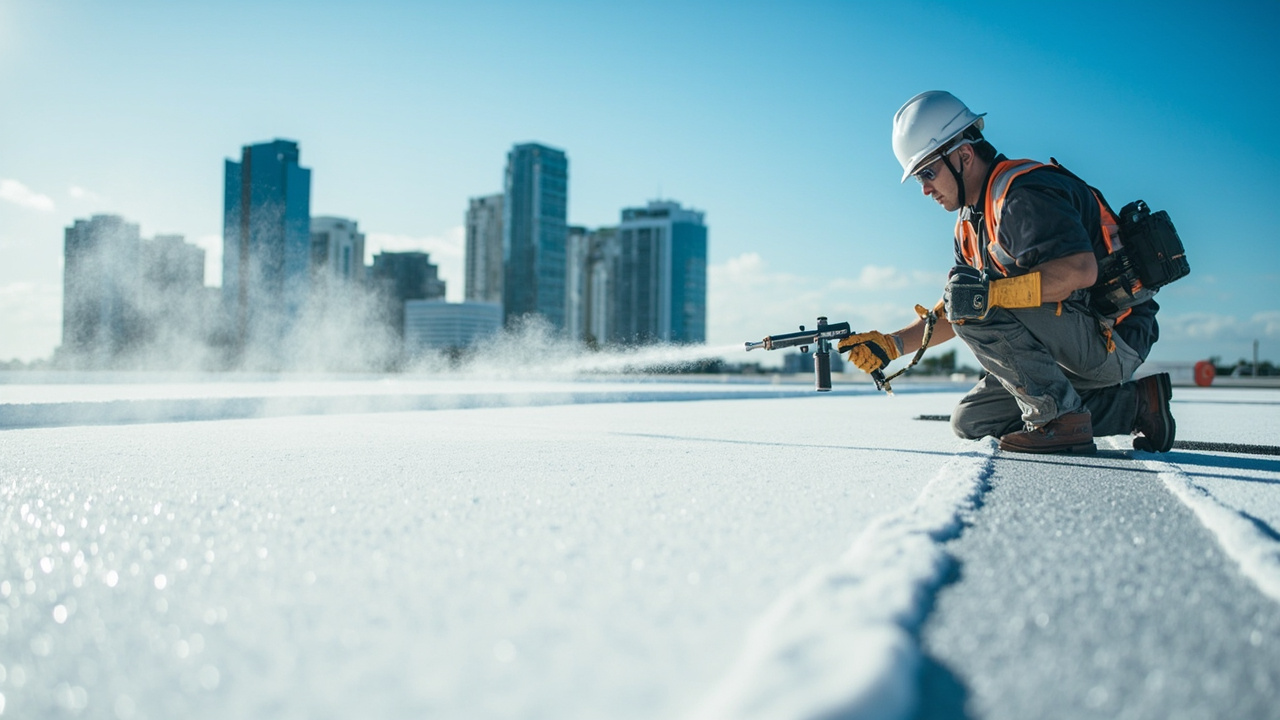
Application occurs in controlled lifts. We spray SPF roofing in passes no thicker than 1.5 inches, allowing each lift to cure before adding subsequent layers. This prevents core shrinkage and ensures uniform density across the membrane. Miami's temperature and humidity require real-time adjustments to isocyanate ratios, something automated equipment cannot accommodate without operator intervention.

The foam receives an elastomeric coating within 24 hours of application. This topcoat provides UV protection and creates the waterproofing layer. We apply it at manufacturer-specified mil thickness, typically 20 mils for base coat and 10 mils for topcoat, using calibrated spray equipment that ensures even distribution.

Ironwood Roofing Miami coordinates applications during low-wind periods and monitors dew point temperatures throughout installation. SPF chemistry is unforgiving. Ambient conditions outside specification windows produce inferior results that compromise system performance.

How We Execute Your SPF Roof Installation

Spray Foam Roofing in Miami | Minimize Downtime and Extend Asset Life for Commercial Properties
01

Site Assessment and Specification

We conduct a structural load analysis to verify your roof deck can support the additional dead load from the SPF roof system, typically 1.5 to 3 pounds per square foot depending on application thickness. Our team reviews building permits, identifies penetrations requiring flashing details, and develops a phased installation plan that maintains your business operations. For multi-tenant properties, we coordinate access to minimize tenant disruption and maintain code-required egress paths throughout the project.
02

Controlled Application Environment

We establish environmental monitoring stations across your roof to track temperature, humidity, and wind speed in real time. Spray polyurethane foam roofing requires substrate temperatures above 40°F and relative humidity below 85 percent for proper chemical reaction. Our crews adjust material ratios and pass thickness based on these readings, ensuring each lift achieves specified density and adhesion. We maintain containment protocols to protect HVAC equipment, skylights, and adjacent properties from overspray during application.
03

Coating and Quality Verification

After foam curing, we apply the protective elastomeric coating system using plural-component equipment calibrated to manufacturer specifications. Our quality control process includes core samples to verify foam density, mil thickness gauges to confirm coating application rates, and flood testing on critical areas like parapet walls and penetration flashings. You receive documentation of all testing, material certifications, and a roof assembly drawing showing tapered sections and drainage modifications for your facility management records.

Why Miami Commercial Property Owners Choose Ironwood Roofing

Commercial roofing failures create cascading liabilities. Water intrusion damages inventory, forces production shutdowns, triggers mold remediation, and exposes you to tenant claims. Selecting a contractor based on price rather than technical capability is a false economy that multiplies your total cost of ownership.

Ironwood Roofing Miami understands Florida Building Code requirements for roof assemblies in High Velocity Hurricane Zones. Our SPF installations meet FM 4471 wind uplift standards and Miami-Dade County Notice of Acceptance protocols. We provide the engineering documentation and product approvals your insurance carrier requires, eliminating coverage disputes after storm events.

We work exclusively with spray polyurethane foam roofing manufacturers who maintain technical representatives in South Florida. When application questions arise on complex details like expansion joints or HVAC curb flashings, we have direct access to engineering support rather than relying on generic installation guides written for different climate zones.

Our project management approach recognizes that your facility operates during construction. We schedule applications during off-peak hours for restaurants and retail properties, coordinate with property management for multi-tenant buildings, and maintain clean work zones that protect your landscaping and parking areas. For cold storage and food processing facilities, we implement contamination control protocols that satisfy USDA and FDA inspection requirements.

Miami's commercial real estate market demands quantifiable ROI. We provide thermal modeling that projects your energy savings, lifecycle cost analysis comparing SPF roof systems to conventional reroofing, and maintenance schedules that help you budget future costs. You receive data to support capital planning decisions, not sales rhetoric about being the premier roofing contractor.

What Your SPF Roofing Project Includes

Project Timeline and Staging

Most commercial spray foam roofing installations complete in three to seven days depending on roof area and complexity. We provide a critical path schedule showing substrate preparation, foam application windows, coating phases, and final inspection milestones. Weather delays are common in Miami's afternoon thunderstorm season. Our contracts include transparent delay protocols and schedule recovery plans so you can coordinate tenant notifications and business operations. For phased projects on occupied buildings, we sequence work to maintain fire-rated assemblies and code-required roof access throughout construction.

Pre-Application Roof Analysis

We perform infrared thermography to map moisture contamination in your existing roof assembly, critical for identifying saturated insulation that will compromise SPF adhesion. Our structural evaluation reviews deck fastening patterns, identifies rust-through on metal decks common in coastal Miami facilities, and verifies adequate attachment for wind uplift loads. You receive a written report documenting existing conditions, recommended repairs, and substrate preparation requirements before we provide final pricing. This eliminates change orders from concealed conditions discovered during tear-off and prevents disputes over scope additions.

Installation Quality and Performance

Your completed polyurethane foam roofing system will meet specified R-value, achieve manufacturer-required coating mil thickness, and pass flood testing on all penetrations and terminations. We provide core sample results showing foam density between 2.5 and 3.0 pounds per cubic foot, the range required for structural integrity and wind uplift resistance. The elastomeric coating creates a seamless membrane with elongation properties that accommodate building movement without cracking. Proper installation eliminates the seam failures and fastener blow-offs that plague traditional commercial roofing in Miami's wind environment.

System Maintenance and Recoating

SPF roof systems require periodic recoating to maintain UV protection and extend service life. Miami's intense solar radiation degrades elastomeric coatings in 10 to 15 years depending on color selection and exposure. We provide a maintenance manual showing inspection intervals, cleaning procedures for drainage components, and coating condition assessment criteria. When recoating becomes necessary, the process costs a fraction of tear-off and replacement because the foam base remains intact. This maintenance approach dramatically reduces your lifecycle roofing costs compared to conventional systems requiring complete replacement every 15 to 20 years.

Frequently Asked Questions

You Have Questions,
We Have Answers

What are the disadvantages of a spray foam roof? +

Spray foam roofing requires skilled application to avoid uneven coverage or thin spots that compromise performance. In Miami's intense UV environment, the protective coating degrades faster and needs reapplication every 10 to 15 years to prevent foam breakdown. Poor installation can trap moisture against the substrate, leading to hidden rot. The system is also sensitive to ponding water, which Miami's flat commercial roofs often experience during heavy storms. You need qualified contractors familiar with Florida Building Code requirements. Improper ventilation during application can disrupt business operations. The upfront cost is higher than traditional systems, which impacts your initial capital expenditure.

How long does a spray foam roof last? +

A properly installed spray foam roof lasts 20 to 30 years in Miami when maintained correctly. The key is recoating the protective elastomeric layer every 10 to 15 years, as South Florida's UV exposure degrades the top coat faster than in northern climates. Regular inspections after hurricane season catch minor damage before it becomes structural. The foam itself remains stable, but neglecting recoats exposes it to moisture infiltration and UV degradation. For commercial buildings in coastal Miami areas, salt air accelerates coating breakdown. Budget for maintenance cycles to maximize your roof asset lifespan and protect your investment.

Why is spray foam a red flag for lenders? +

Lenders flag spray foam roofing because improper installation creates moisture traps that lead to structural decay, and appraisers struggle to verify installation quality after the fact. In Miami's high-humidity climate, any moisture barrier failure accelerates mold and wood rot, which affects collateral value. Some older spray foam applications used in attics reduced ventilation, causing premature shingle failure on residential properties. Commercial lenders are less concerned when you provide documentation showing professional installation, proper substrate prep, and regular maintenance records. Third-party inspections and manufacturer warranties mitigate lender concerns. The risk is installation quality, not the material itself.

Is spray foam roofing expensive? +

Spray foam roofing costs more upfront than traditional systems like modified bitumen or single-ply membranes. For Miami commercial properties, expect higher material and labor costs due to installation complexity and the need for experienced contractors. The expense is offset by superior insulation performance, which reduces your HVAC load in South Florida's climate. Energy savings can be substantial for warehouses and office buildings running air conditioning year-round. The seamless application eliminates leak points common in seamed systems. When you factor in longevity and reduced maintenance over 20-plus years, the total cost of ownership becomes competitive. Evaluate your building's energy profile to determine ROI.

How much does it cost to spray foam for 1000 sq ft? +

Providing specific cost figures is misleading because commercial spray foam roofing pricing depends on substrate condition, foam thickness, access difficulty, and coating specifications. A 1,000-square-foot section on a Miami commercial building varies based on whether you need roof deck repairs, how many inches of foam your energy calculations require, and what R-value your building demands. Coastal properties may need corrosion-resistant primers. Existing roof removal adds cost. Multi-story buildings increase labor expense. Request detailed proposals that itemize substrate prep, foam application rates, coating systems, and warranty coverage. Compare total system cost, not just per-square-foot rates.

Why can't you sell a house with spray foam insulation? +

This concern applies to closed-cell spray foam insulation in attics, not spray foam roofing systems. The residential real estate issue stems from improper attic applications that eliminated ventilation and caused premature shingle failure or moisture problems. Appraisers and inspectors flag these installations because they cannot verify quality without destructive testing. Commercial spray foam roofing is a different application entirely. It serves as the waterproofing membrane and insulation layer on flat or low-slope roofs. For commercial properties in Miami, lenders evaluate the system based on installation documentation, maintenance records, and remaining useful life. Proper documentation eliminates marketability concerns.

Why are people removing spray foam insulation? +

Removal happens when closed-cell attic insulation was improperly installed without adequate ventilation, trapping moisture and causing shingle failure or structural damage. In Miami's humid climate, vapor drive from air conditioning creates condensation issues if the building envelope is unbalanced. Some homeowners remove foam to restore ventilation or address hidden mold growth. This is distinct from spray foam roofing, where the foam is the exterior weatherproofing layer. Commercial roof foam removal occurs when the substrate needs replacement or when switching to a different roofing system. Poor initial installations that trap moisture also require removal and remediation before re-roofing.

How much does it cost to spray foam a 24x24 garage? +

Quoting specific prices for a 24x24 garage roof is inaccurate without assessing substrate condition, required foam thickness, and local Miami building code requirements. Commercial applications differ from residential garage conversions. You need to determine if the structure requires additional R-value for conditioned space, whether the existing roof needs repair, and what coating system meets your durability needs. Coastal Miami locations may need enhanced UV-resistant coatings. Labor rates vary based on access and project timing. Request itemized proposals from qualified contractors that specify materials, application rates, warranty terms, and maintenance requirements. Compare system performance, not just initial cost.

How much does it cost to replace a roof on a 2200 square foot house? +

Replacement cost for a 2,200-square-foot house roof depends on the roofing system you select, not the building size alone. In Miami, you must account for wind uplift requirements, storm-rated fastening, and potential structural repairs from previous hurricane damage. Tile, metal, shingle, and flat roof systems have different cost structures. Spray foam roofing is uncommon on residential structures in South Florida. Most homes use concrete tile or architectural shingles rated for high-velocity hurricane zones. Commercial flat roofs on mixed-use properties have different specifications. Consult with contractors who understand Florida Building Code and Miami-Dade County product approvals for accurate project scoping.

Can mold grow behind spray foam insulation? +

Mold grows when moisture becomes trapped between spray foam and the substrate, not on the foam itself. In Miami's climate, this happens when foam is applied over wet roof decks, when roof leaks go undetected above the foam layer, or when condensation forms due to improper vapor barrier placement. Commercial roofs need proper substrate drying before application. Regular infrared scanning detects hidden moisture intrusion early. The closed-cell structure resists mold growth, but any building envelope failure that introduces water creates conditions for microbial growth on organic materials like wood decking. Proper installation and maintenance prevent moisture infiltration.

How Miami's Hurricane Exposure and Rainfall Patterns Affect SPF Roofing Performance

Miami sits in the most active hurricane corridor in the continental United States, with building codes requiring roof assemblies to withstand sustained winds of 175 mph in coastal exposure categories. Traditional mechanically-attached roofing systems rely on fastener patterns and seam integrity that fail progressively during wind events, starting with edge metal blow-off and escalating to membrane peeling. Commercial spray foam roofing eliminates these failure modes through full-surface adhesion. The monolithic SPF roof system bonds to your entire deck area, distributing wind uplift loads across the substrate rather than concentrating stress at fastener points. This makes polyurethane foam roofing the superior choice for warehouses in Hialeah, office buildings in Coral Gables, and industrial facilities throughout Miami-Dade County where hurricane risk drives insurance requirements and business continuity planning.

Florida Building Code compliance for commercial roofing requires product approvals specific to High Velocity Hurricane Zones and documentation that your roof assembly meets Miami-Dade County Notice of Acceptance standards. Ironwood Roofing Miami maintains relationships with code officials, understands the inspection protocols for spray polyurethane foam roofing installations, and provides the engineering stamps and manufacturer certifications your permit closeout requires. We also navigate the coordination requirements for projects in historic districts like the Miami Design District or Coconut Grove, where architectural review boards scrutinize rooftop equipment screening and parapet modifications. Local expertise prevents the permit delays and reinspection costs that plague contractors unfamiliar with Miami's regulatory environment.
Roofing Services in The Miami Area

Ironwood Roofing Miami is proud to service the entire Miami-Dade County area, including South Beach, Coral Gables, Doral, and beyond. We are a local company deeply familiar with the region, allowing us to respond quickly to your emergency needs and schedule non-urgent services with efficient turnaround. View our location on the map to see where our trusted professionals operate and invite us to your neighborhood for the area's most reliable roofing expertise.

Address:
Ironwood Roofing Miami, 2214 Biscayne Blvd, Miami, FL, 33131

Additional Services We Offer

Our news updates

Latest Articles & News from The Blogs

The Real Cost Difference Between Concrete and Clay Tiles for Hammock Lakes Homes Choosing between concrete and clay roof tiles…

The Real Cost Difference Between Concrete and Clay Tiles for Hammock Lakes Homes

The Real Cost Difference Between Concrete and Clay Tiles for Hammock Lakes Homes Choosing between concrete and clay roof tiles…

Managing Parapet Wall Leaks and Cap Flashing Issues for Brickell Townhomes

Managing Parapet Wall Leaks and Cap Flashing Issues for Brickell Townhomes Parapet walls create a critical vulnerability in Brickell townhome…

Why Your Ponce Davis Home Needs Heavy Duty Drip Edges to Prevent Wood Rot

Why Your Ponce Davis Home Needs Heavy Duty Drip Edges to Prevent Wood Rot The heavy afternoon thunderstorms that roll…

Contact Us

Stop reacting to roof leaks and start planning for long-term asset protection. Contact Ironwood Roofing Miami at (645) 231-4888 for a technical roof assessment and lifecycle cost analysis. We provide the engineering documentation and installation quality your commercial property requires.