menu

TPO Roofing Installation in Miami – Built to Withstand Hurricane Winds and Maximize Uptime

Single-ply TPO membrane roofing systems engineered for South Florida's extreme weather, with streamlined installation schedules that minimize operational disruption for warehouses, retail centers, and industrial facilities across the greater Miami metro.

Slider Image 1
Slider Image 2
Slider Image 3
Slider Image 4
Slider Image 5
Slider Image 7
Slider Image 8
Slider Image 9
Slider Image 10
Slider Image 11

Why Commercial Facilities in Miami Need TPO Membrane Roofing

Miami's tropical climate creates a hostile environment for flat commercial roofing systems. Year-round UV exposure degrades petroleum-based roofing materials faster than nearly anywhere else in the country. Hurricane-force winds test the seam integrity of every single-ply roof system from June through November. Salt air accelerates corrosion on metal fasteners and coping. Heavy rainfall during summer months exposes any flaw in drainage design or membrane integrity.

Thermoplastic Polyolefin installation addresses each of these challenges. TPO membrane roofing resists UV degradation without requiring reflective coatings that crack and peel. The heat-welded seams create watertight bonds stronger than the membrane itself, a critical advantage when wind-driven rain tests every penetration and termination point. TPO's reflectivity reduces cooling loads in buildings where air conditioning runs 10 months per year, cutting operational costs while extending HVAC system life.

Commercial TPO roof systems also meet Florida Building Code requirements for high-velocity hurricane zones. The membrane's flexibility accommodates thermal expansion and contraction across large roof decks without cracking. Resistance to ponding water protects facilities with minimal roof slope, common in warehouse and industrial construction. For property managers and facility directors evaluating roof replacement, TPO flat roof installation delivers measurable ROI through energy savings, extended service life, and reduced maintenance calls compared to modified bitumen or EPDM alternatives.

Why Commercial Facilities in Miami Need TPO Membrane Roofing
Our TPO Installation Methodology for Miami Commercial Properties

Our TPO Installation Methodology for Miami Commercial Properties

Single-ply TPO roofing requires precision at every phase. We start with core sampling to assess the existing roof deck and insulation layers. Many commercial buildings in Miami have original roof decks from the 1980s and 1990s that show water damage or inadequate R-value. A proper TPO membrane roofing installation requires a stable, dry substrate. If we find compromised insulation or deteriorated deck sections, we remove and replace them before any membrane goes down.

We engineer the drainage plan before ordering materials. South Florida sees 60 inches of annual rainfall. Your roof must shed water quickly to prevent ponding and premature membrane failure. We slope insulation layers toward existing drains or add tapered insulation systems to create positive drainage across the entire roof plane. This step prevents the standing water that voids warranties and shortens roof life.

Membrane attachment method depends on your building's wind exposure and deck type. We use fully-adhered systems for buildings in high-wind zones near the coast. Mechanically-attached systems work for properties with concrete decks or lower wind exposure. Heat-welded seams receive double-pass welding and probe testing to verify complete fusion. All penetrations, including HVAC curbs, plumbing vents, and electrical conduits, receive custom-fabricated flashings sealed with heat welding, not caulk that fails in Miami's heat.

We schedule installations to avoid disrupting your business operations. Most commercial TPO roof systems go on in phases, allowing sections of your facility to remain fully operational while we work on isolated roof zones.

The Three Phases of Commercial TPO Installation

TPO Roofing Installation in Miami – Built to Withstand Hurricane Winds and Maximize Uptime
01

Pre-Installation Deck Assessment

We perform infrared moisture scanning and core sampling to identify wet insulation and structural deficiencies before membrane installation begins. This diagnostic phase prevents costly callbacks and ensures your new TPO membrane roofing bonds to a sound substrate. We verify deck fastener pullout strength meets current Florida Building Code requirements for your wind zone. All findings get documented with photographs and included in your project specification.
02

Membrane Installation and Welding

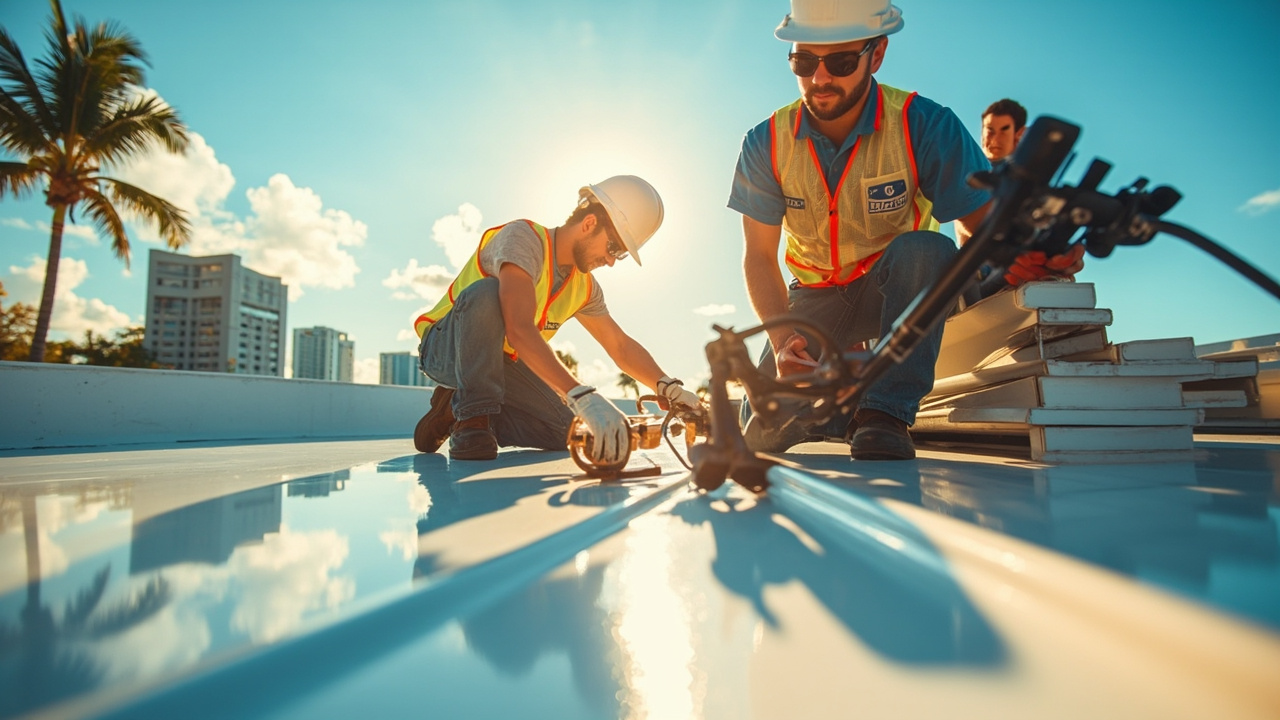
Certified installers position TPO sheets according to the engineered layout, ensuring seams run perpendicular to prevailing winds. Hot-air welding equipment fuses overlapping membrane edges at precisely controlled temperatures. Each seam receives probe testing to verify continuous weld integrity. Penetration flashings get custom-fabricated on-site and heat-welded to the field membrane. We install walkway pads at roof access points to protect high-traffic areas from premature wear.
03

Quality Verification and Handoff

Final inspection includes flood testing around all drains and penetrations to confirm zero leaks before we leave the site. You receive detailed documentation including seam weld test results, material certifications, and as-built drawings showing insulation thickness and membrane attachment pattern. This package simplifies future roof maintenance and protects your warranty coverage. We walk your facilities team through proper roof traffic protocols and scheduled maintenance requirements to maximize system longevity.

Why Miami Property Managers Choose Ironwood Roofing Miami for TPO Systems

Commercial roofing failures create liability exposure and revenue loss. A warehouse that floods during receiving hours loses productivity. A retail center with ceiling leaks loses customer confidence. An office building with HVAC failures during summer loses tenant satisfaction. You need a contractor who understands that downtime costs more than the roof itself.

Ironwood Roofing Miami specializes in commercial TPO roof systems for South Florida's demanding climate. We maintain relationships with building inspectors across Miami-Dade County and understand the permit process for commercial re-roofing projects. Our crews have installed TPO membrane roofing on distribution centers in Doral, shopping plazas in Kendall, and industrial facilities near the Port of Miami. We know which membrane manufacturers provide the best technical support and warranty service in this market.

We schedule around your operational requirements. Retail properties get night and weekend installation windows. Warehouses get phased installations that keep loading docks accessible. Cold storage facilities get expedited tearoff and recovery to minimize temperature control issues. We coordinate with your property management team to communicate project progress and minimize tenant complaints.

Our project managers carry manufacturer certifications for the TPO systems we install. This matters when warranty claims arise. Manufacturer technical support responds faster to certified contractors. Warranty coverage remains intact when certified installers perform future repairs. You also get access to extended warranty options not available through non-certified contractors, protecting your capital investment for 15 to 20 years instead of the standard 10-year coverage.

What to Expect During Your TPO Roofing Installation

Project Timeline and Scheduling

Most commercial TPO flat roof installations take 7 to 21 days depending on building size and roof complexity. We provide a detailed schedule before work begins, breaking down each phase by day and roof section. Weather delays get communicated the same day they occur. You receive 48-hour notice before any phase that requires building access restrictions or utility shutdowns. We stage materials delivery to minimize ground-level disruption and maintain clear emergency vehicle access throughout the project. Rush schedules are available for facilities facing lease requirements or seasonal business peaks.

Pre-Construction Roof Assessment

Our initial site visit includes roof access to all areas, not just visible sections from the ground. We check for structural issues, inadequate drainage, failing penetration seals, and code compliance gaps. Infrared scanning identifies hidden moisture in insulation layers that visual inspection misses. You receive a written assessment within 72 hours documenting current conditions, recommended repairs, and a scope of work for Thermoplastic Polyolefin installation. This report includes photographs and can be shared with your insurance carrier or lending institution if needed for project approval.

Installation Quality and Performance

Your new single-ply TPO roofing system will meet or exceed Miami-Dade County Notice of Acceptance requirements for wind uplift resistance. All seams receive heat welding, creating fusion bonds that exceed the tensile strength of the membrane itself. Reflective white membrane surface reduces roof surface temperatures by 40 to 60 degrees compared to dark-colored roofing, cutting cooling costs immediately. Properly installed TPO membrane roofing requires minimal maintenance and resists algae growth, punctures, and chemical exposure from HVAC condensate or industrial processes common in Miami facilities.

Post-Installation Support and Maintenance

We provide a comprehensive operations and maintenance manual specific to your installation, including drainage maps, membrane specifications, and recommended inspection intervals. Manufacturer warranties get registered within 30 days of project completion, and you receive copies of all warranty documents. We offer annual roof inspection services to identify minor issues before they become expensive problems. Our service team responds to leak calls within 24 hours. Scheduled maintenance programs are available to extend roof life and maintain warranty compliance for multi-property portfolios across the Miami metro area.

Frequently Asked Questions

You Have Questions,
We Have Answers

What are the disadvantages of TPO roofing? +

TPO roofing can experience membrane shrinkage over time, especially in Miami's intense heat and UV exposure. Seam integrity depends on proper heat-welding during installation. If welded incorrectly, seams can fail and allow water infiltration. TPO membranes are also vulnerable to punctures from sharp objects or heavy foot traffic during maintenance. Chemical exposure from certain oils or greases can degrade the material. Not all TPO products are manufactured equally, and lower-grade membranes may crack or chalk faster in Florida's subtropical climate. Regular inspections help mitigate these risks and extend service life.

What goes under a TPO roof? +

A TPO roof system requires multiple layers beneath the membrane. First, you need structural decking, typically plywood or metal. Above that, a cover board or thermal barrier provides impact resistance and protects insulation from fire exposure. Polyisocyanurate or extruded polystyrene insulation sits next, delivering R-value and energy efficiency critical for cooling costs in Miami. A vapor retarder may be required depending on your building's interior humidity levels. Finally, the TPO membrane is mechanically fastened, adhered, or ballasted over these substrates. Proper layering ensures code compliance, wind uplift resistance, and long-term performance.

Can you put TPO directly over plywood? +

You should not install TPO directly over plywood without additional layers. Plywood alone does not provide adequate thermal performance or fire resistance required by Miami-Dade County building codes. You need insulation to meet energy efficiency standards and reduce cooling loads. A cover board between insulation and membrane protects against punctures and provides a smooth substrate for proper adhesion or fastening. Direct membrane contact with plywood also creates moisture trapping risks and poor dimensional stability. Always consult local code requirements and use a complete roof assembly designed for commercial applications and hurricane wind ratings.

Should TPO roofing be glued down? +

Fully adhered TPO offers superior wind uplift resistance, which is critical in Miami's hurricane-prone environment. Adhesive application eliminates metal fasteners that can back out or create thermal bridging. It also reduces membrane fluttering during high winds, extending roof life. However, mechanically fastened systems cost less upfront and allow faster installation. Your decision depends on wind zone requirements, building height, and budget. Miami-Dade County approvals dictate specific attachment methods for your location. Full adhesion typically performs better long-term in coastal conditions where wind events and salt air accelerate wear on mechanical fasteners.

How Miami's Hurricane Zone Requirements Shape TPO Membrane Installation

Miami sits in the highest-risk hurricane wind zone in the continental United States. Florida Building Code requires commercial roofing systems to withstand wind speeds up to 180 mph in coastal areas. Commercial TPO roof systems meet these requirements through engineered attachment patterns that distribute wind uplift forces across the entire roof deck. Every fastener, every seam, and every termination detail must comply with Miami-Dade County Product Control Division approvals. Installers must follow manufacturer specifications exactly, or the system fails code inspection and warranty coverage becomes void. This regulatory environment demands contractors with specific experience in high-wind zone installations.

Miami's commercial roofing market includes contractors who learned their trade in other climates and apply northern installation methods to South Florida buildings. This creates problems. Fastener spacing appropriate for Atlanta fails inspection in Miami. Adhesive formulations that work in Dallas delaminate in Miami's heat and humidity. Seam welding techniques adequate for moderate climates fail when hurricane winds test every linear foot of membrane. Ironwood Roofing Miami employs installers trained specifically for Florida's demanding code requirements. Our crews understand the difference between meeting minimum code and building a roof system that actually survives hurricane season after hurricane season.
Roofing Services in The Miami Area

Ironwood Roofing Miami is proud to service the entire Miami-Dade County area, including South Beach, Coral Gables, Doral, and beyond. We are a local company deeply familiar with the region, allowing us to respond quickly to your emergency needs and schedule non-urgent services with efficient turnaround. View our location on the map to see where our trusted professionals operate and invite us to your neighborhood for the area's most reliable roofing expertise.

Address:
Ironwood Roofing Miami, 2214 Biscayne Blvd, Miami, FL, 33131

Additional Services We Offer

Our news updates

Latest Articles & News from The Blogs

The Real Cost Difference Between Concrete and Clay Tiles for Hammock Lakes Homes Choosing between concrete and clay roof tiles…

The Real Cost Difference Between Concrete and Clay Tiles for Hammock Lakes Homes

The Real Cost Difference Between Concrete and Clay Tiles for Hammock Lakes Homes Choosing between concrete and clay roof tiles…

Managing Parapet Wall Leaks and Cap Flashing Issues for Brickell Townhomes

Managing Parapet Wall Leaks and Cap Flashing Issues for Brickell Townhomes Parapet walls create a critical vulnerability in Brickell townhome…

Why Your Ponce Davis Home Needs Heavy Duty Drip Edges to Prevent Wood Rot

Why Your Ponce Davis Home Needs Heavy Duty Drip Edges to Prevent Wood Rot The heavy afternoon thunderstorms that roll…

Contact Us

Protect your facility and your budget with a TPO roofing system engineered for Miami's climate. Call (645) 231-4888 to schedule a roof assessment. Our project managers provide detailed proposals within 48 hours, with transparent pricing and no-pressure consultations.