

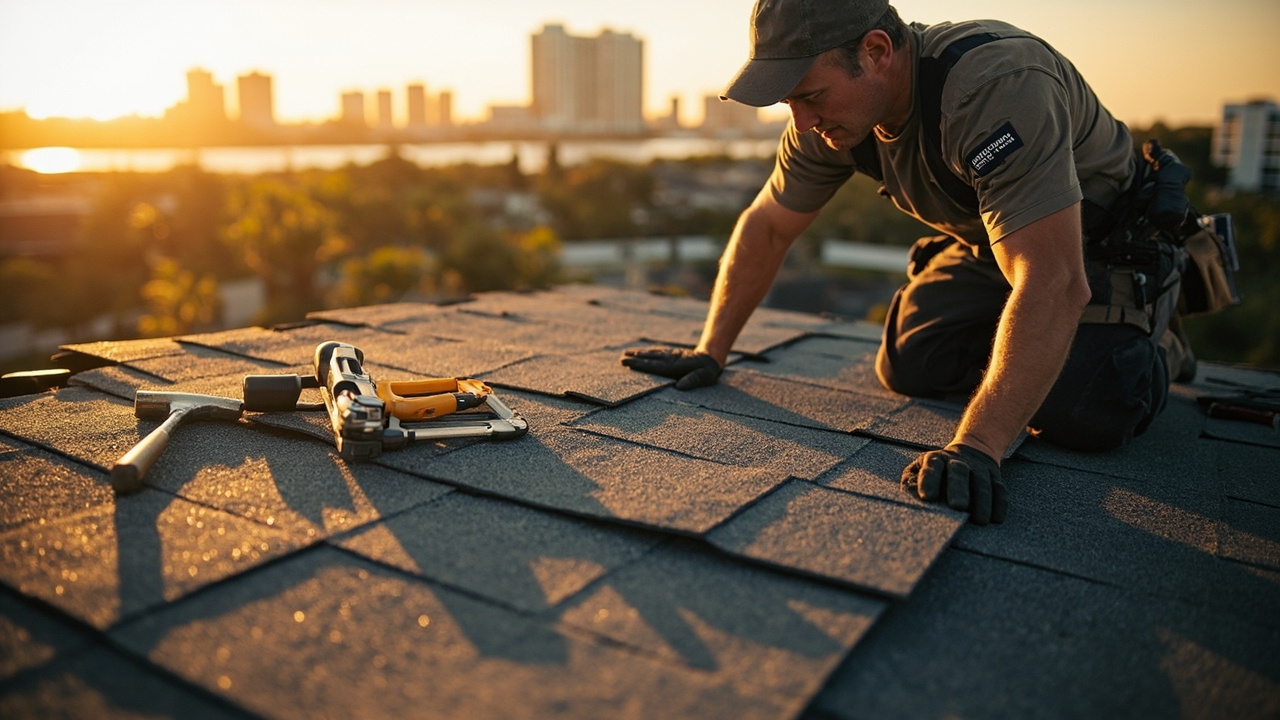


Homes within three miles of Biscayne Bay face accelerated granule loss on composition shingles due to salt deposition. The sodium chloride crystals absorb atmospheric moisture and create a corrosive slurry on your shingle surface. This process strips the ceramic granules that protect the underlying asphalt layer from UV radiation. Once the asphalt is exposed, thermal degradation happens quickly. You see this as shiny black spots on your roof where the granule coating has worn through. Miami's 77 percent average relative humidity prevents your roof from fully drying between rain events, which allows algae and lichens to colonize the shingle surface. The biological growth holds moisture against the asphalt, further accelerating decomposition.
Miami-Dade County enforces the most stringent roofing standards in Florida because of our hurricane exposure. Every asphalt shingle product must pass the Large Missile Impact Test and Cyclic Pressure Testing before receiving NOA approval. Contractors who install composition shingle roofing here must understand these product approvals and match the shingle to your specific wind zone. Ironwood Roofing Miami maintains relationships with local building inspectors and stays current on code amendments that affect shingle installation. We also understand how Miami's unique zoning overlays in historic districts affect material choices. Some neighborhoods require specific architectural shingle profiles or color palettes that restrict your options.