



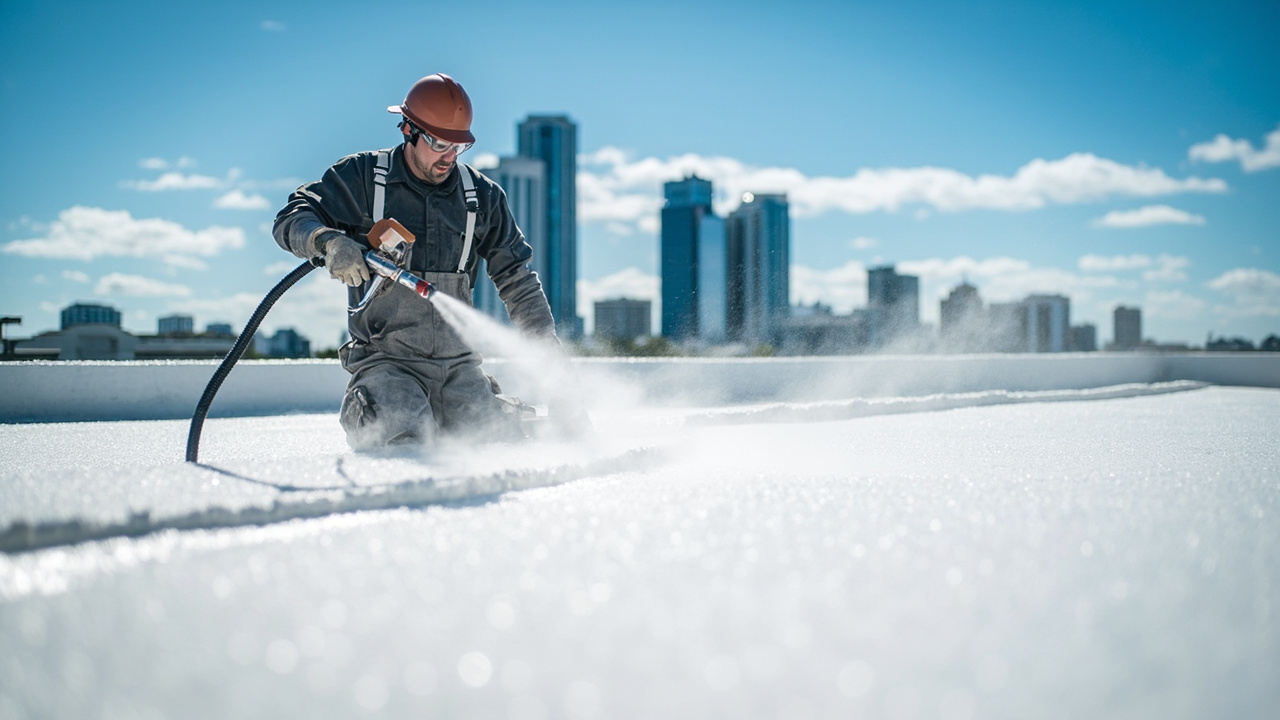
Miami sits in the most active hurricane corridor in the continental United States, with building codes requiring roof assemblies to withstand sustained winds of 175 mph in coastal exposure categories. Traditional mechanically-attached roofing systems rely on fastener patterns and seam integrity that fail progressively during wind events, starting with edge metal blow-off and escalating to membrane peeling. Commercial spray foam roofing eliminates these failure modes through full-surface adhesion. The monolithic SPF roof system bonds to your entire deck area, distributing wind uplift loads across the substrate rather than concentrating stress at fastener points. This makes polyurethane foam roofing the superior choice for warehouses in Hialeah, office buildings in Coral Gables, and industrial facilities throughout Miami-Dade County where hurricane risk drives insurance requirements and business continuity planning.
Florida Building Code compliance for commercial roofing requires product approvals specific to High Velocity Hurricane Zones and documentation that your roof assembly meets Miami-Dade County Notice of Acceptance standards. Ironwood Roofing Miami maintains relationships with code officials, understands the inspection protocols for spray polyurethane foam roofing installations, and provides the engineering stamps and manufacturer certifications your permit closeout requires. We also navigate the coordination requirements for projects in historic districts like the Miami Design District or Coconut Grove, where architectural review boards scrutinize rooftop equipment screening and parapet modifications. Local expertise prevents the permit delays and reinspection costs that plague contractors unfamiliar with Miami's regulatory environment.