The Best Roof Styles for Modern Accessory Dwelling Units in West Miami
Building an Accessory Dwelling Unit in West Miami requires more than just a roof over your head. The unique climate, strict building codes, and hurricane risks demand specialized roofing solutions that protect your investment and comply with Miami-Dade regulations. This guide breaks down the best roof styles for ADUs in West Miami, focusing on durability, energy efficiency, and code compliance. Miami-Dade Building Department.
Understanding Miami-Dade HVHZ Requirements for ADUs
West Miami falls within the High-Velocity Hurricane Zone (HVHZ), which means every roofing decision must meet stringent Miami-Dade Notice of Acceptance (NOA) standards. The Florida Building Code Chapter 15 requires all ADU roofing materials to pass wind uplift testing at speeds exceeding 175 mph. This isn’t just about keeping rain out—it’s about preventing catastrophic failure during a Category 5 storm. Florida Building Code NOA List.
The soil composition in West Miami adds another layer of complexity. The area sits on Miami Oolite limestone bedrock, which affects how roofing systems anchor to the structure. This geological factor means your ADU’s roof must be engineered specifically for this substrate, not just any standard installation. The Best Metal Roofing Options for Homes in Key Biscayne.
During our inspections, we use a moisture meter at multiple depths to check the structural deck before any installation. This diagnostic test reveals hidden water damage that could compromise the entire roofing system. We’ve found that many backyard structures in West Miami have suffered from years of humidity exposure before conversion to legal ADUs. Roofing Cutler Bay.
Metal Roofing: The Hurricane-Resistant Choice for West Miami ADUs
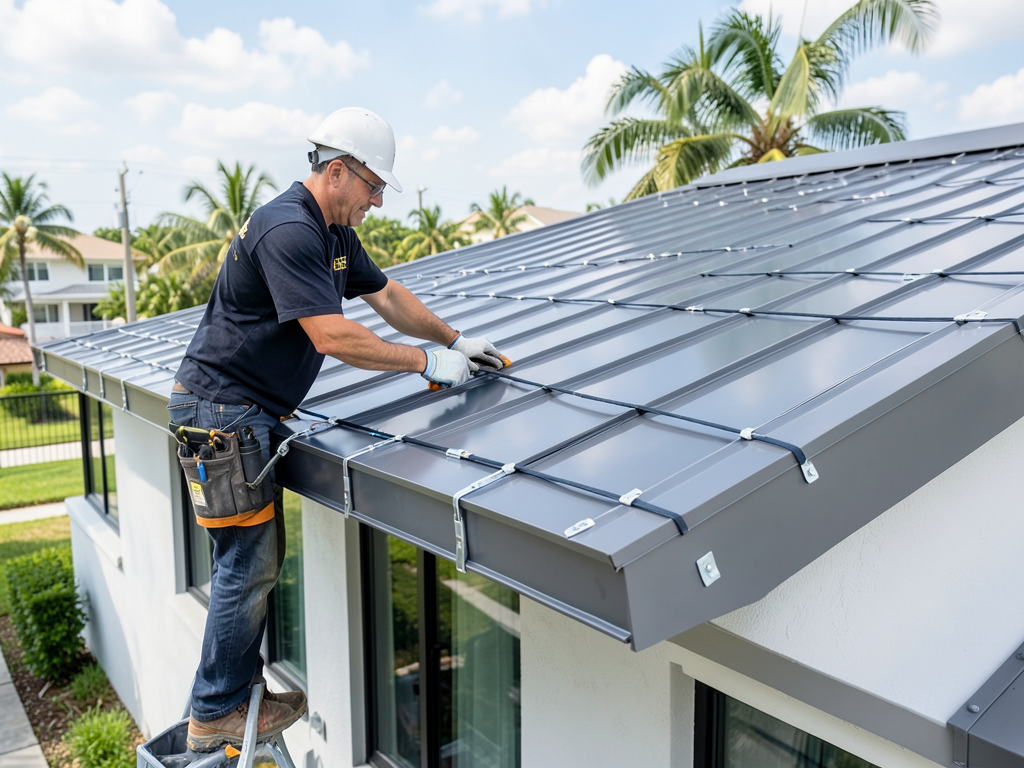
Standing seam metal roofing dominates the ADU market in West Miami for good reason. The interlocking panels create a continuous barrier that wind cannot penetrate. When properly installed with Miami-Dade NOA-approved clips, these systems can withstand sustained winds of 180+ mph. Metal Roofing Systems.
The thermal properties of metal make it ideal for Miami’s brutal sun. Modern cool-roof coatings reflect up to 70% of solar radiation, reducing attic temperatures by 20-30 degrees. This translates to lower cooling costs for your ADU, which matters in a climate where air conditioning runs nine months per year.. Read more about How to Turn Your Flat Miami Roof Into a Durable Rooftop Garden.
We recently completed a metal ADU roof in the Flagler Grove neighborhood where the homeowner wanted to match their main house’s Spanish-style architecture. We used stone-coated steel panels that mimic clay tile appearance while providing superior wind resistance. The installation included a secondary water barrier per Miami-Dade requirements, adding an extra layer of protection.. Read more about What Every Homeowner in Coral Gables Needs to Know About the Local Roofing Permit Process.
Concrete and Clay Tile: Mediterranean Charm Meets Modern Durability
West Miami’s architectural heritage leans heavily toward Mediterranean Revival styles, making concrete and clay tile a popular choice for ADUs. These materials offer exceptional longevity—often 50+ years with proper maintenance—and provide natural insulation against Miami’s heat.
However, tile roofing requires specialized installation techniques in the HVHZ. Each tile must be mechanically fastened or foam-adhered to prevent uplift. We use a torque wrench to ensure every fastener meets the exact specifications required by Miami-Dade NOA standards. This attention to detail prevents the cascading failures we see when tiles become projectiles during hurricanes. Protecting Your Home with Hurricane Rated Roofing Systems in Miami.
The weight of tile roofing—typically 900-1,200 pounds per square—means your ADU’s structure must be engineered to support it. Many older backyard structures require reinforcement before tile installation becomes viable. We conduct structural assessments using load calculations specific to Miami-Dade’s requirements.

Flat Roof Systems: Modern Minimalism for West Miami ADUs
Flat roofs using TPO or PVC membranes offer a contemporary aesthetic that works well for modern ADU designs. These single-ply systems excel in Miami’s climate when installed correctly. The heat-welded seams create a monolithic barrier that outperforms traditional built-up roofing in our humidity and UV exposure.
The key to successful flat roofing in West Miami lies in proper drainage design. Our canal system, managed by the South Florida Water Management District, requires specific drainage calculations to prevent overflow during tropical storms. We design roof crickets and tapered insulation systems that eliminate ponding water—a critical failure point in many flat roof installations.
During installation, we perform an infrared scan to detect any moisture trapped in the existing substrate. This diagnostic step prevents future leaks by identifying problem areas before they become catastrophic. The thermal imaging shows temperature variations that indicate water intrusion, even when it’s not visible to the naked eye.. Read more about Comparing Ridge Vents and Powered Attic Fans for Better Airflow in West Kendall Homes.
Solar-Ready Roofing: Meeting Miami’s Energy Code Requirements
Miami-Dade’s Green Building Code now encourages solar-ready roofing for new construction, including ADUs. This means your roof must be engineered to support future solar panel installation without structural modifications. We design framing systems that exceed standard load requirements by 30-40%, ensuring your ADU can accommodate solar technology when you’re ready.
The orientation of your ADU also matters for solar efficiency. West Miami’s latitude (approximately 25.8° N) means a south-facing roof at a 25-30 degree pitch maximizes year-round energy production. We use solar path analysis tools to determine the optimal configuration for your specific lot and shading conditions.
We recently installed a solar-ready metal roof in the West Miami Park area where the homeowner plans to add panels within two years. The roof structure was engineered with additional trusses and reinforced decking to handle the concentrated loads of solar mounting systems.
Navigating the Miami-Dade ADU Permitting Process
Obtaining permits for ADU roofing in West Miami requires submitting detailed engineering plans that demonstrate HVHZ compliance. The Miami-Dade Building Department reviews every application for adherence to Florida Building Code Chapter 16, which covers roof assemblies in high-wind zones.
The permitting process includes a Notice of Acceptance review for all roofing materials. This means you can’t simply choose any product off the shelf—it must have Miami-Dade NOA approval for your specific application. We maintain a database of currently approved products and their limitations to streamline this process.
Timeline expectations matter for planning. ADU roofing permits typically take 2-3 weeks for initial review, with potential revisions adding another 1-2 weeks. We handle all permit submissions and inspections as part of our service, ensuring your project moves forward without delays from documentation errors.
Cost Factors for ADU Roofing in West Miami
Roofing an ADU in West Miami costs more per square foot than standard residential roofing due to the specialized requirements. The HVHZ compliance, engineering specifications, and permitting process all add to the base cost. Expect to pay 30-50% more than roofing a house in a non-hurricane zone.
Material selection drives the largest cost variations. Basic TPO flat roofing might start around $8-10 per square foot installed, while premium metal systems with cool-roof coatings can exceed $15-18 per square foot. Tile roofing typically falls in the $12-16 per square foot range, not including any necessary structural reinforcement.
The size of your ADU also affects pricing. Smaller roofs under 500 square feet often have higher per-square-foot costs due to minimum mobilization fees for equipment and labor. We’ve found that ADUs between 600-800 square feet typically offer the best value for roofing investment.
Maintenance Considerations for West Miami ADU Roofs
The Miami climate demands regular maintenance regardless of your roofing material choice. The combination of UV exposure, salt air, and humidity creates unique challenges. We recommend bi-annual inspections, particularly after hurricane season, to catch minor issues before they become major problems.
Metal roofs in West Miami require specific attention to fastener maintenance. The thermal expansion and contraction cycles can loosen screws over time. We use a calibrated torque wrench during maintenance visits to ensure all fasteners maintain proper tension according to manufacturer specifications.
For tile roofs, the most common failure point isn’t the tiles themselves but the underlayment beneath them. Miami’s heat accelerates the degradation of traditional felt underlayment. We now specify synthetic underlayment with 30+ year warranties for all tile installations, providing better long-term protection against the elements.
Integration with Existing Structures
Many ADUs in West Miami connect to or sit adjacent to existing homes, creating transition challenges. The roof-to-wall flashing details must accommodate both buildings’ movement while maintaining a watertight seal. We use flexible membrane flashings that can expand and contract without compromising the seal.
The height differential between structures also matters. Miami-Dade code requires specific parapet heights and fire ratings for attached ADUs. We design transition details that meet these requirements while maintaining aesthetic continuity between the main house and the accessory unit.
We recently completed a project in the West Flagler area where the ADU shared a common wall with the main house. The roof integration required custom-fabricated aluminum flashings that matched the existing home’s architectural style while providing superior corrosion resistance in Miami’s salt-air environment.
Making the Right Choice for Your West Miami ADU
The best roof style for your ADU depends on multiple factors: your budget, the architectural style of your main home, local HOA requirements, and your long-term plans for the space. We provide detailed consultations that weigh these factors against Miami-Dade’s strict building requirements.
Consider your priorities carefully. If hurricane protection is your top concern, metal roofing offers unmatched performance. If you want to match a Mediterranean-style main house, properly installed tile might be worth the additional cost and engineering requirements. For modern designs, flat TPO or PVC systems provide clean lines and excellent energy efficiency.
Remember that your roofing decision affects more than just protection from rain. It impacts your ADU’s energy efficiency, insurance costs, and long-term maintenance requirements. We help you understand these trade-offs so you can make an informed decision that serves your needs for decades to come.
Frequently Asked Questions
How long does it take to roof an ADU in West Miami?
Most ADU roofing projects in West Miami take 3-5 days for installation, plus 2-3 weeks for permitting. Weather delays during hurricane season can extend this timeline, so we recommend scheduling during the drier winter months when possible.
Do I need a permit to replace the roof on my existing backyard structure?
Yes, converting an existing structure to a legal ADU requires permits for any roofing work. Miami-Dade requires engineering plans and NOA-approved materials even for replacement roofs on accessory structures.
What’s the most hurricane-resistant roofing option for my ADU?
Standing seam metal roofing with proper Miami-Dade NOA approval offers the highest wind resistance, typically rated for 180+ mph winds. When installed with secondary water barriers and proper fastening, it provides superior protection compared to other materials.
How much does ADU roofing cost in West Miami?
ADU roofing in West Miami typically costs $8-18 per square foot installed, depending on the material. This is 30-50% higher than roofing in non-HVHZ areas due to the specialized requirements and engineering needed.
Can I install solar panels on my ADU roof later?
Yes, but you should install a solar-ready roof from the start. This means engineering the structure to handle the additional weight and designing the roof orientation for optimal solar exposure. Retrofitting later often costs more and may require structural modifications.
Ready to Protect Your ADU Investment?
Your ADU represents a significant investment in your property, and the roof is your first line of defense against Miami’s harsh climate. Don’t trust this critical component to just anyone. Our team understands the unique challenges of roofing accessory dwelling units in West Miami’s High-Velocity Hurricane Zone.
We’ve helped dozens of West Miami homeowners navigate the complex requirements for ADU roofing, from initial permitting through final inspection. Our experience with Miami-Dade NOA approvals, HVHZ engineering, and local building department processes means your project stays on track and passes inspection the first time. Why Homeowners in Coral Gables Choose Professional Tile Roof Installation.
Call (645) 231-4888 today to schedule your ADU roofing consultation. We’ll assess your specific needs, discuss material options, and provide a detailed proposal that meets all Miami-Dade requirements. Don’t wait until the next storm threatens your investment—get the protection your ADU deserves now.
Pick up the phone and call (645) 231-4888 before the next storm hits. Your ADU’s roof isn’t just a covering—it’s your peace of mind in South Florida’s unpredictable weather.
You may also find this helpful. Why Choosing White Shingles Could Drastically Reduce Your Cooling Costs in Homestead.
{
“@context”: “https://schema.org”,
“@type”: “BlogPosting”,
“headline”: “The Best Roof Styles for Modern Accessory Dwelling Units in West Miami”,
“description”: “Discover the best roofing styles for ADUs in West Miami. Learn about Miami-Dade HVHZ compliance, material options, and permitting for your accessory dwelling unit.”,
“wordCount”: 1994,
“datePublished”: “2026-04-14T15:30:00.000Z”,
“dateModified”: “2026-04-14T15:30:00.000Z”,
“inLanguage”: “en-US”,
“mainEntityOfPage”: {
“@type”: “WebPage”,
“@id”: “https://ironwoodroofingmiami.com”
},
“publisher”: {
“@type”: “LocalBusiness”,
“name”: “Ironwood Roofing Miami”,
“url”: “https://ironwoodroofingmiami.com”
},
“author”: {
“@type”: “Organization”,
“name”: “Ironwood Roofing Miami”,
“url”: “https://ironwoodroofingmiami.com”
},
“image”: {
“@type”: “ImageObject”,
“url”: “https://ironwoodroofingmiami.com/wp-content/uploads/2026/03/the-best-roof-styles-for-modern-accessory-dwelling-1.png”
}
}
{
“@context”: “https://schema.org”,
“@type”: “RoofingContractor”,
“name”: “Ironwood Roofing Miami”,
“url”: “https://ironwoodroofingmiami.com”,
“address”: {
“@type”: “PostalAddress”,
“addressLocality”: “Miami”
},
“areaServed”: {
“@type”: “City”,
“name”: “Miami”
}
}
{
“@context”: “https://schema.org”,
“@type”: “FAQPage”,
“mainEntity”: [
{
“@type”: “Question”,
“name”: “How long does it take to roof an ADU in West Miami?”,
“acceptedAnswer”: {
“@type”: “Answer”,
“text”: “Most ADU roofing projects in West Miami take 3-5 days for installation, plus 2-3 weeks for permitting. Weather delays during hurricane season can extend this timeline, so we recommend scheduling during the drier winter months when possible.”
}
},
{
“@type”: “Question”,
“name”: “Do I need a permit to replace the roof on my existing backyard structure?”,
“acceptedAnswer”: {
“@type”: “Answer”,
“text”: “Yes, converting an existing structure to a legal ADU requires permits for any roofing work. Miami-Dade requires engineering plans and NOA-approved materials even for replacement roofs on accessory structures.”
}
},
{
“@type”: “Question”,
“name”: “What’s the most hurricane-resistant roofing option for my ADU?”,
“acceptedAnswer”: {
“@type”: “Answer”,
“text”: “Standing seam metal roofing with proper Miami-Dade NOA approval offers the highest wind resistance, typically rated for 180+ mph winds. When installed with secondary water barriers and proper fastening, it provides superior protection compared to other materials.”
}
},
{
“@type”: “Question”,
“name”: “How much does ADU roofing cost in West Miami?”,
“acceptedAnswer”: {
“@type”: “Answer”,
“text”: “ADU roofing in West Miami typically costs $8-18 per square foot installed, depending on the material. This is 30-50% higher than roofing in non-HVHZ areas due to the specialized requirements and engineering needed.”
}
},
{
“@type”: “Question”,
“name”: “Can I install solar panels on my ADU roof later?”,
“acceptedAnswer”: {
“@type”: “Answer”,
“text”: “Yes, but you should install a solar-ready roof from the start. This means engineering the structure to handle the additional weight and designing the roof orientation for optimal solar exposure. Retrofitting later often costs more and may require structural modifications.”
}
},
{
“@type”: “Question”,
“name”: “Ready to Protect Your ADU Investment?”,
“acceptedAnswer”: {
“@type”: “Answer”,
“text”: “Your ADU represents a significant investment in your property, and the roof is your first line of defense against Miami’s harsh climate. Don’t trust this critical component to just anyone. Our team understands the unique challenges of roofing accessory dwelling units in West Miami’s High-Velocity Hurricane Zone.”
}
}
]
}
{
“@context”: “https://schema.org”,
“@type”: “BreadcrumbList”,
“itemListElement”: [
{
“@type”: “ListItem”,
“position”: 1,
“name”: “Home”,
“item”: “https://ironwoodroofingmiami.com”
},
{
“@type”: “ListItem”,
“position”: 2,
“name”: “Blog”,
“item”: “https://ironwoodroofingmiami.com/blog”
},
{
“@type”: “ListItem”,
“position”: 3,
“name”: “The Best Roof Styles for Modern Accessory Dwelling Units in West Miami”
}
]
}
{
“@context”: “https://schema.org”,
“@type”: “Service”,
“serviceType”: “Roofing”,
“provider”: {
“@type”: “LocalBusiness”,
“name”: “Ironwood Roofing Miami”,
“url”: “https://ironwoodroofingmiami.com”
},
“areaServed”: {
“@type”: “City”,
“name”: “Miami”
},
“description”: “Discover the best roofing styles for ADUs in West Miami. Learn about Miami-Dade HVHZ compliance, material options, and permitting for your accessory dwelling unit.”
}