How to Tell if Your Roof Decking Is Rotting Without Removing the Tiles
Your roof decking forms the backbone of your entire roofing system. When moisture penetrates beneath your tiles in Miami’s humid climate, the plywood or OSB sheathing begins to deteriorate silently. You can detect this hidden damage through several visual and physical indicators before the problem becomes catastrophic. The Best Metal Roofing Options for Homes in Key Biscayne.
Miami’s combination of high humidity, salt air, and frequent tropical storms creates the perfect environment for wood rot. The constant moisture exposure breaks down the structural integrity of your roof deck, compromising your home’s ability to withstand hurricane-force winds. Early detection saves thousands in emergency repairs and protects your family from potential roof collapse during storm season. Professional Flat Roof Repair Services for Brickell Business Owners.
Understanding these warning signs helps you take action before minor rot becomes major structural failure. Let’s examine the specific indicators that reveal roof deck deterioration without requiring you to remove any tiles.
Why Roof Deck Rot is a Critical Issue in South Florida
Miami’s unique climate accelerates wood decay at rates that shock homeowners from other regions. The Florida Building Code’s High Velocity Hurricane Zone (HVHZ) requirements make roof deck integrity non-negotiable for structural safety. Florida Building Code High Velocity Hurricane Zone requirements.
Under Florida Building Code Section 1609.21, roof decks must maintain specific load-bearing capacities to meet hurricane resistance standards. Rotted decking cannot support the uplift forces generated during Category 4 or 5 storms. This creates a dangerous situation where your roof may fail precisely when you need it most. Protecting Your Home with Hurricane Rated Roofing Systems in Miami.
The salt air from coastal areas like Miami Beach and Key Biscayne accelerates corrosion of metal fasteners that secure decking panels. Once these fasteners weaken, the entire deck system becomes unstable. The constant thermal expansion from Miami’s intense UV exposure causes microscopic cracks in tile underlayment, allowing moisture intrusion that feeds the rot cycle.
According to the National Association of Home Builders, roof decking in coastal Florida environments typically requires replacement every 15-20 years, even with proper maintenance. This shortened lifespan results from the relentless combination of moisture, salt, and heat that no underlayment can completely resist.
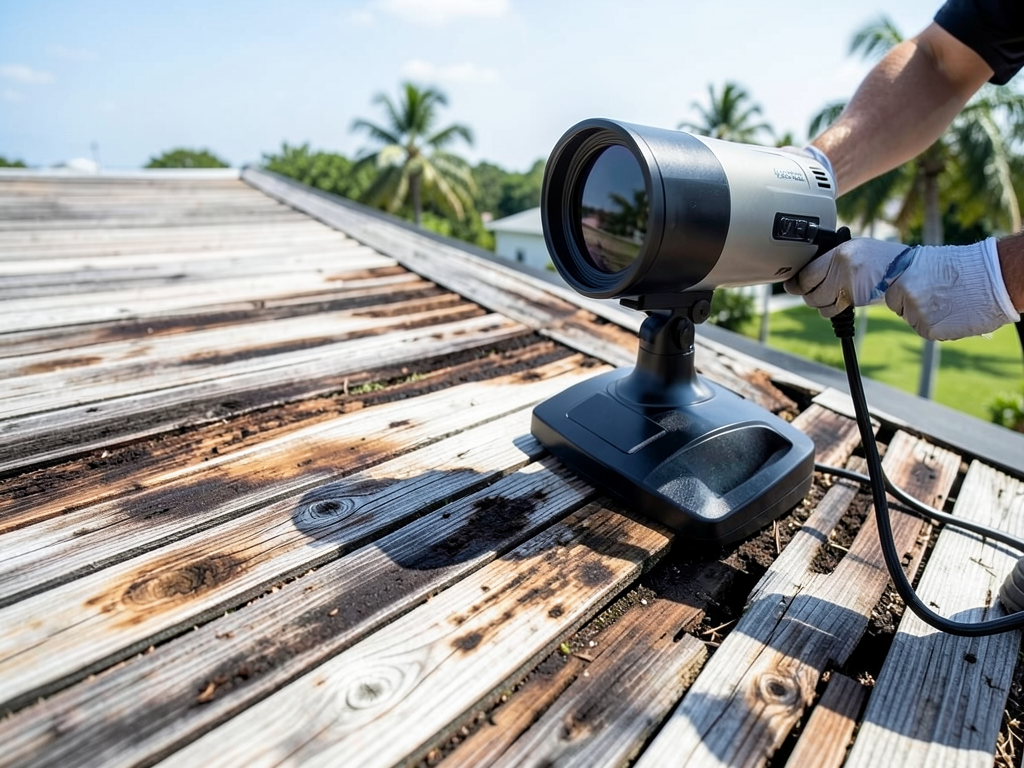
Diagram showing moisture pathways through tile underlayment into roof decking, with common failure points highlighted around valleys and flashing areas.
5 Signs of Roof Deck Rot You Can See from the Attic
Your attic provides the best vantage point for detecting roof deck problems without disturbing exterior tiles. Look for these specific indicators during daylight hours when natural light reveals hidden damage.
Dark water stains on the underside of decking panels indicate ongoing moisture intrusion. These stains often appear as irregular brown or black patches that grow larger after heavy rains. Fresh stains feel damp to the touch and may have visible water droplets forming beneath them.
Soft spots in the decking become obvious when you press gently with your fingertips. Healthy plywood resists pressure and feels solid. Rotted sections compress easily and may leave fingernail impressions. These soft areas typically measure several inches across and feel noticeably different from surrounding solid wood.. Read more about Fixing Rotted Fascia and Soffit Boards on Your Gables Estates Property.
Visible mold growth appears as black, green, or white fuzzy patches on the wood surface. Miami’s humidity creates ideal conditions for mold colonization, which often indicates prolonged moisture exposure. Mold doesn’t just indicate rot danger it also poses health risks to your family through airborne spores.
Cracks or splits in the decking panels widen over time as moisture causes wood fibers to separate. These separations often run parallel to the grain and may expose the attic space to exterior elements. You might notice daylight visible through these cracks during sunny days.
Termite damage can mimic rot symptoms but requires different treatment. Look for small holes, mud tubes climbing up roof rafters, or wood that crumbles when touched. Miami’s termite population makes this a common confusion point for homeowners diagnosing decking problems. Why Homeowners in Coral Gables Choose Professional Tile Roof Installation.
Exterior Red Flags: What Your Shingles are Telling You
Even without removing tiles, exterior observations reveal critical information about your roof deck’s condition. These visual cues develop as decking deterioration progresses beneath the surface.
Sagging roof sections indicate structural weakness in the decking system. Walk around your home’s perimeter and look for areas where the roofline appears uneven or dips between rafters. These depressions often form over rotted decking that can no longer support its intended load.
Cracked or broken tiles near roof valleys suggest underlying water damage. Valleys channel large volumes of water toward decking seams, creating prime conditions for rot. If you notice multiple broken tiles in the same area, moisture has likely compromised the decking beneath.
Gaps between fascia boards and roof edges indicate decking shrinkage from moisture loss. As rotted wood dries and deteriorates, it pulls away from trim pieces. These gaps allow additional water intrusion, accelerating the damage cycle.
Interior ceiling stains directly below roof areas often trace back to rotted decking. Water penetrates through the damaged deck, travels along rafters, and emerges at the ceiling drywall. The stain pattern typically follows the roof’s slope and may expand after rainfall.
Attic ventilation problems contribute to decking rot by trapping moisture inside the roof structure. Check for proper soffit vent function and ridge vent clearance. Poor ventilation allows humidity to condense on the underside of decking, feeding the rot process even without exterior water intrusion.
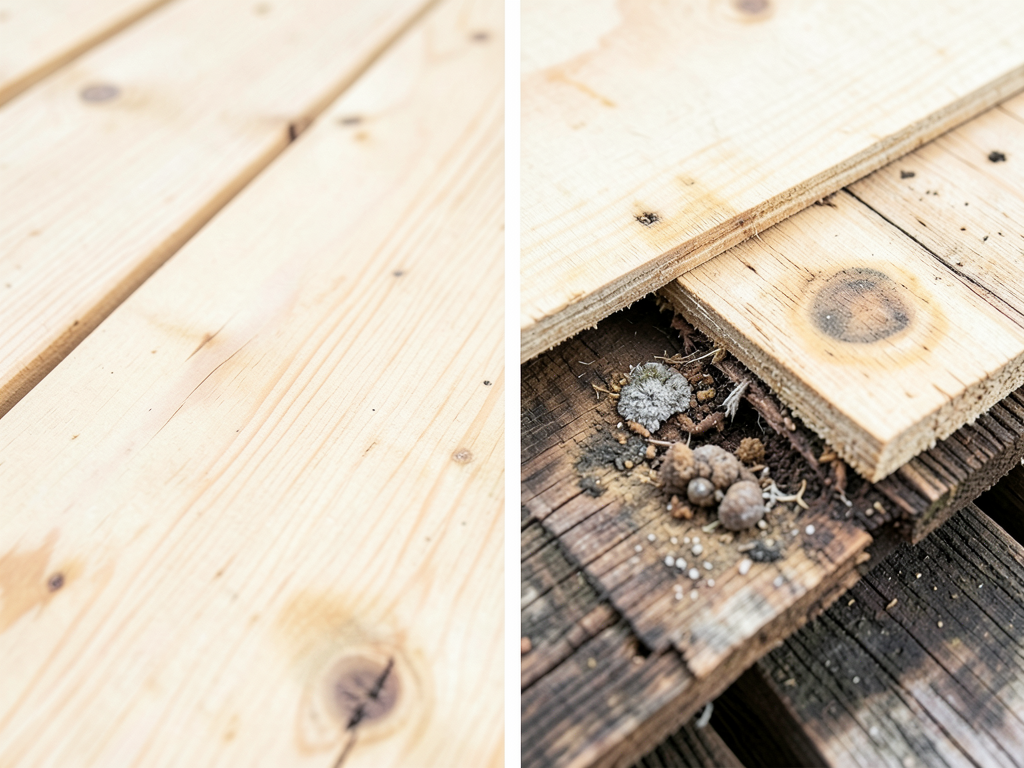
Photo showing sagging roof sections and cracked tiles in a Miami home’s roof valley, indicating severe underlying decking deterioration.
The Role of Miami’s Humidity and Salt Air in Wood Decay
Miami’s average relative humidity exceeds 75% throughout the year, creating constant moisture exposure for roof structures. This persistent dampness prevents wood from drying completely between rain events, allowing rot fungi to establish and spread rapidly.
According to the University of Florida Institute of Food and Agricultural Sciences, wood moisture content above 20% creates conditions favorable for decay fungi growth. Miami’s humidity often pushes decking moisture levels to 25-30%, well above the decay threshold. University of Florida wood decay research.
Salt air from the Atlantic Ocean accelerates corrosion of metal fasteners that secure decking to rafters. Once these fasteners fail, decking panels become loose and more susceptible to moisture intrusion. The corrosion process creates microscopic gaps that widen over time.
Thermal cycling in Miami’s climate causes decking to expand and contract daily. This movement creates stress points at panel seams and fastener locations. Over years, these stress cycles break down the wood’s cellular structure, making it more vulnerable to moisture penetration.
Heavy afternoon thunderstorms common to Miami deliver concentrated bursts of water that overwhelm standard underlayment systems. The rapid temperature drops following these storms cause condensation on cooler decking surfaces, adding another moisture source to the decay equation.
Structural Risks: Rot and Hurricane Resistance
Roof decking serves as the critical connection between your home’s structure and the roofing system that must resist hurricane forces. Rotted decking cannot maintain this connection, creating dangerous failure points during storms.
The Florida Building Code’s HVHZ requirements mandate specific fastener spacing and uplift resistance ratings for roof decks. Rotted wood cannot achieve these ratings, meaning your roof may not meet code requirements even if it appears intact from the outside.
During a hurricane, wind creates both positive and negative pressure on roof surfaces. Negative pressure essentially tries to lift the roof off your home. Healthy decking transfers these forces to the building’s structural walls. Rotted decking breaks this load path, allowing roof sections to detach.
The secondary water barrier requirements in Florida Building Code Section 15.1.7 become irrelevant if the primary decking fails. This barrier depends on intact decking to function properly. Once rot compromises the deck, water can penetrate directly into your home’s interior.
Insurance companies increasingly require documentation of roof deck condition for coverage in hurricane-prone areas. Homes with rotted decking may face premium increases or coverage denials. Some insurers now require professional inspections before issuing or renewing policies.
When to Repair vs. When to Replace Your Roof Deck
Determining whether to repair or replace rotted decking depends on several critical factors. The extent of damage, your roof’s age, and your long-term plans all influence this decision.
Small isolated rot areas covering less than 10% of the total deck area often qualify for spot repairs. These repairs involve removing affected sections and replacing them with new plywood or OSB panels. The surrounding healthy decking provides structural support for the repair.
Extensive rot affecting more than 30% of the deck area typically requires complete replacement. Partial replacement in these cases creates weak points that compromise the entire system. The cost difference between partial and full replacement diminishes when factoring in labor mobilization costs.
Roofs over 15 years old with any rot damage usually need complete replacement. The remaining decking likely suffers from the same moisture exposure that caused the visible rot. Replacing only damaged sections leaves hidden deterioration that will cause problems within years.
Consider your plans for staying in the home. If you intend to sell within five years, extensive repairs may suffice. For long-term ownership, complete replacement provides better value through improved energy efficiency, hurricane resistance, and peace of mind.
Material selection matters for replacements in Miami. Marine-grade plywood or HVHZ-rated OSB panels cost more initially but resist moisture better than standard materials. This investment pays off through extended service life in our challenging climate.
Photo comparing healthy roof decking with rotted sections, showing the visual and structural differences between sound and compromised materials.. Read more about Comparing Peel and Stick vs Synthetic Underlayment for Miami Summer Heat.
Professional Inspection: The Infrared and Moisture Meter Advantage
While DIY inspection helps identify obvious problems, professional tools reveal hidden rot that homeowners cannot detect. Infrared cameras and moisture meters provide scientific data about your roof deck’s true condition.
Infrared thermography detects temperature differences caused by moisture accumulation. Wet areas retain heat differently than dry wood, creating visible patterns on infrared scans. These scans reveal rot extent without any physical intrusion into your roof system.
Moisture meters measure wood’s electrical resistance to determine water content. Readings above 20% indicate conditions favorable for rot development. Professional moisture meters can scan through tiles and underlayment to assess decking condition without removal.
Professional inspectors also check for proper fastener spacing and pull-out resistance. Loose fasteners indicate decking deterioration that may not yet show visible signs. This early detection prevents catastrophic failures during storm season.
The cost of professional inspection typically ranges from $200 to $500 but can save thousands by identifying problems early. Many Miami roofing companies offer free inspections with repair estimates, though these may include sales pressure.
Document your inspection findings with dated photographs and moisture readings. This documentation helps with insurance claims and provides baseline data for tracking deterioration over time. Regular inspections every two to three years catch problems before they become emergencies. Finding a Reliable Roof Repair Company in Coconut Grove.
Frequently Asked Questions
How long does roof deck rot take to develop in Miami?
Roof deck rot can develop within 3-5 years in Miami’s humid climate, especially in areas with poor ventilation or previous water damage. The combination of constant moisture and heat accelerates fungal growth that breaks down wood fibers.
Can I walk on my roof to check for soft spots?
Walking on your roof risks personal injury and may cause additional damage to tiles or underlayment. Use visual inspection from the ground and attic examination instead. If you must access the roof, hire professionals with proper safety equipment.
Does homeowners insurance cover rotted roof decking?
Standard policies typically exclude rot damage, considering it a maintenance issue rather than sudden damage. However, if rot results from covered events like storm damage, related decking replacement might be covered. Check your specific policy details.
What’s the difference between plywood and OSB for roof decking?
Plywood handles moisture better than OSB because it dries more quickly and resists swelling. However, OSB costs less and meets Florida Building Code requirements when properly installed with HVHZ-rated underlayment. Both materials eventually rot when exposed to persistent moisture.
How can I prevent roof deck rot in my Miami home?
Prevent rot through proper attic ventilation, regular gutter cleaning, prompt leak repairs, and annual professional inspections. Ensure your roof has adequate soffit and ridge vents to reduce moisture buildup. Consider upgrading to moisture-resistant decking materials during replacement.
Take Action Before the Next Storm Hits
Roof deck rot threatens your home’s structural integrity and your family’s safety. Miami’s hurricane season arrives every year without warning, and rotted decking cannot withstand the forces these storms generate. The cost of emergency repairs after a storm far exceeds preventive maintenance.
Don’t wait until you see water stains on your ceiling or feel soft spots in your attic floor. These signs indicate advanced damage that requires extensive repairs. Early detection through professional inspection saves money and prevents dangerous situations during storm season.
Call (645) 231-4888 today to schedule your comprehensive roof deck inspection. Our experienced technicians use infrared scanning and moisture meters to detect hidden rot before it becomes visible. We serve Miami homeowners throughout Coral Gables, Doral, Pinecrest, and surrounding communities with emergency services available 24/7.
Pick up the phone and call (645) 231-4888 before the next tropical storm arrives. Your home’s structural integrity and your family’s safety depend on a solid roof deck that can withstand Miami’s challenging climate. Don’t risk catastrophic failure when professional inspection costs a fraction of emergency repairs.
You may also find this helpful. Why Your Ponce Davis Home Needs Heavy Duty Drip Edges to Prevent Wood Rot.
{
“@context”: “https://schema.org”,
“@type”: “BlogPosting”,
“headline”: “How to Tell if Your Roof Decking Is Rotting Without Removing the Tiles”,
“description”: “Learn the signs of roof deck rot in Miami homes without removing tiles. Discover moisture damage, sagging, and mold indicators that threaten your home’s hurricane resistance.”,
“wordCount”: 2239,
“datePublished”: “2026-06-03T08:46:00.000Z”,
“dateModified”: “2026-06-03T08:46:00.000Z”,
“inLanguage”: “en-US”,
“mainEntityOfPage”: {
“@type”: “WebPage”,
“@id”: “https://ironwoodroofingmiami.com”
},
“publisher”: {
“@type”: “LocalBusiness”,
“name”: “Ironwood Roofing Miami”,
“url”: “https://ironwoodroofingmiami.com”
},
“author”: {
“@type”: “Organization”,
“name”: “Ironwood Roofing Miami”,
“url”: “https://ironwoodroofingmiami.com”
},
“image”: {
“@type”: “ImageObject”,
“url”: “https://ironwoodroofingmiami.com/wp-content/uploads/2026/03/how-to-tell-if-your-roof-decking-is-rotting-withou-1.png”
}
}
{
“@context”: “https://schema.org”,
“@type”: “RoofingContractor”,
“name”: “Ironwood Roofing Miami”,
“url”: “https://ironwoodroofingmiami.com”,
“address”: {
“@type”: “PostalAddress”,
“addressLocality”: “Miami”
},
“areaServed”: {
“@type”: “City”,
“name”: “Miami”
}
}
{
“@context”: “https://schema.org”,
“@type”: “FAQPage”,
“mainEntity”: [
{
“@type”: “Question”,
“name”: “How long does roof deck rot take to develop in Miami?”,
“acceptedAnswer”: {
“@type”: “Answer”,
“text”: “Roof deck rot can develop within 3-5 years in Miami’s humid climate, especially in areas with poor ventilation or previous water damage. The combination of constant moisture and heat accelerates fungal growth that breaks down wood fibers.”
}
},
{
“@type”: “Question”,
“name”: “Can I walk on my roof to check for soft spots?”,
“acceptedAnswer”: {
“@type”: “Answer”,
“text”: “Walking on your roof risks personal injury and may cause additional damage to tiles or underlayment. Use visual inspection from the ground and attic examination instead. If you must access the roof, hire professionals with proper safety equipment.”
}
},
{
“@type”: “Question”,
“name”: “Does homeowners insurance cover rotted roof decking?”,
“acceptedAnswer”: {
“@type”: “Answer”,
“text”: “Standard policies typically exclude rot damage, considering it a maintenance issue rather than sudden damage. However, if rot results from covered events like storm damage, related decking replacement might be covered. Check your specific policy details.”
}
},
{
“@type”: “Question”,
“name”: “What’s the difference between plywood and OSB for roof decking?”,
“acceptedAnswer”: {
“@type”: “Answer”,
“text”: “Plywood handles moisture better than OSB because it dries more quickly and resists swelling. However, OSB costs less and meets Florida Building Code requirements when properly installed with HVHZ-rated underlayment. Both materials eventually rot when exposed to persistent moisture.”
}
}
]
}
{
“@context”: “https://schema.org”,
“@type”: “BreadcrumbList”,
“itemListElement”: [
{
“@type”: “ListItem”,
“position”: 1,
“name”: “Home”,
“item”: “https://ironwoodroofingmiami.com”
},
{
“@type”: “ListItem”,
“position”: 2,
“name”: “Blog”,
“item”: “https://ironwoodroofingmiami.com/blog”
},
{
“@type”: “ListItem”,
“position”: 3,
“name”: “How to Tell if Your Roof Decking Is Rotting Without Removing the Tiles”
}
]
}
{
“@context”: “https://schema.org”,
“@type”: “Service”,
“serviceType”: “Roofing”,
“provider”: {
“@type”: “LocalBusiness”,
“name”: “Ironwood Roofing Miami”,
“url”: “https://ironwoodroofingmiami.com”
},
“areaServed”: {
“@type”: “City”,
“name”: “Miami”
},
“description”: “Learn the signs of roof deck rot in Miami homes without removing tiles. Discover moisture damage, sagging, and mold indicators that threaten your home’s hurricane resistance.”
}