Fixing Rotted Fascia and Soffit Boards on Your Gables Estates Property
Wood rot and termite damage to fascia and soffit boards can compromise your home’s structural integrity and lead to costly water damage. In Gables Estates, where Mediterranean-style homes with elaborate woodwork are common, these issues require immediate attention from a licensed roofing contractor who understands Miami-Dade’s unique climate challenges. Miami-Dade County Building Department.
Why Fascia and Soffit Integrity Matters in South Florida
The fascia board runs along your roof’s edge, supporting the bottom row of tiles or shingles, while the soffit covers the underside of your roof’s overhang. Together, they create a critical barrier against South Florida’s relentless humidity, salt air, and hurricane-force winds. When these components fail, water infiltration begins at the roofline, leading to interior ceiling damage, attic mold growth, and compromised rafter tails. Florida Department of Agriculture and Consumer Services.
Gables Estates homes, built primarily in the 1960s and 1970s, often feature cedar or pressure-treated lumber that has reached its 20-25 year service life. The combination of salt air from Biscayne Bay, afternoon thunderstorms, and termite pressure creates perfect conditions for accelerated wood deterioration. A single compromised fascia board can allow water to penetrate the roof deck, causing thousands in hidden damage before visible signs appear.

A licensed roofing contractor inspecting fascia and soffit boards for wood rot and termite damage in a Gables Estates home.
Common Signs Your Miami Home Needs Fascia and Soffit Repair
Identifying fascia and soffit problems early can prevent extensive structural damage. Look for peeling exterior paint near the roofline, which indicates moisture penetration behind the wood. Soft spots when pressing on fascia boards suggest advanced wood rot, while sagging soffits indicate compromised structural integrity or pest damage.
Termite damage presents differently than wood rot. Termites create hollow channels within the wood, leaving the exterior surface intact until pressure causes it to collapse. You might notice small holes, mud tubes climbing from the ground, or frass (termite droppings) accumulating near damaged areas. Florida’s Formosan termites are particularly aggressive and can destroy a fascia board in months rather than years.
During hurricane season, damaged fascia and soffit boards create wind uplift vulnerabilities. The Miami-Dade Notice of Acceptance (NOA) requires all roofing materials and accessories to meet specific wind resistance standards. Compromised roofline components can fail under 120+ mph winds, allowing the entire roofing system to lift off your home. The Best Metal Roofing Options for Homes in Key Biscayne.
Our Local Repair Process for Gables Estates Properties
Professional fascia and soffit repair begins with a comprehensive inspection using moisture meters and thermal imaging to detect hidden water damage. We remove compromised materials section by section, assessing the underlying rafter tails and roof deck for structural integrity. Any damaged wood receives treatment with borate-based preservatives to prevent future termite infestation. Professional Flat Roof Repair Services for Brickell Business Owners.
Installation involves precise measurements to ensure proper drip edge alignment and gutter system integration. We use stainless steel fasteners rated for coastal environments and apply a continuous bead of high-grade sealant at all joints. The repair must maintain proper attic ventilation, as blocked soffit vents can trap moisture and accelerate wood deterioration.
Permit requirements vary by property location within Gables Estates. Homes within 1,000 feet of water bodies require additional corrosion-resistant materials per Miami-Dade County Code Section 11B-1.1. Our team handles all permitting and ensures compliance with local building standards before starting work. Roofing Miami Gardens.
Material Recommendations for the Miami Climate
Traditional pressure-treated lumber remains popular for fascia boards due to its natural appearance and paintability. However, in coastal areas like Gables Estates, aluminum fascia offers superior resistance to salt air corrosion and requires no maintenance. PVC and composite materials provide the best long-term value, resisting both moisture and termites while maintaining dimensional stability in Florida’s extreme temperature swings.
Soffit materials must balance ventilation with durability. Perforated aluminum soffits allow continuous airflow while blocking pest entry. Solid PVC panels work well in areas prone to wind-driven rain. The choice depends on your home’s specific exposure, architectural style, and ventilation requirements per Florida Building Code Chapter 15.
Cost considerations favor aluminum or PVC in the long run despite higher upfront costs. Wood fascia requires repainting every 3-5 years in South Florida’s UV-intense climate, while metal and PVC systems maintain their appearance for decades with minimal maintenance. Metal Roofing Systems.
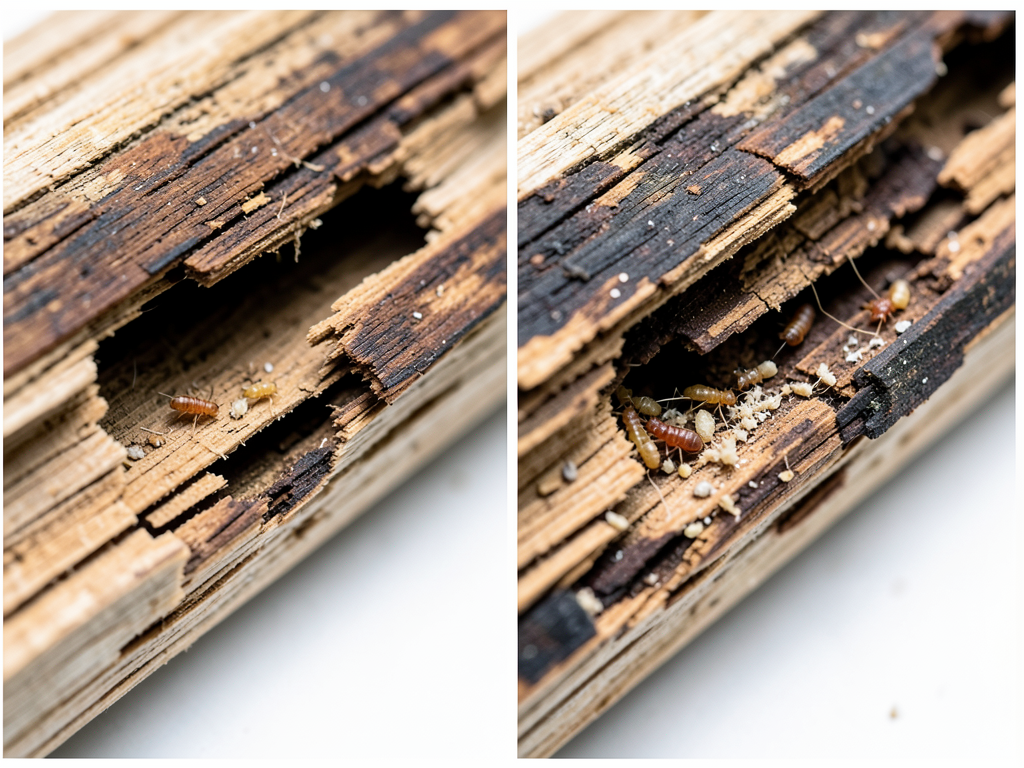
Comparison of wood rot versus termite damage in fascia boards, showing the different failure patterns.
Miami-Dade Building Code Compliance for Roofline Repairs
All fascia and soffit repairs in Miami-Dade County must comply with the High-Velocity Hurricane Zone (HVHZ) provisions of the Florida Building Code. This includes using approved fasteners, maintaining proper nail spacing, and ensuring materials meet Miami-Dade Notice of Acceptance standards. The code specifically addresses wind load calculations for soffit panels, requiring them to withstand uplift forces based on your property’s exposure category. Protecting Your Home with Hurricane Rated Roofing Systems in Miami.
Secondary water barriers become mandatory when replacing fascia boards that support tile roofs. This involves installing a self-adhering polymer-modified bitumen membrane along the roof edge to prevent water infiltration if primary underlayment fails during a storm. The barrier extends up the roof deck at least 24 inches past the interior wall line.
Termite pretreatment requirements apply to all wood replacement in South Florida. The Florida Department of Agriculture and Consumer Services mandates soil treatment around replacement wood to create a chemical barrier against subterranean termites. This protection must be documented and verified before final inspection approval.
Preventing Future Fascia and Soffit Damage
Regular maintenance extends the life of your roofline components significantly. Annual inspections should check for paint deterioration, loose fasteners, and signs of pest activity. Clean gutters prevent water overflow that can saturate fascia boards, while proper attic ventilation reduces moisture buildup that accelerates wood rot.
Termite prevention requires both chemical barriers and physical barriers. Ensure soil around your foundation maintains proper grading to prevent moisture accumulation near wood structures. Remove any wood debris, including mulch, from direct contact with your home’s exterior. Consider installing termite bait stations as an early warning system.
During hurricane season, inspect your roofline for loose components that could become windborne debris. Secure any loose soffit panels and ensure gutter attachments are properly fastened. A pre-season inspection can identify vulnerabilities before tropical storms arrive.
Cost Factors and Investment Considerations
Fascia and soffit repair costs vary based on material selection, accessibility, and extent of damage. Wood replacement typically ranges from $15-25 per linear foot, while aluminum or PVC installations run $25-40 per linear foot. These prices reflect Miami-Dade’s labor rates and permit requirements but don’t include structural repairs if rafter tails are compromised.
Insurance considerations play a significant role in repair timing. Many policies exclude damage from long-term moisture exposure or termite activity, considering these preventable maintenance issues. However, if a covered peril like wind damage exposes pre-existing fascia deterioration, the entire repair might qualify for coverage.
Energy efficiency improvements often accompany fascia and soffit repairs. Proper attic ventilation can reduce cooling costs by 10-15% in South Florida’s climate. When replacing soffits, consider upgrading to high-performance ventilation systems that meet current energy code requirements.
Before and after photos showing fascia and soffit replacement on a Mediterranean-style home in Gables Estates.
Frequently Asked Questions
How long does fascia and soffit repair take?
Most residential repairs in Gables Estates take 2-3 days, depending on weather conditions and material availability. Complex repairs involving structural damage or custom architectural details may require additional time.
Can I paint over rotted fascia boards?
No. Painting over rotted wood only traps moisture and accelerates deterioration. All compromised wood must be removed and replaced before painting can occur.
Will my homeowner’s insurance cover fascia and soffit repairs?
Coverage depends on the cause of damage. Sudden events like storm damage are typically covered, while gradual deterioration from moisture or termites is usually excluded as a maintenance issue.
How often should fascia and soffits be inspected?
Annual inspections are recommended, with additional checks before and after hurricane season. Homes in coastal areas like Gables Estates may require more frequent monitoring due to salt air exposure.
What’s the difference between fascia and frieze boards?
Fascia boards are the vertical boards that cap the roof rafters and support gutters, while frieze boards are horizontal trim pieces that cover the joint between the soffit and exterior wall. Both can rot but serve different structural functions.
Take Action Before Minor Damage Becomes Major Repairs
Wood rot and termite damage to fascia and soffit boards rarely improve on their own. What starts as a small soft spot can escalate to roof deck failure, interior water damage, and costly structural repairs. The humid Miami climate accelerates deterioration, making timely intervention critical.
Our team understands the specific challenges facing Gables Estates properties, from salt air corrosion to Formosan termite pressure. We provide detailed inspections, transparent pricing, and warranty-backed repairs that comply with all Miami-Dade building requirements. Don’t wait for the next tropical storm to reveal your roofline vulnerabilities.
Call (645) 231-4888 today to schedule your inspection. Our licensed contractors will assess your fascia and soffit condition, provide a comprehensive repair plan, and help you choose materials that protect your investment for decades to come. The sooner we address these issues, the more you’ll save on potential water damage repairs and energy costs.
Pick up the phone and call (645) 231-4888 before the next storm hits. Your home’s structural integrity depends on the strength of every component, from the foundation to the roofline.