
Before you fall in love with those beautiful Spanish-style clay tiles for your West Miami home, you need to know if your roof can actually support the weight. Heavy clay tiles add 800 to 1,200 pounds per square to your roof structure—that’s like parking a small car on top of your house. Many older homes in West Miami were built for lighter asphalt shingles, and switching to tile without checking structural capacity can lead to sagging, cracked walls, or even roof collapse.. Read more about The Minimum Roof Life You Need Before Installing Solar Panels in South Miami.
The good news is that you can determine if your home is ready for tile with a professional inspection. Your roof’s trusses, rafters, and decking must handle both the dead load of the tiles and the live load from Miami’s heavy rains and hurricane winds. Homes built before 2002 often need reinforcement to meet current Florida Building Code requirements, especially in Miami-Dade’s High-Velocity Hurricane Zone. Florida Building Code Information.
Understanding Tile Roof Weight (Clay vs. Concrete)
Clay tiles feel solid in your hand because they are. A typical clay barrel tile weighs about 10 to 12 pounds per square foot, while concrete tiles run 9 to 11 pounds per square foot. For a 2,000-square-foot roof, that’s 20,000 to 24,000 pounds of additional weight sitting on your structure.. Read more about The Real Cost Difference Between Concrete and Clay Tiles for Hammock Lakes Homes.
Compare that to asphalt shingles at just 2.5 to 4 pounds per square foot, and you can see why structural evaluation matters. The weight difference isn’t just about the tiles themselves—you also need underlayment, battens, and enhanced fastening systems that add another 100 to 150 pounds per square.
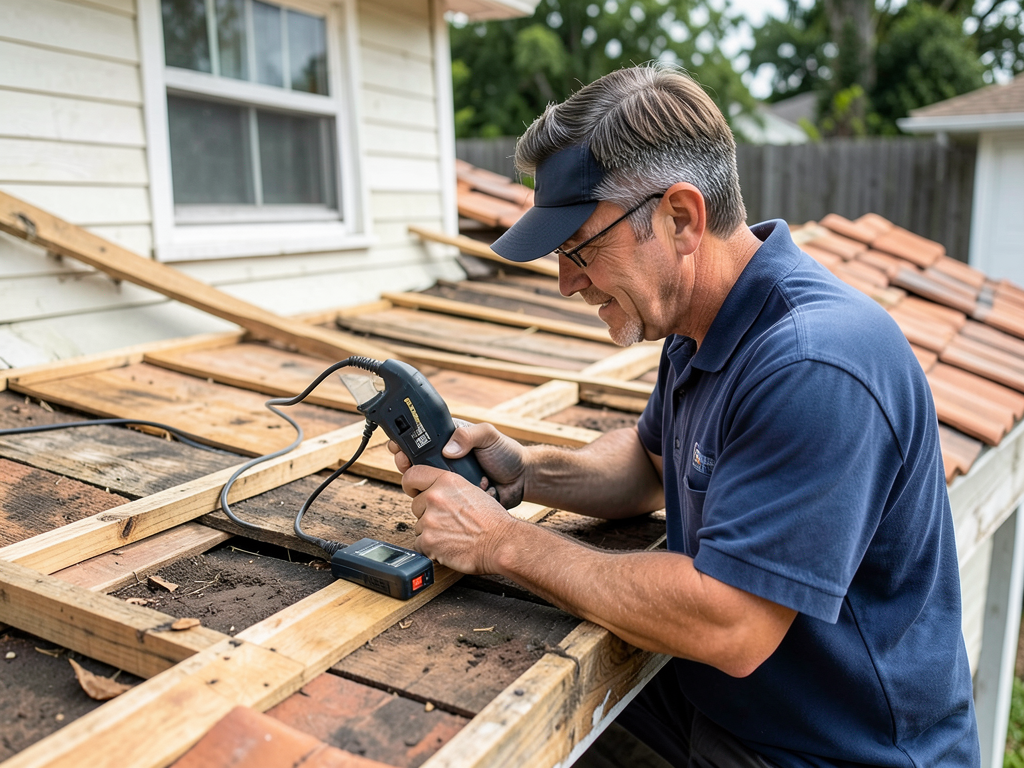
A technician uses a moisture meter to check the structural integrity of roof decking before tile installation assessment.. Read more about How to Tell if Your Roof Decking Is Rotting Without Removing the Tiles.
Miami-Dade County Building Codes & Load Requirements
Miami-Dade County enforces some of the strictest roofing codes in the nation through the High-Velocity Hurricane Zone provisions of the Florida Building Code. Section 1609.4 requires all roofs to withstand specific wind uplift pressures based on your home’s location and exposure category. Miami-Dade County Building Department.
For tile roofs, the dead load requirement starts at 15 pounds per square foot for clay and 12 pounds per square foot for concrete. Your existing structure must be designed to handle these loads plus a safety factor. Homes built before the 2004 Florida Building Code updates often fall short of these requirements.
The Miami-Dade Notice of Acceptance (NOA) system means every roofing material must pass rigorous testing for wind resistance, impact resistance, and water penetration. Your contractor must provide NOA documentation showing your chosen tile meets these standards before permit approval. The Best Metal Roofing Options for Homes in Key Biscayne.
Dead Load vs. Live Load: Can Your Trusses Handle It?
Engineers calculate roof capacity using two main load types. Dead load is the permanent weight of your roofing system—tiles, underlayment, decking, and all fasteners. Live load includes temporary forces like maintenance workers walking on the roof, accumulated rainwater, and debris buildup. Roofing Cutler Bay.
Your roof trusses must support both loads simultaneously. A typical residential truss system in West Miami handles 20 pounds per square foot dead load and 20 pounds per square foot live load. Heavy clay tiles can push you to the maximum capacity of older structures.
Truss spacing also matters. Most modern homes use 24-inch on-center spacing for asphalt shingles, but tile roofs often require 16-inch spacing for adequate support. Closer spacing means more trusses and stronger overall structure, but also higher installation costs.. Read more about How Modern Metal Roofing Enhances the Minimalist Aesthetic of Pinecrest Architecture.
Signs Your Current Roof Structure Needs Reinforcement
Several warning signs indicate your West Miami home might need structural upgrades before installing tile. Sagging roof lines, cracked interior drywall, or doors that stick in their frames suggest existing structural stress. These symptoms often worsen when you add heavy tile weight.. Read more about How to Repair Cracked Mortar and Loose Ridge Tiles on Your Cocoplum Estate.
Attic inspections reveal critical information. Look for spliced or notched rafters, rusted connectors, or signs of previous water damage. Termite damage in South Florida is another major concern—wood that looks solid might be compromised internally.
The age of your home matters significantly. Properties in West Miami from the 1960s through 1980s often used smaller dimensional lumber than today’s standards. A structural engineer can measure actual lumber sizes and calculate remaining load capacity.
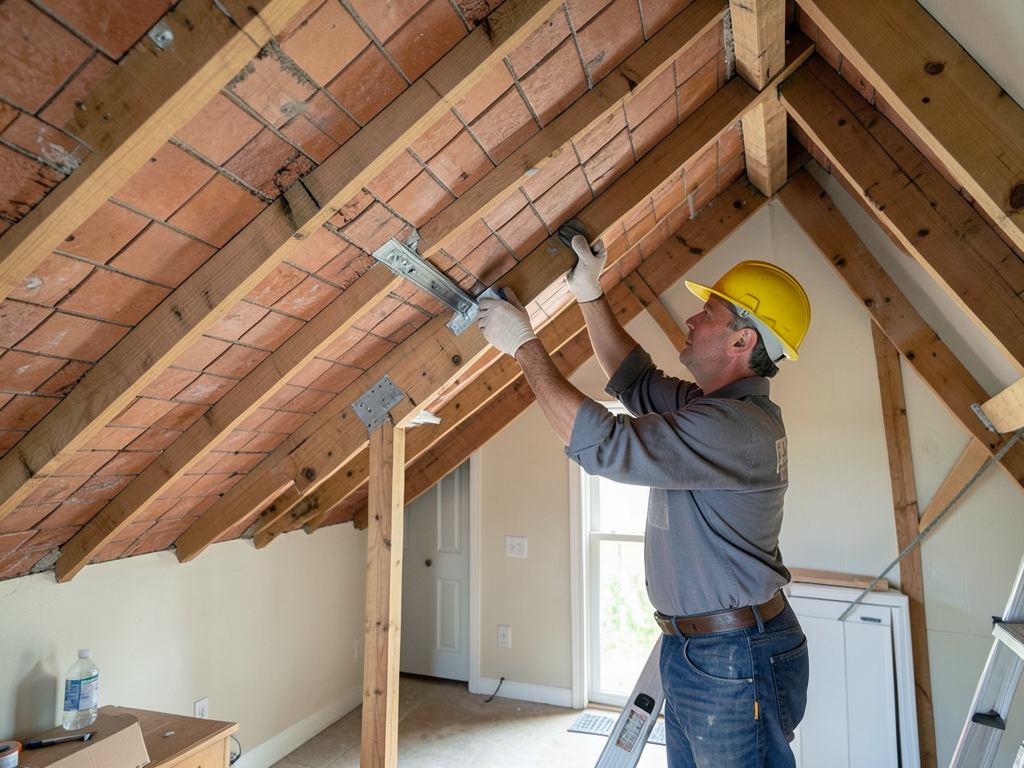
A structural engineer examines roof truss connections in an older West Miami home to assess tile installation readiness.
The Role of a Structural Engineer in Tile Installation
Miami-Dade County almost always requires a structural engineer’s letter when switching from lightweight to heavyweight roofing materials. The engineer evaluates your existing structure, calculates load capacities, and specifies any needed reinforcements.
The engineer’s report becomes part of your building permit application. It must show that your modified roof system meets all current code requirements for both dead and live loads. Without this certification, permit approval is unlikely.
Structural reinforcement might include adding sister rafters, installing new collar ties, or upgrading roof decking. In some cases, you might need to reinforce interior bearing walls to handle the redistributed loads. These modifications add to your project timeline and budget but ensure long-term safety.
Cost Factors for Tile Roof Installation in West Miami
Installing tile on a structure that needs no reinforcement typically costs 30 to 50 percent more than asphalt shingle installation. When structural work is required, total costs can double or triple due to engineering fees, permit costs, and construction time.
Engineering fees in Miami-Dade range from $800 to $2,500 depending on your home’s complexity. Permit fees for tile installations run $300 to $800. Structural reinforcement costs vary widely—adding support beams might cost $5,000 to $15,000, while complete truss replacement could exceed $30,000.
However, tile roofs last 50 years or more with proper maintenance, compared to 15 to 20 years for asphalt. The long-term value often justifies the higher upfront investment, especially when you factor in hurricane resistance and energy efficiency benefits. Protecting Your Home with Hurricane Rated Roofing Systems in Miami.
Alternatives If Your Structure Can’t Support Clay Tile
If structural reinforcement isn’t feasible or affordable, several alternatives give you the tile look without the weight. Lightweight concrete tiles weigh 30 to 40 percent less than traditional clay. Synthetic tiles made from recycled polymers can weigh as little as 4 pounds per square foot.
Metal roofing with a tile profile offers another option. Modern standing seam metal panels can be formed to mimic clay tile appearance while weighing just 1.5 to 2.5 pounds per square foot. These systems often qualify for additional insurance discounts in hurricane-prone areas.
Composite tiles combine recycled materials with advanced polymers to create durable, lightweight products that install directly over existing roofs in many cases. They typically cost more than traditional tile but less than structural reinforcement projects.
Getting Your West Miami Home Ready for Tile
The first step is scheduling a professional roof inspection with a contractor experienced in Miami-Dade’s permitting requirements. They’ll assess your current structure, discuss your tile preferences, and determine if engineering evaluation is needed. Professional Flat Roof Repair Services for Brickell Business Owners.
During the inspection, technicians check for signs of existing structural stress, measure attic spaces, and evaluate roof pitch. Low-slope roofs under 4:12 pitch often require additional waterproofing measures regardless of structural capacity.
If engineering is required, the process typically takes 2 to 3 weeks for assessment and report preparation. Permit processing in Miami-Dade can add another 4 to 8 weeks, depending on current workloads and your project’s complexity.
Protecting Your Investment Long-Term
Once your tile roof is installed, proper maintenance protects both your investment and your home’s structural integrity. Miami’s intense UV exposure and salt air can degrade underlayment over time, potentially leading to hidden moisture damage in your roof structure.
Annual inspections should check for cracked or broken tiles, damaged underlayment, and signs of moisture intrusion. Prompt repairs prevent small issues from becoming major structural problems. Many tile manufacturers require professional inspections every 2 to 3 years to maintain warranty coverage.
Quality installation makes a huge difference in long-term performance. Proper fastening, adequate underlayment, and correct flashing details prevent the water infiltration that leads to rot and structural weakening over decades.
Making the Right Decision for Your Home
The decision to install heavy clay tile involves balancing aesthetics, budget, and structural reality. For many West Miami homeowners, the beauty and durability of tile justify the investment in necessary structural upgrades. Others find that alternative materials better suit their circumstances. Why Homeowners in Coral Gables Choose Professional Tile Roof Installation.
Start with a professional assessment before falling in love with any specific tile product. Understanding your home’s structural capacity early in the process prevents disappointment and ensures you make informed decisions about your roofing investment.
Call (645) 231-4888 today to schedule your professional roof inspection and structural assessment. Our experienced team will evaluate your West Miami home’s readiness for heavy tile and provide clear recommendations for your specific situation.
Frequently Asked Questions
How much does a structural engineer cost in Miami-Dade?
Structural engineering assessments for tile roof installations typically cost between $800 and $2,500 in Miami-Dade County. The fee depends on your home’s size, complexity, and whether additional testing like moisture readings or load calculations are needed.
Can I install tile over my existing asphalt roof to avoid structural work?
No. Miami-Dade County building codes prohibit installing heavy tile over existing roofing materials. You must remove all existing roofing down to the deck, then assess the structure’s capacity before installing tile. This ensures proper evaluation and prevents hidden moisture problems.
How long does the permitting process take for tile roof installations?
Permit processing in Miami-Dade County typically takes 4 to 8 weeks for tile roof projects, depending on current workloads and whether engineering documentation is required. Complex projects needing structural modifications may take longer for review and approval.
What happens if I install tile without checking structural capacity?
Installing heavy tile on an inadequate structure can cause immediate sagging, cracked walls, or roof collapse. Even if failure isn’t immediate, the excess weight accelerates deterioration of existing structural components, leading to expensive repairs and potential safety hazards.
Are there weight limits for tile on older homes?
Yes. Homes built before 2002 often have lower structural load capacities than current code requires. A structural engineer must evaluate your specific home to determine if it can safely support tile weight or needs reinforcement to meet minimum 15 pounds per square foot dead load requirements.
{
“@context”: “https://schema.org”,
“@type”: “BlogPosting”,
“headline”: “Calculating if Your Older West Miami Home Can Support the Weight of Heavy Clay Tiles”,
“description”: “Discover if your West Miami home can handle heavy clay tile weight. Learn about structural load requirements, Miami-Dade codes, and when you need a structural engineer.”,
“wordCount”: 1715,
“datePublished”: “2026-05-20T08:24:00.000Z”,
“dateModified”: “2026-05-20T08:24:00.000Z”,
“inLanguage”: “en-US”,
“mainEntityOfPage”: {
“@type”: “WebPage”,
“@id”: “https://ironwoodroofingmiami.com”
},
“publisher”: {
“@type”: “LocalBusiness”,
“name”: “Ironwood Roofing Miami”,
“url”: “https://ironwoodroofingmiami.com”
},
“author”: {
“@type”: “Organization”,
“name”: “Ironwood Roofing Miami”,
“url”: “https://ironwoodroofingmiami.com”
},
“image”: {
“@type”: “ImageObject”,
“url”: “https://ironwoodroofingmiami.com/wp-content/uploads/2026/03/calculating-if-your-older-west-miami-home-can-supp-1.png”
}
}
{
“@context”: “https://schema.org”,
“@type”: “RoofingContractor”,
“name”: “Ironwood Roofing Miami”,
“url”: “https://ironwoodroofingmiami.com”,
“address”: {
“@type”: “PostalAddress”,
“addressLocality”: “Miami”
},
“areaServed”: {
“@type”: “City”,
“name”: “Miami”
}
}
{
“@context”: “https://schema.org”,
“@type”: “FAQPage”,
“mainEntity”: [
{
“@type”: “Question”,
“name”: “Dead Load vs. Live Load: Can Your Trusses Handle It?”,
“acceptedAnswer”: {
“@type”: “Answer”,
“text”: “Engineers calculate roof capacity using two main load types. Dead load is the permanent weight of your roofing system—tiles, underlayment, decking, and all fasteners. Live load includes temporary forces like maintenance workers walking on the roof, accumulated rainwater, and debris buildup. Roofing Cutler Bay.”
}
},
{
“@type”: “Question”,
“name”: “How much does a structural engineer cost in Miami-Dade?”,
“acceptedAnswer”: {
“@type”: “Answer”,
“text”: “Structural engineering assessments for tile roof installations typically cost between $800 and $2,500 in Miami-Dade County. The fee depends on your home’s size, complexity, and whether additional testing like moisture readings or load calculations are needed.”
}
},
{
“@type”: “Question”,
“name”: “Can I install tile over my existing asphalt roof to avoid structural work?”,
“acceptedAnswer”: {
“@type”: “Answer”,
“text”: “No. Miami-Dade County building codes prohibit installing heavy tile over existing roofing materials. You must remove all existing roofing down to the deck, then assess the structure’s capacity before installing tile. This ensures proper evaluation and prevents hidden moisture problems.”
}
},
{
“@type”: “Question”,
“name”: “How long does the permitting process take for tile roof installations?”,
“acceptedAnswer”: {
“@type”: “Answer”,
“text”: “Permit processing in Miami-Dade County typically takes 4 to 8 weeks for tile roof projects, depending on current workloads and whether engineering documentation is required. Complex projects needing structural modifications may take longer for review and approval.”
}
},
{
“@type”: “Question”,
“name”: “What happens if I install tile without checking structural capacity?”,
“acceptedAnswer”: {
“@type”: “Answer”,
“text”: “Installing heavy tile on an inadequate structure can cause immediate sagging, cracked walls, or roof collapse. Even if failure isn’t immediate, the excess weight accelerates deterioration of existing structural components, leading to expensive repairs and potential safety hazards.”
}
},
{
“@type”: “Question”,
“name”: “Are there weight limits for tile on older homes?”,
“acceptedAnswer”: {
“@type”: “Answer”,
“text”: “Yes. Homes built before 2002 often have lower structural load capacities than current code requires. A structural engineer must evaluate your specific home to determine if it can safely support tile weight or needs reinforcement to meet minimum 15 pounds per square foot dead load requirements.”
}
}
]
}
{
“@context”: “https://schema.org”,
“@type”: “BreadcrumbList”,
“itemListElement”: [
{
“@type”: “ListItem”,
“position”: 1,
“name”: “Home”,
“item”: “https://ironwoodroofingmiami.com”
},
{
“@type”: “ListItem”,
“position”: 2,
“name”: “Blog”,
“item”: “https://ironwoodroofingmiami.com/blog”
},
{
“@type”: “ListItem”,
“position”: 3,
“name”: “Calculating if Your Older West Miami Home Can Support the Weight of Heavy Clay Tiles”
}
]
}
{
“@context”: “https://schema.org”,
“@type”: “Service”,
“serviceType”: “Roofing”,
“provider”: {
“@type”: “LocalBusiness”,
“name”: “Ironwood Roofing Miami”,
“url”: “https://ironwoodroofingmiami.com”
},
“areaServed”: {
“@type”: “City”,
“name”: “Miami”
},
“description”: “Discover if your West Miami home can handle heavy clay tile weight. Learn about structural load requirements, Miami-Dade codes, and when you need a structural engineer.”
}