The Minimum Roof Life You Need Before Installing Solar Panels in South Miami
If you’re thinking about adding solar panels to your South Miami home, the first question isn’t about the panels—it’s about your roof. In Miami-Dade County, where hurricane winds regularly exceed 175 mph and salt air corrodes mounting hardware, installing solar on a roof that’s near the end of its life is a costly mistake. The minimum roof life you need before installing solar panels in South Miami is at least 10 to 15 years of remaining lifespan. Anything less risks structural failure, voided warranties, and expensive panel removal later. Miami-Dade Regulatory and Economic Resources.
Miami’s High Velocity Hurricane Zone (HVHZ) requirements mean every roof-mounted solar system must pass engineering review for uplift resistance. That starts with a roof that’s structurally sound. If your shingles are curling, your underlayment is brittle, or your decking shows signs of rot from Miami’s humidity, those weaknesses will be magnified once panels are bolted on. A compromised roof cannot safely support the added wind load of solar racking. Protecting Your Home with Hurricane Rated Roofing Systems in Miami.
Beyond structural concerns, Miami-Dade’s Notice of Acceptance (NOA) process for solar mounting systems only applies to roofs that meet current Florida Building Code standards. If your roof is older than 15 years and hasn’t been updated with a secondary water barrier or improved fastening, it may not qualify for permitting. That means you’d either need to re-roof first or risk having your solar project denied. Florida Solar Energy Center solar permitting guide.
The financial math also works against you. Removing and reinstalling solar panels to replace a roof later can cost $2,000 to $5,000 in labor alone. If your roof is already 12 to 20 years old, that expense is likely within the next five years. Installing solar on a newer roof—ideally with 20+ years of life remaining—protects your investment and avoids unnecessary disruption.. Read more about Why Solar Powered Attic Fans Are the Best Cooling Upgrade for Hialeah Homes.
So before you sign a solar contract, get a professional roofing inspection. A licensed Miami roofer can assess your remaining lifespan, check for code compliance, and identify any hidden damage from UV exposure or moisture intrusion. In South Miami’s climate, that step isn’t optional—it’s the foundation of a safe, long-lasting solar installation. Professional Flat Roof Repair Services for Brickell Business Owners.
Understanding Miami-Dade’s HVHZ Requirements for Solar Roofs
Miami-Dade County enforces the strictest wind and impact standards in the nation. Under the Florida Building Code, any solar installation in the HVHZ must meet ASCE 7-22 wind load standards, which require roofs to withstand uplift forces up to 190 mph. That means your roof deck, trusses, and attachment points must be engineered for those loads. If your roof was installed before 2002, it likely lacks the enhanced fastening required today.
During a site inspection, a structural engineer will look for signs of degraded sheathing, rusted fasteners, or compromised trusses. Even small weaknesses can fail under the added stress of solar panel racking. In many cases, older roofs need reinforcement before solar can be approved. This isn’t just a technicality—it’s a life-safety issue in a region where a single loose panel can become a projectile in a hurricane.
Another critical factor is the secondary water barrier. Since 2007, Miami-Dade has required this self-adhering membrane on all new roofs and major re-roofs. It prevents water intrusion if shingles are blown off. Without it, your roof may not pass the NOA review for solar, even if the structure appears sound. A roofer can verify whether your home has this layer by inspecting the attic or checking permit records.
The permitting process also involves FPL’s interconnection requirements. If your roof is too old or unstable, FPL may deny net metering approval until structural issues are resolved. That means your solar investment could be delayed or derailed by something as simple as a few weakened rafters or missing hurricane clips.
In short, Miami-Dade’s HVHZ rules make roof age and condition non-negotiable for solar. You can’t shortcut the process—and you shouldn’t try. A proper inspection now saves you from costly surprises later.
The 10-Year Rule: Why Roof Age Matters for Solar Installation
The 10-year rule isn’t arbitrary—it’s based on the typical lifespan of asphalt shingles in South Florida’s punishing climate. Miami’s combination of UV radiation, salt air, and tropical storms can age a roof twice as fast as in cooler regions. If your roof is already 10 to 15 years old, it’s likely approaching the end of its effective service life.
Solar panels themselves are warrantied for 20 to 25 years. If your roof fails before then, you’ll face the expensive process of uninstalling, storing, and reinstalling the panels. In many cases, the cost of that work approaches the price of a new roof. That’s why most solar contractors in Miami require at least 10 years of remaining roof life before they’ll install.
Age also affects material integrity. Older shingles become brittle and lose their flexibility, making them prone to cracking under the pressure of mounting brackets. Underlayment degrades from heat exposure, and sealant around flashings can fail. These aren’t always visible from the ground, which is why a professional inspection is essential.
Another consideration is insurance. Many Miami insurers will not renew a policy on a roof older than 20 years unless it passes a certified inspection. If your roof is borderline, adding solar could trigger a re-inspection and potentially void coverage if deficiencies are found. That’s a risk no homeowner should take.
Finally, there’s the issue of resale value. A home with a newer roof and solar panels is far more attractive to buyers than one with aging shingles and bolted-on panels. The 10-year rule isn’t just about safety—it’s about protecting your investment and maximizing return.
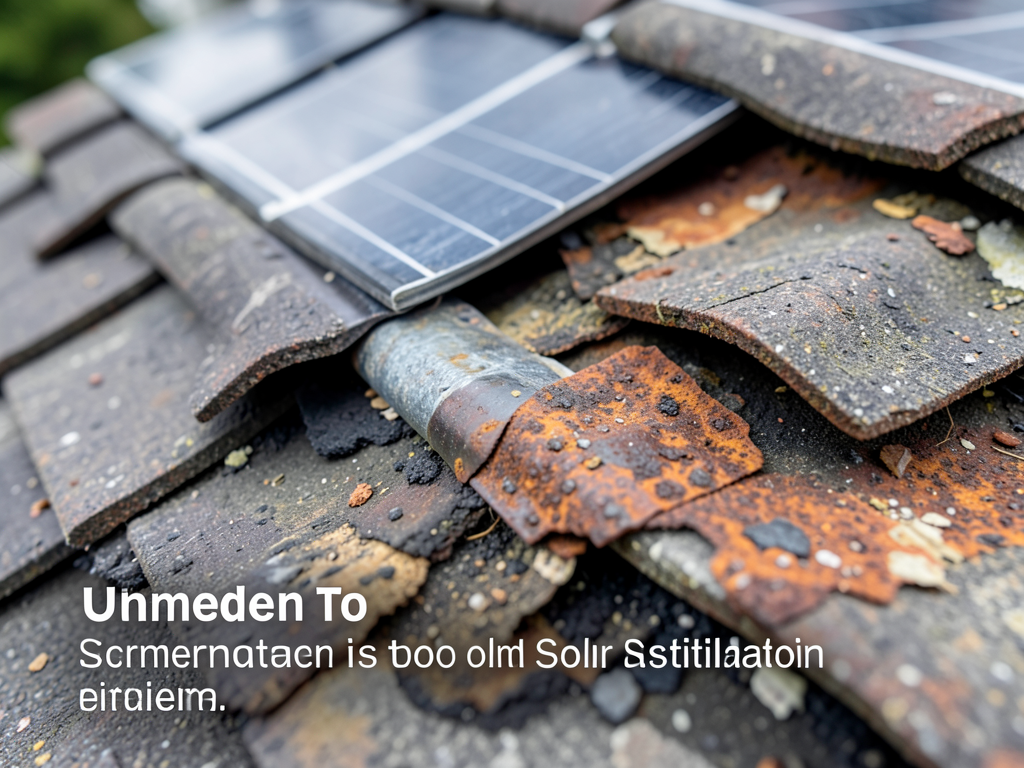
Image description: Close-up of a roof inspection showing curling shingles, rusted flashing, and deteriorated underlayment—common signs that a roof is too old for solar installation.
Best Roofing Materials for Solar Panels in South Florida
Not all roofing materials are created equal when it comes to supporting solar panels. In South Florida, where heat, humidity, and hurricane winds are constant threats, material choice affects both performance and longevity. The best options for solar compatibility are those that offer structural strength, durability, and resistance to the elements. The Best Metal Roofing Options for Homes in Key Biscayne.
Metal roofing is a top choice for solar in Miami. Standing seam metal allows for clamp-based mounting that avoids penetrations, reducing leak risk. Metal also reflects heat, lowering cooling costs, and it can last 40 to 70 years—far outlasting the solar panels themselves. In coastal areas, aluminum or Galvalume coatings resist salt corrosion better than steel. Roofing Cutler Bay.
Concrete and clay tiles are also popular in South Miami, especially in Mediterranean-style homes. While heavier than asphalt, they provide excellent wind resistance when properly installed. Solar mounting on tile requires special brackets to avoid breakage, but the result is a durable, hurricane-rated system. Tile roofs often last 30 to 50 years, making them a strong match for solar.
Asphalt shingles remain the most common roofing material, but they have the shortest lifespan—typically 15 to 25 years in Miami’s climate. If your home has a shingle roof, you’ll need to verify its age and condition before adding solar. Even a 12-year-old shingle roof may be nearing the end of its useful life.. Read more about How Modern Metal Roofing Enhances the Minimalist Aesthetic of Pinecrest Architecture.
Synthetic roofing materials, such as composite shake or slate, are gaining traction for their durability and aesthetic appeal. These products often carry Class A fire ratings and high wind ratings, making them suitable for solar. They also resist UV degradation better than traditional materials, which is critical in South Florida.
Finally, flat roofs—common in commercial and mid-century modern homes—require a different approach. Solar on flat roofs typically uses ballast mounts or low-profile racks to avoid penetrations. The roofing membrane must be in excellent condition, as leaks are harder to detect and repair under panels.
Navigating the Permitting Process with Miami-Dade RER
Getting a solar permit in Miami-Dade County involves more than just submitting plans. The Regulatory and Economic Resources (RER) department requires detailed structural calculations, product approvals, and sometimes even a site inspection before issuing a permit. If your roof is older or has undocumented repairs, this process can become a bottleneck.
The first step is a structural evaluation. A Florida-licensed engineer must certify that your roof can handle the added load of solar panels and withstand local wind speeds. This is especially critical for homes built before the 2002 Florida Building Code update, which introduced stricter fastening requirements.
Next comes the NOA review. Every solar mounting system must have a Miami-Dade NOA number, which certifies it meets hurricane standards. If your roof decking or trusses don’t meet current code, the engineer may require reinforcement before the system can be approved. This is where roof age becomes a deciding factor—older roofs often need upgrades to pass.
FPL’s interconnection application is another step. They’ll review your roof’s structural letter, electrical plans, and sometimes request photos or drone footage. If your roof is flagged for age or condition, FPL may delay approval until issues are resolved. This can add weeks or months to your timeline.
Finally, there’s the final inspection. A Miami-Dade building inspector will verify that the installation matches approved plans and that all attachments are secure. If your roof was flagged during the permitting phase, the inspector may require additional documentation or even halt the project until repairs are made.
Navigating this process is complex, but a local roofer familiar with HVHZ requirements can streamline it. They’ll know which materials, fasteners, and underlayment combinations are most likely to pass, saving you time and avoiding costly rework.
Financial Incentives and FPL Net Metering for Miami Residents
Going solar in South Miami isn’t just about energy savings—it’s also about leveraging financial incentives that make the investment more affordable. The federal solar tax credit, known as the Investment Tax Credit (ITC), currently allows you to deduct 30% of your solar installation costs from your federal taxes. For a $25,000 system, that’s a $7,500 credit.
Florida also offers a sales tax exemption on solar equipment, saving you an additional 6% upfront. There’s also a property tax exemption for the added home value from solar, so you won’t pay more in taxes even though your home is worth more. These incentives stack with local utility programs to reduce your net cost significantly.
FPL’s net metering program is a key benefit for Miami homeowners. It allows you to earn credit for excess electricity your panels generate, which you can use to offset nighttime or cloudy-day usage. In some months, you may even receive a credit on your bill. However, FPL requires a bi-directional meter and a passing inspection before you can connect to the grid. Why Homeowners in Coral Gables Choose Professional Tile Roof Installation.
One caveat: FPL’s net metering caps are set by state policy and can change. Currently, there’s no hard cap for residential systems, but commercial projects may face limits. If you’re planning a large installation, check current policies to ensure you’ll qualify for full credit.
Another incentive is the Solar Rights Law, which prevents homeowners’ associations from banning solar panels. While they can still impose reasonable restrictions on placement or appearance, they can’t outright deny your installation. This is especially relevant in gated communities like Coral Gables or Pinecrest, where aesthetic rules are strict.
Finally, some local governments offer expedited permitting for solar, reducing wait times. Miami-Dade’s RER department has been working to streamline solar reviews, but older roofs may still face delays if structural upgrades are needed. Planning ahead and addressing roof issues first can keep your project on track.
Frequently Asked Questions
How do I know if my roof is too old for solar?
Have a licensed roofer inspect it. If your roof is over 15 years old, shows signs of wear, or hasn’t been updated to current code, it’s likely too old for solar without repairs or replacement.
Can I install solar on a flat roof in South Miami?
Yes, but the roofing membrane must be in excellent condition. Flat roofs typically use ballast or low-profile mounts to avoid penetrations, and the structure must still meet HVHZ wind requirements.
What happens if I install solar on a roof that later needs replacement?
You’ll need to pay to remove and reinstall the panels, which can cost $2,000 to $5,000. That’s why it’s critical to ensure your roof has at least 10 to 15 years of life remaining before adding solar.
Does Miami-Dade require a special permit for solar?
Yes. You need a building permit from RER, and your mounting system must have a Miami-Dade NOA number. A structural engineer must also certify your roof can handle the added load.
Will adding solar void my roof warranty?
It can, if the installation damages the roofing material or violates manufacturer guidelines. Using a certified installer and proper mounting techniques helps protect your warranty.
How long does the solar permitting process take in Miami-Dade?
It typically takes 4 to 8 weeks, but older roofs or those needing structural upgrades can take longer. Starting with a roof inspection can prevent delays.
Can I get solar if my HOA has restrictions?
Florida’s Solar Rights Law prevents HOAs from banning solar, but they can still impose reasonable restrictions on placement or appearance. Check your HOA’s guidelines before proceeding.
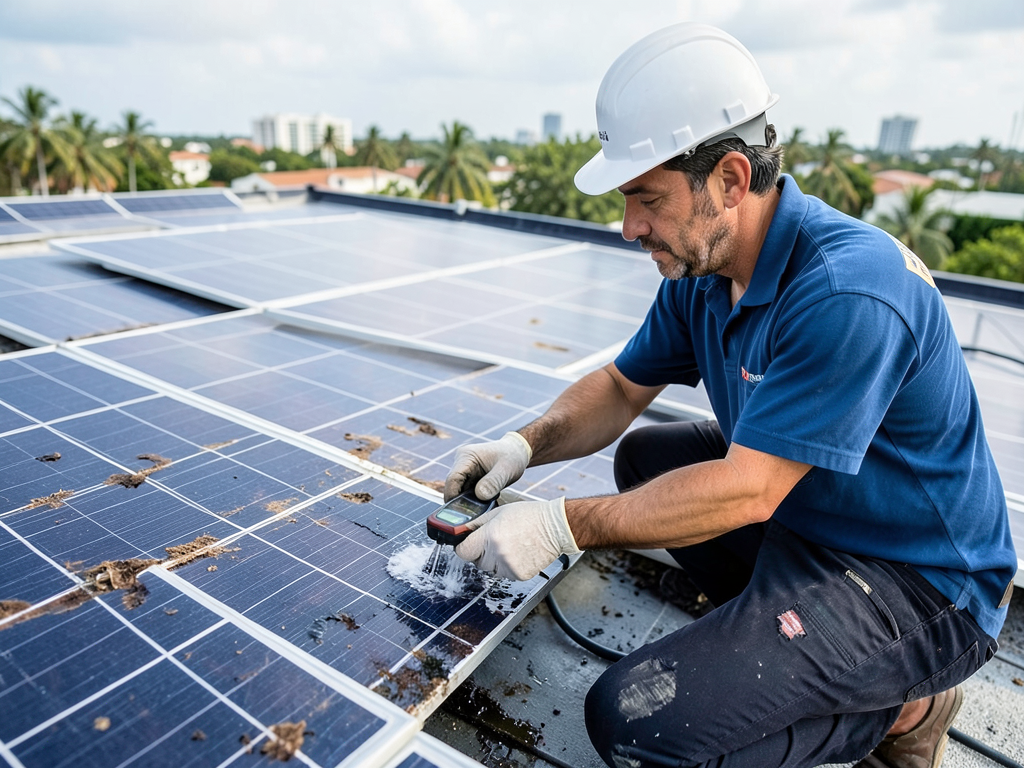
Image description: Technician using a moisture meter on a roof deck to check for hidden water damage—a critical step before approving a solar installation in Miami’s humid climate.
Image description: Side-by-side comparison of a 10-year-old asphalt shingle roof (curling, faded) versus a 2-year-old metal roof, illustrating why roof age matters for solar readiness.
Call (645) 231-4888 Today to Schedule Your Solar-Ready Roof Inspection
Don’t let an aging roof derail your solar plans. In South Miami’s hurricane-prone climate, the minimum roof life you need before installing solar panels isn’t just a recommendation—it’s a requirement for safety, code compliance, and long-term value. A quick inspection now can save you thousands in removal and reinstallation costs later.
Ironwood Roofing Miami has been helping homeowners across Cutler Bay, Pinecrest, and Coral Gables prepare their roofs for solar since 2010. We know the HVHZ codes, we understand the permitting process, and we’ll give you an honest assessment of your roof’s condition. If it’s not ready, we’ll show you exactly what needs to be done.
Call (645) 231-4888 today to schedule your inspection. We’ll check your roof’s age, structure, and code compliance so you can move forward with solar confidence. Don’t wait until the next storm or the next inspection—pick up the phone and call (645) 231-4888 before the next storm hits.
- Schedule a Professional Inspection
Contact a licensed Miami roofer to assess your roof’s age, condition, and code compliance. This is the first and most critical step.
- Review Structural Integrity
Ensure your roof deck, trusses, and fasteners meet current HVHZ wind load standards. Older homes may need reinforcement.
- Check for Code Compliance
Verify your roof has a secondary water barrier and meets Florida Building Code requirements for solar mounting.
- Address Repairs or Replacement
If your roof is too old or damaged, replace it before installing solar to avoid costly removal later.
- Obtain Permits and NOA Approvals
Work with a contractor familiar with Miami-Dade RER requirements to streamline the permitting process.
{
“@context”: “https://schema.org”,
“@type”: “BlogPosting”,
“headline”: “The Minimum Roof Life You Need Before Installing Solar Panels in South Miami”,
“description”: “Find out the minimum roof lifespan required for solar panel installation in South Miami. Learn about structural codes, hurricane requirements, and why roof age matters.”,
“wordCount”: 2551,
“datePublished”: “2026-05-28T06:47:00.000Z”,
“dateModified”: “2026-05-28T06:47:00.000Z”,
“inLanguage”: “en-US”,
“mainEntityOfPage”: {
“@type”: “WebPage”,
“@id”: “https://ironwoodroofingmiami.com”
},
“publisher”: {
“@type”: “LocalBusiness”,
“name”: “Ironwood Roofing Miami”,
“url”: “https://ironwoodroofingmiami.com”
},
“author”: {
“@type”: “Organization”,
“name”: “Ironwood Roofing Miami”,
“url”: “https://ironwoodroofingmiami.com”
},
“image”: {
“@type”: “ImageObject”,
“url”: “https://ironwoodroofingmiami.com/wp-content/uploads/2026/03/the-minimum-roof-life-you-need-before-installing-s-1.png”
}
}
{
“@context”: “https://schema.org”,
“@type”: “RoofingContractor”,
“name”: “Ironwood Roofing Miami”,
“url”: “https://ironwoodroofingmiami.com”,
“address”: {
“@type”: “PostalAddress”,
“addressLocality”: “Miami”
},
“areaServed”: {
“@type”: “City”,
“name”: “Miami”
}
}
{
“@context”: “https://schema.org”,
“@type”: “FAQPage”,
“mainEntity”: [
{
“@type”: “Question”,
“name”: “How do I know if my roof is too old for solar?”,
“acceptedAnswer”: {
“@type”: “Answer”,
“text”: “Have a licensed roofer inspect it. If your roof is over 15 years old, shows signs of wear, or hasn’t been updated to current code, it’s likely too old for solar without repairs or replacement.”
}
},
{
“@type”: “Question”,
“name”: “Can I install solar on a flat roof in South Miami?”,
“acceptedAnswer”: {
“@type”: “Answer”,
“text”: “Yes, but the roofing membrane must be in excellent condition. Flat roofs typically use ballast or low-profile mounts to avoid penetrations, and the structure must still meet HVHZ wind requirements.”
}
},
{
“@type”: “Question”,
“name”: “What happens if I install solar on a roof that later needs replacement?”,
“acceptedAnswer”: {
“@type”: “Answer”,
“text”: “You’ll need to pay to remove and reinstall the panels, which can cost $2,000 to $5,000. That’s why it’s critical to ensure your roof has at least 10 to 15 years of life remaining before adding solar.”
}
},
{
“@type”: “Question”,
“name”: “Does Miami-Dade require a special permit for solar?”,
“acceptedAnswer”: {
“@type”: “Answer”,
“text”: “Yes. You need a building permit from RER, and your mounting system must have a Miami-Dade NOA number. A structural engineer must also certify your roof can handle the added load.”
}
},
{
“@type”: “Question”,
“name”: “Will adding solar void my roof warranty?”,
“acceptedAnswer”: {
“@type”: “Answer”,
“text”: “It can, if the installation damages the roofing material or violates manufacturer guidelines. Using a certified installer and proper mounting techniques helps protect your warranty.”
}
},
{
“@type”: “Question”,
“name”: “How long does the solar permitting process take in Miami-Dade?”,
“acceptedAnswer”: {
“@type”: “Answer”,
“text”: “It typically takes 4 to 8 weeks, but older roofs or those needing structural upgrades can take longer. Starting with a roof inspection can prevent delays.”
}
},
{
“@type”: “Question”,
“name”: “Can I get solar if my HOA has restrictions?”,
“acceptedAnswer”: {
“@type”: “Answer”,
“text”: “Florida’s Solar Rights Law prevents HOAs from banning solar, but they can still impose reasonable restrictions on placement or appearance. Check your HOA’s guidelines before proceeding.”
}
}
]
}
{
“@context”: “https://schema.org”,
“@type”: “HowTo”,
“name”: “How to Prepare Your Roof for Solar Installation”,
“step”: [
{
“@type”: “HowToStep”,
“position”: 1,
“name”: “Schedule a Professional Inspection”,
“text”: “Contact a licensed Miami roofer to assess your roof’s age, condition, and code compliance. This is the first and most critical step.”
},
{
“@type”: “HowToStep”,
“position”: 2,
“name”: “Review Structural Integrity”,
“text”: “Ensure your roof deck, trusses, and fasteners meet current HVHZ wind load standards. Older homes may need reinforcement.”
},
{
“@type”: “HowToStep”,
“position”: 3,
“name”: “Check for Code Compliance”,
“text”: “Verify your roof has a secondary water barrier and meets Florida Building Code requirements for solar mounting.”
},
{
“@type”: “HowToStep”,
“position”: 4,
“name”: “Address Repairs or Replacement”,
“text”: “If your roof is too old or damaged, replace it before installing solar to avoid costly removal later.”
},
{
“@type”: “HowToStep”,
“position”: 5,
“name”: “Obtain Permits and NOA Approvals”,
“text”: “Work with a contractor familiar with Miami-Dade RER requirements to streamline the permitting process.”
}
],
“image”: “https://ironwoodroofingmiami.com/wp-content/uploads/2026/03/the-minimum-roof-life-you-need-before-installing-s-1.png”
}
{
“@context”: “https://schema.org”,
“@type”: “BreadcrumbList”,
“itemListElement”: [
{
“@type”: “ListItem”,
“position”: 1,
“name”: “Home”,
“item”: “https://ironwoodroofingmiami.com”
},
{
“@type”: “ListItem”,
“position”: 2,
“name”: “Blog”,
“item”: “https://ironwoodroofingmiami.com/blog”
},
{
“@type”: “ListItem”,
“position”: 3,
“name”: “The Minimum Roof Life You Need Before Installing Solar Panels in South Miami”
}
]
}
{
“@context”: “https://schema.org”,
“@type”: “Service”,
“serviceType”: “Roofing”,
“provider”: {
“@type”: “LocalBusiness”,
“name”: “Ironwood Roofing Miami”,
“url”: “https://ironwoodroofingmiami.com”
},
“areaServed”: {
“@type”: “City”,
“name”: “Miami”
},
“description”: “Find out the minimum roof lifespan required for solar panel installation in South Miami. Learn about structural codes, hurricane requirements, and why roof age matters.”
}