How to Spot Drywood Termite Damage in Your Little Haiti Roof Structure
Little Haiti’s historic wooden roof structures face unique threats from drywood termites. These pests silently destroy load-bearing components, compromising your home’s ability to withstand Miami’s hurricane-force winds. Within the first 100 words, you’ll learn exactly what to look for and when to call for professional help. Professional Flat Roof Repair Services for Brickell Business Owners.
Understanding Drywood Termites in Little Haiti’s Historic Homes
Drywood termites thrive in Little Haiti’s humid subtropical climate, particularly in homes built before 1980 along NE 2nd Avenue and NW 54th Street. These insects establish colonies within sound wood, feeding on cellulose without requiring soil contact. Unlike subterranean termites, they create intricate tunnel systems entirely within roof rafters, fascia boards, and soffits.. Read more about Repairing Exposed Rafters and Decorative Woodwork on Shenandoah Bungalow Roofs.
Little Haiti’s architectural heritage includes numerous single-story cottages with wooden roof structures dating back to the 1950s and 1960s. These homes often feature Dade County pine, a dense wood that drywood termites find particularly attractive. The combination of older construction methods, wood-to-ground contact in some cases, and Miami’s year-round warmth creates ideal conditions for termite colonies to flourish undetected for years.
According to the University of Florida’s Institute of Food and Agricultural Sciences, drywood termites cause millions in property damage annually across South Florida. The Florida Department of Agriculture and Consumer Services (FDACS) mandates regular inspections for properties in high-risk areas like Little Haiti, where the concentration of older wooden structures increases vulnerability. University of Florida IFAS Extension termite guide.
Visual Signs of Termite Damage in Roof Structures
Detecting termite damage requires knowing exactly what to look for in your attic space. The most obvious sign is frass – tiny wood-colored pellets that drywood termites push out of their galleries. These droppings accumulate in small piles beneath exit holes, often mistaken for sawdust or sand. In Little Haiti’s older homes, frass commonly appears in attic corners near roof vents or along rafters.
Hollow-sounding wood indicates advanced infestation. When you tap on rafters with a screwdriver, healthy wood produces a solid thud while termite-damaged wood sounds hollow or papery. This occurs because termites consume wood from the inside out, leaving only a thin veneer of surface wood intact. In severe cases, you can actually see light through the damaged areas when shining a flashlight.
Surface damage manifests as blistering or darkening wood. Termites create moisture as they digest cellulose, causing wood to darken and develop a blistered appearance. This damage often follows the grain pattern of the wood, creating distinctive lines that differ from water damage patterns. You might also notice maze-like tunnels just beneath the surface when scraping suspect areas.
Structural signs include sagging rooflines and cracked drywall ceilings. As termites weaken rafters and trusses, the roof loses its ability to maintain proper load distribution. This leads to visible sagging between support points, particularly noticeable along ridgelines or around chimneys. Interior signs include cracks in ceiling drywall where structural movement occurs.
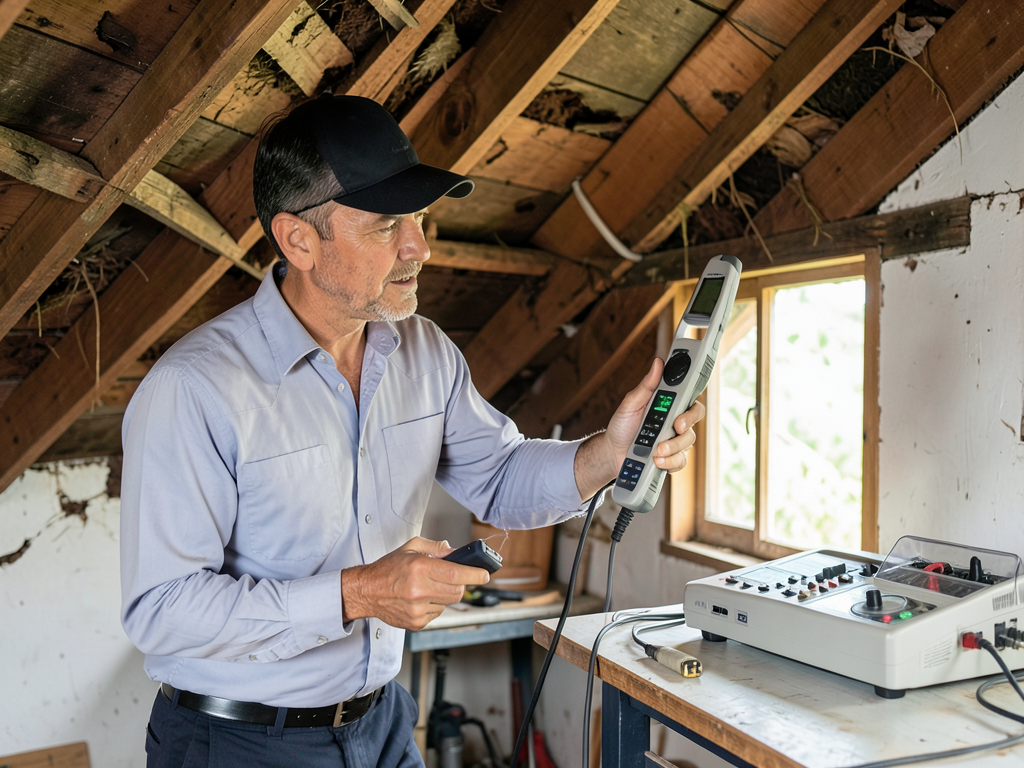
Image: Close-up photograph showing drywood termite frass accumulation in attic space, with exit holes visible in surrounding wood. Technical diagnostic image highlighting characteristic pellet size and color variations.
Structural Impact on Roof Integrity and Hurricane Resistance
Termite-damaged roof structures pose severe safety risks during Miami’s hurricane season. The Florida Building Code (FBC) Chapter 16 requires roof systems to withstand specific wind uplift pressures. When termites compromise rafter integrity, the roof’s ability to resist these forces diminishes dramatically. A single compromised rafter can reduce a roof’s wind resistance by up to 15%, according to structural engineering studies. Florida Department of Agriculture and Consumer Services.
Load-bearing calculations become critical when assessing termite damage. Each roof rafter must support its share of the total roof load, including dead loads (the roof’s weight), live loads (temporary weight like maintenance workers), and wind loads during storms. Termites reduce the cross-sectional area of wood members, decreasing their load-bearing capacity. A 2×6 rafter with 30% wood loss might only support 70% of its designed load.
Connection failures represent another major concern. Roof structures rely on metal connectors, hurricane straps, and proper nailing patterns to transfer loads to walls and foundations. Termite damage often occurs at these critical connection points, where moisture tends to accumulate. When wood around connectors deteriorates, the entire connection system can fail under stress. The Best Metal Roofing Options for Homes in Key Biscayne.
The Miami-Dade County Notice of Acceptance (NOA) program requires all roofing materials and structural components to meet specific performance standards. Termite damage can void NOA compliance, potentially affecting insurance coverage and property values. Insurance companies increasingly require WDO (Wood Destroying Organism) reports before issuing or renewing policies on older homes in Little Haiti. Roofing Cutler Bay.
Common Misconceptions About Termite Damage
Many Little Haiti homeowners mistake termite damage for water damage or normal aging. Water damage typically creates dark stains with clear boundaries and often affects larger areas uniformly. Termite damage appears more random, with localized hollow areas and characteristic frass piles. The presence of mud tubes, common with subterranean termites, indicates a different infestation type entirely. Why Homeowners in Coral Gables Choose Professional Tile Roof Installation.
Another misconception involves the relationship between termite damage and roof leaks. While termites can create openings that allow water intrusion, most roof leaks originate from separate issues like damaged flashing or deteriorated underlayment. However, once termites create structural weaknesses, wind-driven rain can more easily penetrate compromised areas.
Some homeowners believe that if they don’t see termites, they don’t have a problem. Drywood termites remain hidden within wood for most of their lifecycle. Swarmers (winged termites) only appear briefly during mating season, typically in spring or early summer. By the time you see swarmers, the colony has already been established for years.
DIY treatments often fail because they don’t address the full extent of damage. Surface treatments might kill exposed termites but miss colonies deep within rafters. Professional inspection using moisture meters, borescopes, and sometimes thermal imaging can reveal damage extent that’s invisible to the naked eye.
Diagnostic Testing Methods for Termite Detection
Professional termite inspection involves multiple diagnostic tools and techniques. The screwdriver test remains fundamental – probing wood surfaces to detect hollow areas or easily penetrated material. This simple test quickly identifies compromised areas but requires experience to distinguish between various types of wood deterioration.
Moisture meters help detect areas where termites thrive. These pests prefer wood with 10-20% moisture content. Readings above normal levels in attic spaces often indicate termite activity or conditions conducive to infestation. Modern pinless moisture meters can scan large areas without damaging wood surfaces.
Borescopes allow visual inspection inside wall cavities and rafter spaces without demolition. These small cameras, inserted through tiny holes, reveal termite galleries, frass accumulation, and live insect activity. Thermal imaging cameras detect temperature variations caused by termite activity, as active colonies generate heat through their metabolic processes.
Acoustic emission devices can detect the faint sounds of termites feeding within wood. These sensitive microphones pick up the clicking and chewing sounds termites make as they consume cellulose. While not standard in every inspection, these tools prove valuable for confirming active infestations in hard-to-reach areas.

Image: Professional inspector using moisture meter on attic rafter, demonstrating proper diagnostic technique for detecting termite damage in roof structures. Shows tool placement and reading interpretation.
Repair vs. Replacement: Making the Right Decision
Determining whether to repair or replace termite-damaged roof structures depends on several factors. The extent of damage, structural importance of affected members, and cost considerations all play crucial roles. Minor damage affecting less than 20% of a rafter’s cross-section might be repairable through sistering techniques.
Sistering involves attaching new lumber alongside damaged members to restore structural integrity. This method works well for rafters with localized damage but requires proper fastening techniques and consideration of load transfer. Sister boards must be adequately sized and securely attached using construction adhesive and structural screws or bolts.
Full replacement becomes necessary when damage exceeds 30-40% of structural members or affects critical load-bearing components. Trusses with extensive damage compromise the entire roof structure’s ability to distribute loads properly. In these cases, partial or complete roof replacement may be the only safe option.
Cost factors vary significantly between repair and replacement. Sistering individual rafters might cost $200-400 per member, while complete roof replacement for a typical Little Haiti home ranges from $15,000-30,000 depending on size and materials. Insurance coverage often depends on whether damage resulted from lack of maintenance or sudden occurrence.
Building permit requirements under Miami-Dade County regulations mandate permits for structural repairs affecting load-bearing elements. The permit process ensures repairs meet current building codes and are inspected for proper execution. Working without permits can result in fines and complications during future property sales.
Prevention Strategies for Little Haiti Homeowners
Preventing termite damage starts with eliminating conditions that attract these pests. Proper attic ventilation reduces moisture accumulation, making the environment less hospitable for termites. Ensure soffit vents remain unobstructed and consider adding ridge vents if your attic lacks adequate airflow.
Moisture control proves essential for termite prevention. Repair roof leaks promptly, ensure proper drainage away from foundation areas, and address any plumbing leaks in attic spaces. Termites thrive in moist environments, so eliminating excess moisture significantly reduces infestation risk.
Regular professional inspections every 12-24 months can catch infestations early when treatment costs remain minimal. Licensed pest control operators can identify early warning signs that homeowners might miss. Many companies offer annual inspection services that include detailed reports on structural conditions.
Treated lumber for repairs and renovations provides additional protection. Pressure-treated wood resists termite attack and can be used for fascia boards, soffits, and other exterior wood components. Borate treatments applied to existing wood structures create chemical barriers that deter termite colonization.
Landscaping choices affect termite vulnerability. Avoid wood mulch directly against foundation walls, maintain proper clearance between soil and wooden structures, and remove dead trees or stumps from your property. These simple steps reduce termite habitat near your home.
Professional Inspection and Treatment Options
Professional termite inspections involve comprehensive evaluation of all accessible wooden structures. Inspectors check attics, crawl spaces, exterior trim, and foundation areas for signs of infestation. They also assess conditions that might contribute to future problems, such as moisture issues or wood-to-ground contact.
Treatment options vary based on infestation extent and homeowner preferences. Localized treatments using termiticides can address specific problem areas effectively. These treatments involve injecting chemicals directly into termite galleries or applying them to wood surfaces. Fumigation becomes necessary for extensive drywood termite infestations affecting entire structures.
Heat treatment offers an alternative to chemical methods. This process involves raising the temperature of infested wood to levels lethal to termites. Heat treatment works well for localized infestations and avoids chemical exposure concerns, though it requires specialized equipment and professional execution.
Post-treatment monitoring ensures treatment effectiveness. Many pest control companies offer warranty programs that include annual inspections for several years after treatment. These programs provide peace of mind and catch any re-infestation early.
Coordination between pest control professionals and roofing contractors proves essential for comprehensive solutions. Pest control addresses the biological threat while roofing professionals handle structural repairs. This coordinated approach ensures both immediate and long-term protection of your roof structure.
Insurance Considerations and Documentation
Standard homeowners insurance policies typically exclude termite damage, considering it a maintenance issue rather than sudden accidental damage. However, some policies offer optional coverage for wood-destroying organisms. Understanding your coverage limits and exclusions helps plan for potential repair costs.
Documentation becomes crucial when dealing with insurance companies. Maintain records of professional inspections, treatments, and repairs. Photographs showing damage extent and repair work help substantiate claims if coverage disputes arise. WDO inspection reports from licensed professionals carry significant weight with insurance adjusters.
Preventive measures might qualify for insurance discounts in some cases. Installing termite baiting systems or using treated lumber for repairs could reduce premiums with certain carriers. Ask your insurance agent about available discounts for proactive termite prevention measures.
Real estate transactions involving termite damage require specific disclosures under Florida law. Sellers must disclose known termite damage and provide recent inspection reports to potential buyers. Undisclosed damage discovered during buyer inspections can derail sales or lead to legal complications.
Emergency Response to Termite Discovery
Discovering extensive termite damage requires immediate action to prevent further structural compromise. First, avoid disturbing active infestations, as this can cause termites to spread to unaffected areas. Document damage with photographs before any cleanup or repair work begins.
Contact licensed professionals immediately. Pest control operators can assess infestation extent and recommend treatment options. Structural engineers might be necessary for evaluating load-bearing capacity and determining safe repair methods. Roofing contractors experienced with termite damage can provide repair estimates and coordinate with other professionals.
Temporary stabilization might be necessary for severely damaged structures. This could involve installing temporary supports or tarping damaged areas to prevent water intrusion. Never attempt major structural modifications without professional guidance, as improper repairs can create dangerous conditions.
Consider the timing of repairs relative to Miami’s weather patterns. Hurricane season runs from June through November, making pre-season inspections and repairs particularly important. Scheduling major repairs during the dry season (December through May) often proves more practical and cost-effective. Protecting Your Home with Hurricane Rated Roofing Systems in Miami.
Long-term Maintenance and Monitoring
After addressing active infestations and completing necessary repairs, ongoing monitoring prevents future problems. Install termite monitoring stations around your property’s perimeter. These devices contain wood bait that attracts termites, allowing early detection of new colonies before they reach your home.
Maintain detailed records of all inspections, treatments, and repairs. This documentation helps track problem areas and proves valuable for future property transactions. Many homeowners create digital files with dates, service provider information, and observations from each inspection.
Seasonal awareness helps anticipate potential problems. Termite activity often increases during warm, humid periods. Pay extra attention to attic spaces and exterior wood during these times. Early detection of new activity can prevent extensive damage and reduce treatment costs.
Educate household members about termite signs. Teach family members to recognize frass, mud tubes, and other indicators. Early reporting of suspicious signs can lead to prompt professional evaluation before damage becomes severe.
Environmental and Health Considerations
Termite treatment chemicals raise environmental and health concerns for many homeowners. Modern termiticides undergo extensive testing for safety and environmental impact. Many products are designed to remain localized within treatment areas, minimizing exposure risks to occupants and beneficial organisms.
Alternative treatments like heat, freezing, or microwave technology offer chemical-free options for some situations. These methods work best for localized infestations and may require combination approaches for complete elimination. Discuss all available options with your pest control professional to find the best solution for your situation.
Proper ventilation during and after chemical treatments ensures safe re-occupancy of treated spaces. Follow all safety guidelines provided by treatment professionals, including recommended waiting periods before re-entering treated areas. Keep pets and children away from treatment zones until clearance is given.
Consider the environmental impact of repair materials. Many manufacturers now offer eco-friendly building materials with recycled content or sustainable sourcing. While these options might cost slightly more, they reduce environmental impact and often perform as well as traditional materials.
Cost Factors and Budgeting for Termite Damage
Termite damage repair costs vary widely based on damage extent, structural complexity, and local labor rates. Minor repairs might cost a few hundred dollars, while extensive structural repairs can exceed $20,000. Understanding cost factors helps homeowners budget appropriately and avoid surprises.
Inspection costs typically range from $75-300, depending on home size and inspection complexity. Professional WDO inspections required for real estate transactions might cost more but provide detailed documentation valuable for insurance and sales purposes.
Treatment costs depend on the method chosen and infestation extent. Localized chemical treatments might cost $500-1,500, while whole-structure fumigation can exceed $3,000-5,000. Heat treatment costs vary but often fall between chemical and fumigation options.
Repair costs depend on whether sistering or replacement is needed. Sistering individual rafters costs $200-400 each, while complete roof replacement for a typical home ranges from $15,000-30,000. Factor in permit fees, which can add several hundred dollars to project costs.
Consider long-term costs when choosing treatment and repair options. Cheaper initial treatments might prove less effective, leading to repeated expenses. Quality repairs using appropriate materials often cost more upfront but provide better long-term value and protection.
Building Code Compliance and Permit Requirements
Miami-Dade County enforces strict building code requirements for structural repairs, including those related to termite damage. The Florida Building Code (FBC) Chapter 6 covers roof structures, specifying minimum requirements for member sizing, fastening, and load capacity. Repairs must meet current code standards, even when replacing damaged original construction.
Permit requirements depend on repair extent and structural impact. Miami-Dade County requires permits for repairs affecting load-bearing elements, structural modifications, or work exceeding specific cost thresholds. The permitting process ensures repairs meet safety standards and are inspected by qualified building officials.
Wind load requirements become particularly important in Little Haiti’s hurricane-prone location. The Florida Building Code High-Velocity Hurricane Zone (HVHZ) provisions mandate specific fastening requirements, material strengths, and design considerations. Termite-damaged structures must be repaired to meet these enhanced standards, not just original construction levels.
Inspection requirements during repairs ensure proper execution. Building officials inspect work at various stages, including before covering repairs. These inspections verify that repairs meet code requirements and are properly executed. Skipping inspections or working without permits can result in fines and complications during future property transactions.
Frequently Asked Questions
How can I tell if I have drywood termites versus subterranean termites?
Drywood termites create distinctive frass (wood-colored pellets) and don’t require soil contact, while subterranean termites build mud tubes and nest in soil. Drywood termites typically infest higher locations like attics, while subterranean termites attack foundation areas and lower walls.
How much does it cost to repair termite-damaged roof rafters?
Repair costs vary widely based on damage extent. Minor sistering repairs might cost $200-400 per rafter, while extensive structural repairs or roof replacement can range from $5,000-30,000. Professional inspection is necessary to provide accurate estimates for your specific situation.
Will my homeowners insurance cover termite damage?
Most standard policies exclude termite damage as a maintenance issue. Some carriers offer optional wood-destroying organism coverage, but it’s uncommon. Check your specific policy or contact your insurance agent to understand your coverage options.
How often should I have my roof inspected for termites?
Professional inspections every 12-24 months are recommended for Little Haiti homes, with annual inspections being ideal. Older homes or those with previous termite history might benefit from more frequent inspections. Spring and early summer are good times for inspections as termite activity increases during these seasons.
Can I repair termite damage myself?
Minor cosmetic repairs might be DIY-appropriate, but structural repairs require professional expertise. Improper repairs can create safety hazards, especially in hurricane-prone areas. Always consult professionals for damage affecting load-bearing elements or when structural integrity is questionable.
Taking Action Against Termite Damage
Termite damage in Little Haiti’s historic roof structures requires prompt, professional attention. These pests can compromise your home’s structural integrity and hurricane resistance before you notice visible signs. Early detection through regular inspections and prompt professional intervention when problems arise protects your investment and ensures your family’s safety.
Don’t wait until sagging rooflines or interior ceiling cracks appear. If you suspect termite activity or want peace of mind about your roof’s condition, professional inspection provides the answers you need. Our experienced team understands Little Haiti’s unique housing stock and the specific challenges these historic structures face.
Call (645) 231-4888 today to schedule your comprehensive roof inspection. We’ll identify any termite damage, assess structural integrity, and provide clear recommendations for treatment and repair. Protect your Little Haiti home from these silent destroyers before the next hurricane season arrives.
Remember, termite damage only worsens over time. The longer you wait, the more expensive and extensive repairs become. Take action now to preserve your home’s structural integrity and maintain its value in Miami’s competitive real estate market.
Don’t let termites compromise your home’s safety and your family’s security. Pick up the phone and call (645) 231-4888 before the next storm hits. Your Little Haiti home deserves professional protection against these destructive pests.
Image: Before and after comparison of termite-damaged roof rafter repair, showing sistering technique and proper fastening methods. Demonstrates structural restoration and code compliance.
{
“@context”: “https://schema.org”,
“@type”: “BlogPosting”,
“headline”: “How to Spot Drywood Termite Damage in Your Little Haiti Roof Structure”,
“description”: “Learn to identify drywood termite damage in Little Haiti’s historic roofs with our expert guide. Protect your home’s structural integrity today.”,
“wordCount”: 3373,
“datePublished”: “2026-04-13T14:01:00.000Z”,
“dateModified”: “2026-04-13T14:01:00.000Z”,
“inLanguage”: “en-US”,
“mainEntityOfPage”: {
“@type”: “WebPage”,
“@id”: “https://ironwoodroofingmiami.com”
},
“publisher”: {
“@type”: “LocalBusiness”,
“name”: “Ironwood Roofing Miami”,
“url”: “https://ironwoodroofingmiami.com”
},
“author”: {
“@type”: “Organization”,
“name”: “Ironwood Roofing Miami”,
“url”: “https://ironwoodroofingmiami.com”
},
“image”: {
“@type”: “ImageObject”,
“url”: “https://ironwoodroofingmiami.com/wp-content/uploads/2026/03/how-to-spot-drywood-termite-damage-in-your-little-1.png”
}
}
{
“@context”: “https://schema.org”,
“@type”: “RoofingContractor”,
“name”: “Ironwood Roofing Miami”,
“url”: “https://ironwoodroofingmiami.com”,
“address”: {
“@type”: “PostalAddress”,
“addressLocality”: “Miami”
},
“areaServed”: {
“@type”: “City”,
“name”: “Miami”
}
}
{
“@context”: “https://schema.org”,
“@type”: “FAQPage”,
“mainEntity”: [
{
“@type”: “Question”,
“name”: “How can I tell if I have drywood termites versus subterranean termites?”,
“acceptedAnswer”: {
“@type”: “Answer”,
“text”: “Drywood termites create distinctive frass (wood-colored pellets) and don’t require soil contact, while subterranean termites build mud tubes and nest in soil. Drywood termites typically infest higher locations like attics, while subterranean termites attack foundation areas and lower walls.”
}
},
{
“@type”: “Question”,
“name”: “How much does it cost to repair termite-damaged roof rafters?”,
“acceptedAnswer”: {
“@type”: “Answer”,
“text”: “Repair costs vary widely based on damage extent. Minor sistering repairs might cost $200-400 per rafter, while extensive structural repairs or roof replacement can range from $5,000-30,000. Professional inspection is necessary to provide accurate estimates for your specific situation.”
}
},
{
“@type”: “Question”,
“name”: “Will my homeowners insurance cover termite damage?”,
“acceptedAnswer”: {
“@type”: “Answer”,
“text”: “Most standard policies exclude termite damage as a maintenance issue. Some carriers offer optional wood-destroying organism coverage, but it’s uncommon. Check your specific policy or contact your insurance agent to understand your coverage options.”
}
},
{
“@type”: “Question”,
“name”: “How often should I have my roof inspected for termites?”,
“acceptedAnswer”: {
“@type”: “Answer”,
“text”: “Professional inspections every 12-24 months are recommended for Little Haiti homes, with annual inspections being ideal. Older homes or those with previous termite history might benefit from more frequent inspections. Spring and early summer are good times for inspections as termite activity increases during these seasons.”
}
},
{
“@type”: “Question”,
“name”: “Can I repair termite damage myself?”,
“acceptedAnswer”: {
“@type”: “Answer”,
“text”: “Minor cosmetic repairs might be DIY-appropriate, but structural repairs require professional expertise. Improper repairs can create safety hazards, especially in hurricane-prone areas. Always consult professionals for damage affecting load-bearing elements or when structural integrity is questionable.”
}
}
]
}
{
“@context”: “https://schema.org”,
“@type”: “BreadcrumbList”,
“itemListElement”: [
{
“@type”: “ListItem”,
“position”: 1,
“name”: “Home”,
“item”: “https://ironwoodroofingmiami.com”
},
{
“@type”: “ListItem”,
“position”: 2,
“name”: “Blog”,
“item”: “https://ironwoodroofingmiami.com/blog”
},
{
“@type”: “ListItem”,
“position”: 3,
“name”: “How to Spot Drywood Termite Damage in Your Little Haiti Roof Structure”
}
]
}
{
“@context”: “https://schema.org”,
“@type”: “Service”,
“serviceType”: “Roofing”,
“provider”: {
“@type”: “LocalBusiness”,
“name”: “Ironwood Roofing Miami”,
“url”: “https://ironwoodroofingmiami.com”
},
“areaServed”: {
“@type”: “City”,
“name”: “Miami”
},
“description”: “Learn to identify drywood termite damage in Little Haiti’s historic roofs with our expert guide. Protect your home’s structural integrity today.”
}