How to Soundproof Your Miami Springs Roof Against Constant Airplane Noise
Living under Miami International Airport’s flight path means constant airplane noise can disrupt your sleep and daily life. The roar of jets taking off and landing creates sound levels that can exceed 85 decibels right over your roof. But there’s good news. Professional soundproofing solutions can reduce this noise by up to 70%, creating a quieter home environment without compromising your roof’s hurricane resistance or energy efficiency. Professional Flat Roof Repair Services for Brickell Business Owners.
Miami Springs residents face unique challenges. The combination of HVHZ (High Velocity Hurricane Zone) building requirements and the need for effective sound dampening means standard roofing materials won’t solve the problem. You need specialized solutions that work with Miami-Dade’s strict building codes while actually blocking the low-frequency rumble that penetrates most residential structures. Miami-Dade County Building Code Compliance.
The first step is understanding that airplane noise isn’t like regular traffic sounds. Jet engines produce low-frequency vibrations that travel through your roof decking and into your living spaces. These vibrations can make your walls and windows rattle, creating a constant background hum that’s exhausting over time. Professional soundproofing addresses both the airborne sound and the structure-borne vibrations that standard insulation simply cannot stop. The Best Metal Roofing Options for Homes in Key Biscayne.
Before we dive into solutions, it’s important to know that effective soundproofing often improves your home’s energy efficiency. Many of the same materials that block sound also provide excellent thermal insulation, potentially lowering your cooling costs in Miami’s hot climate. This dual benefit makes soundproofing an investment that pays for itself in multiple ways. Roofing Cutler Bay.
Why Soundproofing Matters for Miami Springs Homeowners
Miami Springs sits directly under one of MIA’s busiest flight paths. Planes fly overhead every 2-3 minutes during peak hours, creating sound levels that can reach 90 decibels. That’s as loud as a motorcycle engine running right outside your window. Over time, this constant noise exposure can lead to stress, sleep disruption, and even hearing damage.
The problem gets worse during Miami’s summer thunderstorms. Heavy rain on standard roofing materials can add another 10-15 decibels to the noise level, creating a perfect storm of sound pollution. Many Miami Springs homes were built before modern soundproofing techniques existed, meaning their roofs act like giant sound amplifiers rather than barriers.
Beyond the noise itself, there’s the issue of property values. Homes in high-noise areas typically sell for 10-15% less than comparable properties in quieter neighborhoods. Soundproofing your roof can help maintain your home’s market value while improving your quality of life. Plus, many insurance companies now offer premium discounts for homes with certified soundproofing installations.
The Miami-Dade County noise ordinance actually sets specific decibel limits for residential areas, though enforcement is rare due to the airport’s federal protections. However, meeting these standards can be important for future home sales or refinancing. A professionally soundproofed roof can help you stay well below these limits, even during the busiest flight times.

Technical Solutions: How We Reduce Roof Noise
Effective roof soundproofing requires a multi-layered approach that addresses both airborne sound and structure-borne vibrations. The most successful installations combine mass, damping, and decoupling techniques to create a comprehensive sound barrier system that works with your existing roof structure.
Mass is the first line of defense against noise. Heavier materials naturally block more sound than lighter ones. For roofing applications, this means adding layers of dense materials like Mass Loaded Vinyl (MLV) or specialized acoustic underlayment beneath your existing roof surface. These materials can add 2-3 pounds per square foot of sound-blocking mass without significantly increasing your roof’s weight.
Damping is the next critical component. This involves using materials that convert sound energy into heat energy, effectively absorbing the vibrations before they can travel through your home. Green Glue damping compound and specialized acoustic sealants create a viscoelastic layer that stops sound waves in their tracks. This is particularly important for the low-frequency rumble of jet engines that standard insulation cannot address.
Decoupling separates your roof structure from your home’s interior, preventing vibrations from traveling through the building frame. This can involve installing resilient channels, isolation clips, or specialized mounting systems that create a physical break between the roof and your ceiling. Decoupling is especially effective for metal roofs, which can act like giant soundboards without proper isolation. EPA Noise Pollution Information.
The final piece is proper sealing. Even the best soundproofing materials fail if there are gaps or leaks in the system. Professional installers use acoustic caulks, gaskets, and specialized tapes to seal every penetration point, ensuring that sound cannot find alternate paths into your living spaces. This attention to detail is what separates professional installations from DIY attempts.
Mass Loaded Vinyl (MLV) Installations
Mass Loaded Vinyl is a heavy, flexible material that adds significant sound-blocking mass to your roof assembly. At 1-2 pounds per square foot, MLV creates a dense barrier that stops most airborne noise from penetrating your home. The material is typically installed between your roof decking and underlayment, creating an invisible sound barrier that doesn’t change your roof’s appearance.
MLV works by reflecting sound waves back toward their source rather than allowing them to pass through. The material’s high density means that sound energy is absorbed and dissipated as heat rather than transmitted into your home. For airplane noise specifically, MLV is particularly effective at blocking the mid to high-frequency components of jet engine sounds.
Installation requires careful attention to detail. Seams must overlap by at least 2 inches and be sealed with specialized acoustic tape. Penetrations for vents, skylights, and other roof features need custom-fitted pieces with sealed edges. Any gaps in the MLV layer will significantly reduce the overall soundproofing effectiveness.
The material also provides excellent thermal benefits. MLV acts as a radiant barrier, reflecting heat away from your home during Miami’s hot summers. This can reduce your cooling costs by 10-15% while simultaneously blocking noise. The combination of sound and thermal benefits makes MLV one of the most cost-effective soundproofing solutions available.
Open-Cell vs. Closed-Cell Spray Foam Insulation
Spray foam insulation offers excellent soundproofing capabilities while also providing superior thermal performance. Open-cell spray foam is softer and more flexible, making it better at absorbing sound waves. It typically provides an STC rating of 39-42 when installed at 3-4 inches thick. The material’s open structure allows it to trap sound energy and convert it to heat.
Closed-cell spray foam is denser and provides better structural support. It offers an STC rating of 45-50 at similar thicknesses. The material’s closed-cell structure makes it more effective at blocking low-frequency sounds like airplane rumble. However, it’s also more expensive and requires professional installation to ensure proper application.
For Miami’s climate, closed-cell foam often provides better value despite the higher upfront cost. The material’s higher R-value means better energy efficiency, and its moisture resistance is crucial in South Florida’s humid environment. Closed-cell foam also adds structural strength to your roof assembly, which can be beneficial in hurricane-prone areas. Protecting Your Home with Hurricane Rated Roofing Systems in Miami.
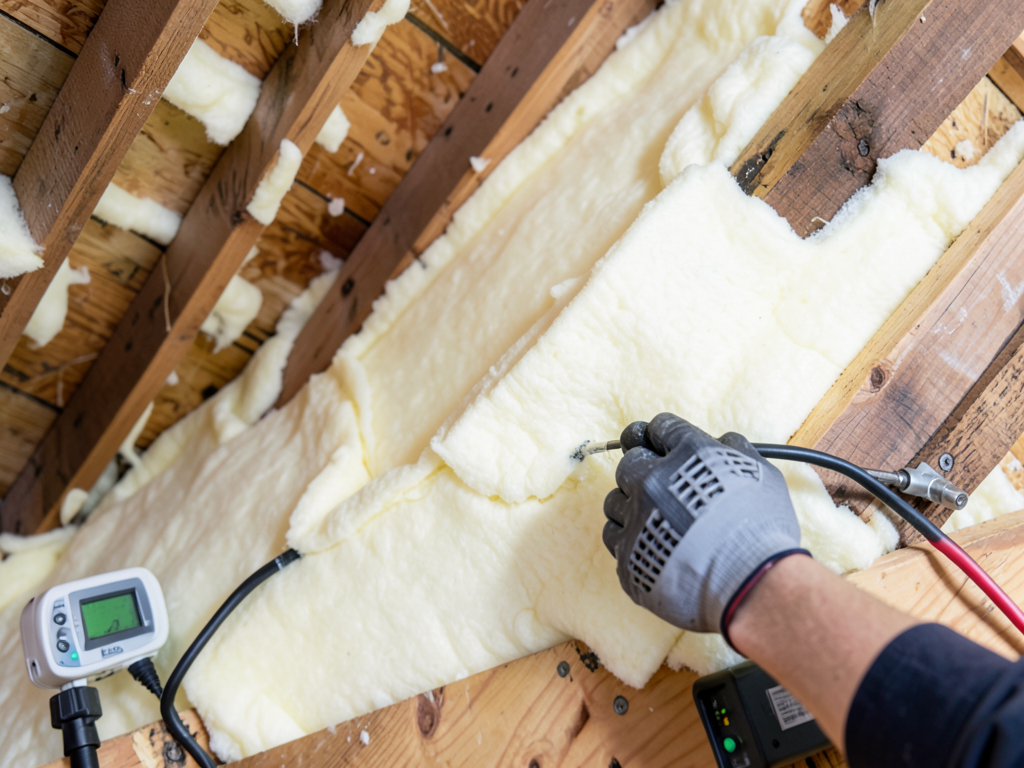
The installation process involves spraying the foam directly onto your roof decking from inside your attic. The foam expands to fill all gaps and cracks, creating an airtight seal that blocks both sound and air infiltration. This comprehensive coverage is what makes spray foam superior to traditional batt insulation for soundproofing applications.
Sound-Dampening Underlayments and Shingles
Modern acoustic underlayments provide an additional layer of sound protection beneath your roof surface. These materials are specifically engineered to absorb impact noise from rain and reduce airborne sound transmission. High-quality acoustic underlayments can add 3-5 STC points to your roof assembly, making a noticeable difference in overall noise levels.
Modified bitumen underlayments with rubberized asphalt cores offer excellent sound dampening properties. These materials remain flexible in Miami’s heat while providing consistent noise reduction across a wide frequency range. Some premium underlayments include integrated vapor barriers, addressing both noise and moisture concerns in one product.
When it comes to shingles, architectural asphalt shingles with sound-dampening backing provide better noise reduction than standard three-tab shingles. The additional mass and specialized backing materials can reduce impact noise by up to 30%. For maximum effectiveness, these shingles should be installed over acoustic underlayment rather than standard roofing felt.
Clay and concrete tiles offer natural sound dampening due to their mass and density. A properly installed tile roof can reduce sound transmission by 40-50% compared to asphalt shingles. However, tile installation requires specialized expertise and must meet Miami-Dade’s strict wind uplift requirements. The added weight also means your roof structure may need reinforcement.
Decoupling Techniques for Metal Roofs
Metal roofs present unique soundproofing challenges. Without proper isolation, metal panels can act like giant soundboards, amplifying rather than blocking noise. Decoupling techniques create a physical break between the metal surface and your home’s structure, preventing vibrations from traveling through the building frame.
Resilient channel systems are one of the most effective decoupling methods. These metal channels attach to your roof rafters but are isolated from the metal panels by rubber or neoprene bushings. The channels absorb vibrations before they can reach your home’s structure, reducing noise transmission by up to 60%.
Isolation clips provide another decoupling option. These specialized fasteners use rubber or silicone components to create a vibration-absorbing connection between your metal roof and the underlying structure. Each clip acts as a mini shock absorber, preventing sound energy from traveling through the building frame.
For maximum effectiveness, decoupling should be combined with mass-loaded barriers and acoustic underlayment. This three-layer approach addresses all three aspects of sound transmission: mass blocks airborne sound, decoupling prevents structure-borne vibrations, and acoustic materials absorb remaining energy. The result is a roof assembly that can reduce noise levels by 70% or more.
Understanding STC Ratings and Noise Reduction Levels
Sound Transmission Class (STC) ratings measure how well a building assembly blocks airborne sound. The higher the STC rating, the better the material is at preventing sound transmission. For residential roofing, STC ratings typically range from 25 for basic asphalt shingles to 55+ for comprehensive soundproofing systems.
A standard Miami Springs roof with asphalt shingles might have an STC rating of 25-30. This means you’ll still hear loud conversations and basic traffic noise, but it won’t be overwhelming. Adding a single layer of MLV can boost this to STC 35-40, significantly reducing airplane noise while maintaining your roof’s appearance.
For serious noise problems, a complete soundproofing system with multiple layers can achieve STC ratings of 45-55. At these levels, you’ll barely hear airplane noise during the day and won’t hear it at all during normal conversation levels. The investment in comprehensive soundproofing pays off in improved quality of life and potentially higher property values.
It’s important to understand that STC ratings don’t tell the whole story. Low-frequency sounds like airplane rumble require different testing and measurement than high-frequency sounds like voices or traffic. Professional soundproofing companies use specialized equipment to measure both STC and impact sound transmission class (IIC) ratings to ensure comprehensive noise reduction.
The relationship between STC ratings and perceived loudness isn’t linear. An increase of 10 STC points typically results in a perceived noise reduction of about 50%. This means going from STC 30 to STC 40 cuts the perceived noise level in half, while going from STC 40 to STC 50 cuts it in half again.
Miami Building Codes & Hurricane Resilience: Soundproofing Without Compromising Safety
Miami-Dade County enforces some of the strictest building codes in the nation, particularly in the HVHZ (High Velocity Hurricane Zone). Any soundproofing solution must meet these requirements while still providing effective noise reduction. The good news is that many modern soundproofing materials are specifically engineered to meet or exceed these standards.
The Florida Building Code requires all roofing materials to have Miami-Dade Notice of Acceptance (NOA) certification. This means that any soundproofing underlayment, insulation, or barrier system must be tested and approved for use in hurricane-prone areas. Professional installers must follow specific installation methods outlined in the NOA documents to maintain code compliance.
Secondary water barriers are mandatory for all re-roofing projects in Miami-Dade County. These barriers provide an additional layer of protection against water infiltration during hurricanes. Many acoustic underlayments also serve as secondary water barriers, allowing you to meet both noise reduction and code requirements with a single product.
Wind uplift resistance is another critical consideration. Miami-Dade requires roofing assemblies to withstand winds up to 180 mph in some areas. Soundproofing materials must be installed in a way that doesn’t compromise the roof’s ability to resist these forces. This often means using specialized fasteners and installation patterns that distribute wind loads properly.
The Florida Building Code Section 15 specifically addresses roofing assemblies and their performance requirements. Any soundproofing modifications must maintain or improve the roof’s compliance with these standards. This includes maintaining proper ventilation, ensuring adequate drainage, and preserving the roof’s structural integrity.
Insurance companies in Florida often require documentation of code compliance for roofing projects. A professionally installed soundproofing system that meets all HVHZ requirements can actually help you maintain or improve your insurance coverage. Some companies even offer premium discounts for roofs that exceed minimum code requirements.
Our Miami Service Areas
We provide professional soundproofing services throughout the greater Miami area, with special expertise in communities affected by airport noise. Our service area includes Miami Springs, where we’ve helped dozens of homeowners reduce airplane noise while maintaining hurricane-resistant roofing systems. Why Homeowners in Coral Gables Choose Professional Tile Roof Installation.
In Coral Gables, we work with historic homes that require special consideration for both noise reduction and architectural preservation. The area’s older construction methods often benefit significantly from modern soundproofing techniques that don’t alter the home’s exterior appearance.
Doral residents face similar airport noise challenges, particularly in neighborhoods closest to MIA. Our soundproofing solutions for Doral homes focus on maximizing noise reduction while working within the constraints of various architectural styles, from Mediterranean to contemporary.
Brickell’s high-rise condominiums present unique soundproofing opportunities. We specialize in roof deck and penthouse soundproofing, where airplane noise can be particularly problematic due to the elevated position and large roof areas.
Key Biscayne homeowners often deal with both airport noise and coastal wind issues. Our soundproofing solutions for this area incorporate salt-air resistant materials and enhanced hurricane protection while still providing excellent noise reduction.
Throughout all our service areas, we maintain strict compliance with local building codes and HOA requirements. Every installation includes proper permitting, inspections, and documentation to ensure your investment is protected and your home remains fully compliant with all regulations.
Frequently Asked Questions
How much does roof soundproofing cost in Miami?
Roof soundproofing costs in Miami typically range from $8 to $25 per square foot, depending on the materials and complexity of the installation. A basic soundproofing upgrade with MLV and acoustic underlayment might cost $8-12 per square foot, while a comprehensive system with spray foam insulation and decoupling can reach $20-25 per square foot. Most homeowners spend between $5,000 and $15,000 for a complete installation on an average-sized home. The exact cost depends on your roof’s current condition, the level of noise reduction desired, and whether you need to address any underlying structural issues.
Will soundproofing my roof affect my home’s energy efficiency?
Yes, soundproofing your roof often improves your home’s energy efficiency significantly. Many soundproofing materials, particularly spray foam insulation and acoustic underlayments, provide excellent thermal insulation. Homeowners typically see 10-20% reductions in their cooling costs after soundproofing installation. The materials that block sound also block heat transfer, keeping your home cooler in Miami’s hot climate. Some soundproofing systems can pay for themselves through energy savings within 3-5 years, making them a smart investment beyond just noise reduction.
How long does a roof soundproofing installation take?
Most roof soundproofing installations take 2-4 days to complete, depending on the size of your home and the complexity of the system being installed. A basic MLV and underlayment installation might be completed in two days, while a comprehensive system with spray foam insulation could take three to four days. The installation process typically involves removing your existing roof surface, installing the soundproofing materials, and then replacing the roofing material. Your home remains protected throughout the process with temporary coverings and weatherproofing measures.
Do I need to replace my entire roof to add soundproofing?
In most cases, yes, you’ll need to replace your roof surface to add comprehensive soundproofing. Soundproofing materials are typically installed between your roof decking and the outer roofing material, which requires removing the existing surface. However, if your roof is relatively new (less than 5 years old) and in good condition, there may be options for adding soundproofing from inside your attic, though this is generally less effective than a complete roof-based installation.
Will soundproofing make my home completely silent?
No soundproofing system can make your home completely silent, but professional installations can reduce airplane noise by 60-80%. You’ll still hear some noise during extremely loud events like planes taking off directly overhead, but normal conversation levels inside your home will mask most remaining sounds. The goal is to reduce noise to a comfortable level where it no longer disrupts your sleep or daily activities. Most homeowners report that after soundproofing, they only notice airplane noise when they specifically listen for it.
Get Your Free Miami Springs Roof Soundproofing Assessment
Living with constant airplane noise doesn’t have to be your reality. Our team of HVHZ-certified roofing professionals can assess your home’s specific noise problems and design a customized soundproofing solution that meets both your noise reduction goals and Miami-Dade’s strict building requirements.
We start with a comprehensive noise assessment using professional sound level meters to measure your current decibel levels and identify the specific frequencies causing problems. This data-driven approach ensures we recommend the right combination of materials and techniques for your unique situation.
Our installations come with detailed documentation showing compliance with all local building codes, including Miami-Dade NOA certifications and wind uplift ratings. We handle all permitting and inspections, so you can focus on enjoying your quieter home while we handle the technical details.
Don’t let another day of airplane noise disrupt your life. Call (645) 231-4888 today to schedule your free Miami Springs roof soundproofing assessment. Our team will show you exactly how we can reduce your noise levels while improving your home’s energy efficiency and maintaining full code compliance. The peace and quiet you deserve is just a phone call away.
Pick up the phone and call (645) 231-4888 before the next flight path shift makes your noise problem even worse. Our consultations are free, and we’ll provide you with a detailed proposal showing exactly what we recommend and why. Take the first step toward a quieter, more comfortable home today.
{
“@context”: “https://schema.org”,
“@type”: “BlogPosting”,
“headline”: “How to Soundproof Your Miami Springs Roof Against Constant Airplane Noise”,
“description”: “Learn how to reduce airplane noise from Miami International Airport with soundproofing solutions that meet HVHZ building codes. Get a free acoustic roof inspection today.”,
“wordCount”: 3129,
“datePublished”: “2026-03-29T06:18:00.000Z”,
“dateModified”: “2026-03-29T06:18:00.000Z”,
“inLanguage”: “en-US”,
“mainEntityOfPage”: {
“@type”: “WebPage”,
“@id”: “https://ironwoodroofingmiami.com”
},
“publisher”: {
“@type”: “LocalBusiness”,
“name”: “Ironwood Roofing Miami”,
“url”: “https://ironwoodroofingmiami.com”
},
“author”: {
“@type”: “Organization”,
“name”: “Ironwood Roofing Miami”,
“url”: “https://ironwoodroofingmiami.com”
},
“image”: {
“@type”: “ImageObject”,
“url”: “https://ironwoodroofingmiami.com/wp-content/uploads/2026/03/how-to-soundproof-your-miami-springs-roof-against-1.png”
}
}
{
“@context”: “https://schema.org”,
“@type”: “RoofingContractor”,
“name”: “Ironwood Roofing Miami”,
“url”: “https://ironwoodroofingmiami.com”,
“address”: {
“@type”: “PostalAddress”,
“addressLocality”: “Miami”
},
“areaServed”: {
“@type”: “City”,
“name”: “Miami”
}
}
{
“@context”: “https://schema.org”,
“@type”: “FAQPage”,
“mainEntity”: [
{
“@type”: “Question”,
“name”: “How much does roof soundproofing cost in Miami?”,
“acceptedAnswer”: {
“@type”: “Answer”,
“text”: “Roof soundproofing costs in Miami typically range from $8 to $25 per square foot, depending on the materials and complexity of the installation. A basic soundproofing upgrade with MLV and acoustic underlayment might cost $8-12 per square foot, while a comprehensive system with spray foam insulation and decoupling can reach $20-25 per square foot. Most homeowners spend between $5,000 and $15,000 for a complete installation on an average-sized home. The exact cost depends on your roof’s current condition, the level of noise reduction desired, and whether you need to address any underlying structural issues.”
}
},
{
“@type”: “Question”,
“name”: “Will soundproofing my roof affect my home’s energy efficiency?”,
“acceptedAnswer”: {
“@type”: “Answer”,
“text”: “Yes, soundproofing your roof often improves your home’s energy efficiency significantly. Many soundproofing materials, particularly spray foam insulation and acoustic underlayments, provide excellent thermal insulation. Homeowners typically see 10-20% reductions in their cooling costs after soundproofing installation. The materials that block sound also block heat transfer, keeping your home cooler in Miami’s hot climate. Some soundproofing systems can pay for themselves through energy savings within 3-5 years, making them a smart investment beyond just noise reduction.”
}
},
{
“@type”: “Question”,
“name”: “How long does a roof soundproofing installation take?”,
“acceptedAnswer”: {
“@type”: “Answer”,
“text”: “Most roof soundproofing installations take 2-4 days to complete, depending on the size of your home and the complexity of the system being installed. A basic MLV and underlayment installation might be completed in two days, while a comprehensive system with spray foam insulation could take three to four days. The installation process typically involves removing your existing roof surface, installing the soundproofing materials, and then replacing the roofing material. Your home remains protected throughout the process with temporary coverings and weatherproofing measures.”
}
},
{
“@type”: “Question”,
“name”: “Do I need to replace my entire roof to add soundproofing?”,
“acceptedAnswer”: {
“@type”: “Answer”,
“text”: “In most cases, yes, you’ll need to replace your roof surface to add comprehensive soundproofing. Soundproofing materials are typically installed between your roof decking and the outer roofing material, which requires removing the existing surface. However, if your roof is relatively new (less than 5 years old) and in good condition, there may be options for adding soundproofing from inside your attic, though this is generally less effective than a complete roof-based installation.”
}
},
{
“@type”: “Question”,
“name”: “Will soundproofing make my home completely silent?”,
“acceptedAnswer”: {
“@type”: “Answer”,
“text”: “No soundproofing system can make your home completely silent, but professional installations can reduce airplane noise by 60-80%. You’ll still hear some noise during extremely loud events like planes taking off directly overhead, but normal conversation levels inside your home will mask most remaining sounds. The goal is to reduce noise to a comfortable level where it no longer disrupts your sleep or daily activities. Most homeowners report that after soundproofing, they only notice airplane noise when they specifically listen for it.”
}
}
]
}
{
“@context”: “https://schema.org”,
“@type”: “BreadcrumbList”,
“itemListElement”: [
{
“@type”: “ListItem”,
“position”: 1,
“name”: “Home”,
“item”: “https://ironwoodroofingmiami.com”
},
{
“@type”: “ListItem”,
“position”: 2,
“name”: “Blog”,
“item”: “https://ironwoodroofingmiami.com/blog”
},
{
“@type”: “ListItem”,
“position”: 3,
“name”: “How to Soundproof Your Miami Springs Roof Against Constant Airplane Noise”
}
]
}
{
“@context”: “https://schema.org”,
“@type”: “Service”,
“serviceType”: “Roofing”,
“provider”: {
“@type”: “LocalBusiness”,
“name”: “Ironwood Roofing Miami”,
“url”: “https://ironwoodroofingmiami.com”
},
“areaServed”: {
“@type”: “City”,
“name”: “Miami”
},
“description”: “Learn how to reduce airplane noise from Miami International Airport with soundproofing solutions that meet HVHZ building codes. Get a free acoustic roof inspection today.”
}