Comparing Standing Seam and Screw Down Metal Roofs for Coconut Grove Estates
Choosing between standing seam and screw down metal roofing systems in Coconut Grove Estates means understanding how each performs against Miami’s unique climate challenges. Standing seam roofs feature concealed fasteners that prevent water intrusion at attachment points while screw down systems expose fasteners to direct weather exposure. Both systems meet Miami-Dade County’s strict HVHZ requirements when properly installed with approved materials and hurricane clips. Miami-Dade County Building Code Compliance Office.
Coconut Grove Estates homeowners face specific threats from salt air corrosion, 175+ mph wind loads, and intense UV radiation that can degrade roofing materials within 7-10 years if improperly specified. The decision between these two systems affects not just initial cost but long-term durability, insurance compliance, and maintenance requirements for properties located just miles from Biscayne Bay. The Best Metal Roofing Options for Homes in Key Biscayne.
Key Differences Between Standing Seam and Screw Down Metal Roofing
Standing seam metal roofing uses raised seams that interlock panels together creating a continuous waterproof barrier above the roof deck. Fasteners remain completely hidden beneath these seams protecting them from UV degradation and salt air exposure. Screw down systems attach panels directly to the roof deck through exposed fasteners that require periodic tightening as thermal expansion causes loosening over time. Protecting Your Home with Hurricane Rated Roofing Systems in Miami.
The concealed fastener design of standing seam roofs eliminates hundreds of potential leak points that exist in screw down installations. Each exposed fastener in a screw down system represents a penetration through the metal panel where water can eventually work its way past degraded sealant. Standing seam systems transfer wind uplift loads through the panel seams rather than individual fasteners creating superior hurricane resistance.
Performance in Miami’s High Velocity Hurricane Zone
Miami-Dade County requires all roofing systems to meet specific wind uplift resistance standards outlined in the Florida Building Code Chapter 15. Standing seam metal roofs typically achieve higher design wind speeds than screw down systems due to their continuous panel attachment method. A properly installed standing seam roof can withstand design wind speeds up to 180 mph while screw down systems generally max out around 150 mph depending on gauge and fastener spacing. Florida Building Code Online.
During Hurricane Irma in 2017, standing seam metal roofs in Coconut Grove Estates demonstrated superior performance with minimal panel displacement compared to screw down installations that experienced fastener pull-through and panel uplift. The interlocking seam design distributes wind loads across multiple attachment points rather than concentrating stress at individual fasteners.
Call (645) 231-4888 today to schedule your inspection.
Cost Comparison for Coconut Grove Properties
Standing seam metal roofing typically costs $12-18 per square foot installed while screw down systems range from $8-12 per square foot. The higher initial investment for standing seam reflects the specialized labor requirements, thicker gauge materials, and superior fastening systems. For a typical 2,000 square foot home in Coconut Grove Estates, standing seam installation ranges from $24,000-36,000 compared to $16,000-24,000 for screw down. Roofing Cutler Bay.
Long-term cost analysis reveals standing seam systems often provide better value despite higher upfront costs. The 40-60 year lifespan of standing seam roofs versus 20-30 years for screw down systems means homeowners replace their roof once instead of twice. Additionally, standing seam roofs typically qualify for higher insurance premium discounts due to superior wind mitigation ratings. Why Homeowners in Coral Gables Choose Professional Tile Roof Installation.
Corrosion Resistance in Coastal Salt Air
Coconut Grove’s proximity to Biscayne Bay subjects roofing materials to constant salt air exposure that accelerates corrosion of exposed metal surfaces. Standing seam roofs use thicker gauge aluminum or galvanized steel with Kynar 500 finish systems that provide superior salt spray resistance. The concealed fastener design prevents salt accumulation in fastener holes where corrosion typically begins.
Screw down systems require more frequent maintenance in coastal environments as exposed fasteners develop rust and sealant degradation occurs at penetration points. Fastener heads on screw down roofs need replacement every 10-15 years in Coconut Grove’s salt air environment while standing seam systems maintain their integrity for 30+ years without fastener maintenance.
Energy Efficiency and Heat Reflectivity
Both roofing systems can achieve high Solar Reflectance Index (SRI) ratings when finished with cool roof coatings, but standing seam systems typically perform better due to their continuous panel design. The raised seams create air channels that provide additional insulation while the concealed fastener system eliminates thermal bridging through exposed attachment points.
Standing seam metal roofs with Kynar 500 finish systems can achieve SRI ratings above 70, reflecting up to 70% of solar radiation. This translates to 20-30% reduction in cooling costs during Miami’s long summer season. Screw down systems typically achieve SRI ratings 10-15 points lower due to the heat absorption characteristics of exposed fastener heads.
Installation Requirements and Local Code Compliance
Miami-Dade County requires all roofing installations to meet specific product approval standards through Notice of Acceptance (NOA) certification. Both standing seam and screw down systems must carry valid NOA numbers for the specific gauge, finish, and attachment method proposed. The NOA process ensures materials meet Florida Building Code requirements for wind uplift, fire resistance, and impact resistance.
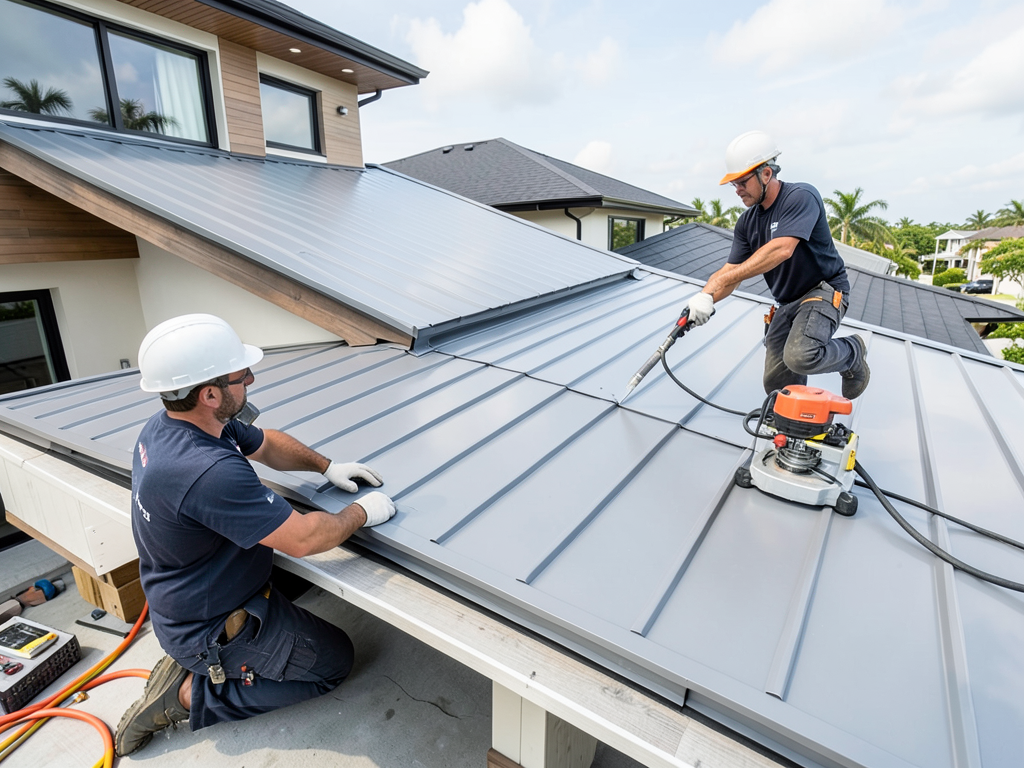
Standing seam installations require specialized mechanical seaming equipment and trained technicians familiar with proper panel alignment and clip spacing. Screw down systems use more common installation techniques but require strict adherence to fastener spacing tables based on wind zone and roof slope. Both systems must include secondary water barriers underlayment as required by FBC 2023 for residential re-roofing projects.
Maintenance Requirements and Longevity
Standing seam metal roofs require minimal maintenance beyond annual inspections and debris removal from valleys and gutters. The concealed fastener design eliminates the need for periodic tightening or sealant replacement at attachment points. Most standing seam systems installed in Coconut Grove Estates since 2000 continue performing without major repairs after 20+ years. Professional Flat Roof Repair Services for Brickell Business Owners.
Screw down systems require more frequent maintenance including fastener inspection every 3-5 years, sealant replacement at penetrations, and potential panel replacement if fastener corrosion causes leaks. The exposed nature of screw down fasteners makes them vulnerable to UV degradation and salt air corrosion that can compromise the watertight seal over time.
Aesthetic Considerations for Coconut Grove Architecture
Coconut Grove Estates features diverse architectural styles from mid-century modern to contemporary designs that influence metal roofing aesthetic choices. Standing seam roofs provide clean, linear appearance that complements modern architecture while screw down systems offer more traditional panel patterns suitable for transitional designs. Both systems are available in multiple color options including earth tones that blend with Coconut Grove’s lush tropical landscaping.
The low profile of standing seam systems creates minimal visual impact from street level while screw down panels show more shadow lines and texture. Standing seam roofs also eliminate the oil canning effect sometimes visible in screw down installations where panel waviness becomes apparent under certain lighting conditions.
Insurance Premium Impact and Wind Mitigation
Homeowners insurance companies in Miami-Dade County offer premium discounts based on wind mitigation features verified through professional inspections. Standing seam metal roofs typically qualify for higher discounts than screw down systems due to superior wind uplift resistance ratings. A standing seam installation can reduce annual premiums by $500-1,500 depending on coverage levels and previous roof condition.
Insurance companies specifically look for NOA certification, proper fastener spacing, and secondary water barriers when determining wind mitigation credits. Standing seam systems with Miami-Dade NOA approval and hurricane clips installed per manufacturer specifications consistently achieve the highest possible wind mitigation ratings.
Environmental Impact and Sustainability
Both metal roofing systems offer significant environmental benefits compared to asphalt shingles through recyclability and energy efficiency. Standing seam systems typically use 30-40% more metal than screw down installations but provide longer service life that reduces replacement frequency. The aluminum content in standing seam roofs is often 100% recycled material while screw down systems use more virgin steel content.
The extended lifespan of standing seam roofs means less material in landfills over the building’s lifetime. A standing seam roof installed in 2020 may be the last roof a homeowner ever needs while screw down systems typically require replacement once or twice during the same period.
Decision Factors for Coconut Grove Homeowners
Choosing between standing seam and screw down metal roofing depends on several factors specific to Coconut Grove Estates properties. Homes within 1,500 feet of Biscayne Bay should strongly consider standing seam due to superior salt air corrosion resistance. Properties with complex rooflines benefit from standing seam’s ability to create long, continuous panels that reduce seams and potential leak points.
Homeowners planning to stay in their homes for 15+ years should consider standing seam’s longer lifespan and lower maintenance requirements. Those with tighter budgets or planning shorter ownership periods might find screw down systems provide adequate performance at lower initial cost. Both systems increase property values compared to aging asphalt shingles while providing superior hurricane protection.
Installation Timeline and Weather Considerations
Standing seam metal roof installations typically require 2-3 weeks from start to finish while screw down systems can be completed in 1-2 weeks. The longer timeline for standing seam reflects the specialized equipment setup, panel fabrication, and mechanical seaming process. Both systems can be installed year-round in Miami’s climate but require careful scheduling around the rainy season from May through October.
Standing seam installations require more precise weather monitoring as the mechanical seaming process cannot proceed in high winds or rain. Screw down systems offer more flexibility for installation during marginal weather conditions but still require dry conditions for proper sealant application and underlayment installation.
Resale Value and Market Perception
Metal roofing systems, particularly standing seam installations, have become increasingly desirable in the Coconut Grove real estate market. Buyers recognize the superior durability, energy efficiency, and hurricane protection that metal roofs provide. Homes with standing seam metal roofs typically sell for 3-5% more than comparable properties with conventional roofing materials.
Real estate agents report that metal roofing is often a deciding factor for buyers concerned about hurricane damage and long-term maintenance costs. The transferable warranties available on quality metal roofing systems also appeal to buyers who want assurance about the roof’s remaining service life.
Common Installation Mistakes to Avoid
Both standing seam and screw down metal roofing systems require proper installation techniques to achieve their rated performance. Common mistakes include improper fastener spacing that creates weak points in wind uplift resistance, inadequate underlayment installation that compromises secondary water barriers, and failure to use approved hurricane clips that meet Miami-Dade NOA requirements.
Standing seam installations often fail when panels are not properly aligned before seaming or when clip spacing exceeds manufacturer specifications. Screw down systems frequently experience problems when fasteners are over-tightened causing panel distortion or under-tightened creating loose attachment points that can back out over time.
Future Technology and Innovation
The metal roofing industry continues developing new technologies that benefit both standing seam and screw down systems. Photovoltaic integration is becoming more common with standing seam systems that can accommodate solar panel mounting without penetrating the roof surface. New coating technologies provide even higher SRI ratings and improved salt air corrosion resistance.
Smart roofing systems with integrated leak detection sensors are being developed for both roofing types, though standing seam systems more easily accommodate the wiring and sensor placement required. These innovations continue improving the already superior performance of metal roofing in Miami’s challenging climate.
Making Your Final Decision
The choice between standing seam and screw down metal roofing ultimately depends on your specific property characteristics, budget constraints, and long-term ownership plans. Standing seam provides superior performance, longer lifespan, and better salt air resistance but requires higher initial investment. Screw down systems offer good hurricane protection and adequate durability at lower cost but require more maintenance and have shorter service life.
Professional evaluation of your Coconut Grove Estates property can help determine which system best meets your needs. Factors like roof complexity, proximity to salt water, and local building code requirements all influence the optimal choice for your specific situation.
Ready to upgrade your roof? Call (645) 231-4888 before the next storm hits.
Frequently Asked Questions
Which metal roofing system lasts longer in Miami’s climate?
Standing seam metal roofs typically last 40-60 years in Miami’s climate while screw down systems generally need replacement after 20-30 years. The concealed fastener design of standing seam systems eliminates the primary failure point of exposed fasteners that degrade from UV exposure and salt air corrosion.
Do both systems meet Miami-Dade County hurricane requirements?
Yes, both standing seam and screw down metal roofing systems can meet Miami-Dade County’s High Velocity Hurricane Zone requirements when properly specified and installed with approved materials. However, standing seam systems typically achieve higher design wind speeds and provide superior performance during actual hurricane events.
How much more does standing seam cost compared to screw down?
Standing seam metal roofing costs approximately 50-75% more than screw down systems for the same roof area. While the initial investment is higher, standing seam’s longer lifespan and lower maintenance requirements often provide better long-term value for Coconut Grove homeowners.
Can I install metal roofing over my existing shingles?
Florida Building Code allows metal roofing installation over a single layer of existing asphalt shingles if the existing roof is in good condition and proper underlayment is installed. However, many Miami-Dade County municipalities require complete tear-off to ensure proper inspection of the roof deck and installation of required secondary water barriers.
Which system is better for energy efficiency?
Standing seam metal roofs typically achieve better energy efficiency due to their continuous panel design and ability to accommodate higher SRI coatings. The raised seams create air channels that provide additional insulation while the concealed fastener system eliminates thermal bridging through exposed attachment points.
{
“@context”: “https://schema.org”,
“@type”: “BlogPosting”,
“headline”: “Comparing Standing Seam and Screw Down Metal Roofs for Coconut Grove Estates”,
“description”: “Discover which metal roofing system—standing seam or screw down—best protects Coconut Grove Estates homes from hurricane winds, salt air corrosion, and Miami’s intense UV exposure.”,
“wordCount”: 2294,
“datePublished”: “2026-03-11T14:53:00.000Z”,
“dateModified”: “2026-03-11T14:53:00.000Z”,
“inLanguage”: “en-US”,
“mainEntityOfPage”: {
“@type”: “WebPage”,
“@id”: “https://ironwoodroofingmiami.com”
},
“publisher”: {
“@type”: “LocalBusiness”,
“name”: “Ironwood Roofing Miami”,
“url”: “https://ironwoodroofingmiami.com”
},
“author”: {
“@type”: “Organization”,
“name”: “Ironwood Roofing Miami”,
“url”: “https://ironwoodroofingmiami.com”
},
“image”: {
“@type”: “ImageObject”,
“url”: “https://ironwoodroofingmiami.com/wp-content/uploads/2026/03/comparing-standing-seam-and-screw-down-metal-roofs-1.png”
}
}
{
“@context”: “https://schema.org”,
“@type”: “RoofingContractor”,
“name”: “Ironwood Roofing Miami”,
“url”: “https://ironwoodroofingmiami.com”,
“address”: {
“@type”: “PostalAddress”,
“addressLocality”: “Miami”
},
“areaServed”: {
“@type”: “City”,
“name”: “Miami”
}
}
{
“@context”: “https://schema.org”,
“@type”: “FAQPage”,
“mainEntity”: [
{
“@type”: “Question”,
“name”: “Which metal roofing system lasts longer in Miami’s climate?”,
“acceptedAnswer”: {
“@type”: “Answer”,
“text”: “Standing seam metal roofs typically last 40-60 years in Miami’s climate while screw down systems generally need replacement after 20-30 years. The concealed fastener design of standing seam systems eliminates the primary failure point of exposed fasteners that degrade from UV exposure and salt air corrosion.”
}
},
{
“@type”: “Question”,
“name”: “Do both systems meet Miami-Dade County hurricane requirements?”,
“acceptedAnswer”: {
“@type”: “Answer”,
“text”: “Yes, both standing seam and screw down metal roofing systems can meet Miami-Dade County’s High Velocity Hurricane Zone requirements when properly specified and installed with approved materials. However, standing seam systems typically achieve higher design wind speeds and provide superior performance during actual hurricane events.”
}
},
{
“@type”: “Question”,
“name”: “How much more does standing seam cost compared to screw down?”,
“acceptedAnswer”: {
“@type”: “Answer”,
“text”: “Standing seam metal roofing costs approximately 50-75% more than screw down systems for the same roof area. While the initial investment is higher, standing seam’s longer lifespan and lower maintenance requirements often provide better long-term value for Coconut Grove homeowners.”
}
},
{
“@type”: “Question”,
“name”: “Which system is better for energy efficiency?”,
“acceptedAnswer”: {
“@type”: “Answer”,
“text”: “Standing seam metal roofs typically achieve better energy efficiency due to their continuous panel design and ability to accommodate higher SRI coatings. The raised seams create air channels that provide additional insulation while the concealed fastener system eliminates thermal bridging through exposed attachment points.”
}
}
]
}
{
“@context”: “https://schema.org”,
“@type”: “BreadcrumbList”,
“itemListElement”: [
{
“@type”: “ListItem”,
“position”: 1,
“name”: “Home”,
“item”: “https://ironwoodroofingmiami.com”
},
{
“@type”: “ListItem”,
“position”: 2,
“name”: “Blog”,
“item”: “https://ironwoodroofingmiami.com/blog”
},
{
“@type”: “ListItem”,
“position”: 3,
“name”: “Comparing Standing Seam and Screw Down Metal Roofs for Coconut Grove Estates”
}
]
}
{
“@context”: “https://schema.org”,
“@type”: “Service”,
“serviceType”: “Roofing”,
“provider”: {
“@type”: “LocalBusiness”,
“name”: “Ironwood Roofing Miami”,
“url”: “https://ironwoodroofingmiami.com”
},
“areaServed”: {
“@type”: “City”,
“name”: “Miami”
},
“description”: “Discover which metal roofing system—standing seam or screw down—best protects Coconut Grove Estates homes from hurricane winds, salt air corrosion, and Miami’s intense UV exposure.”
}