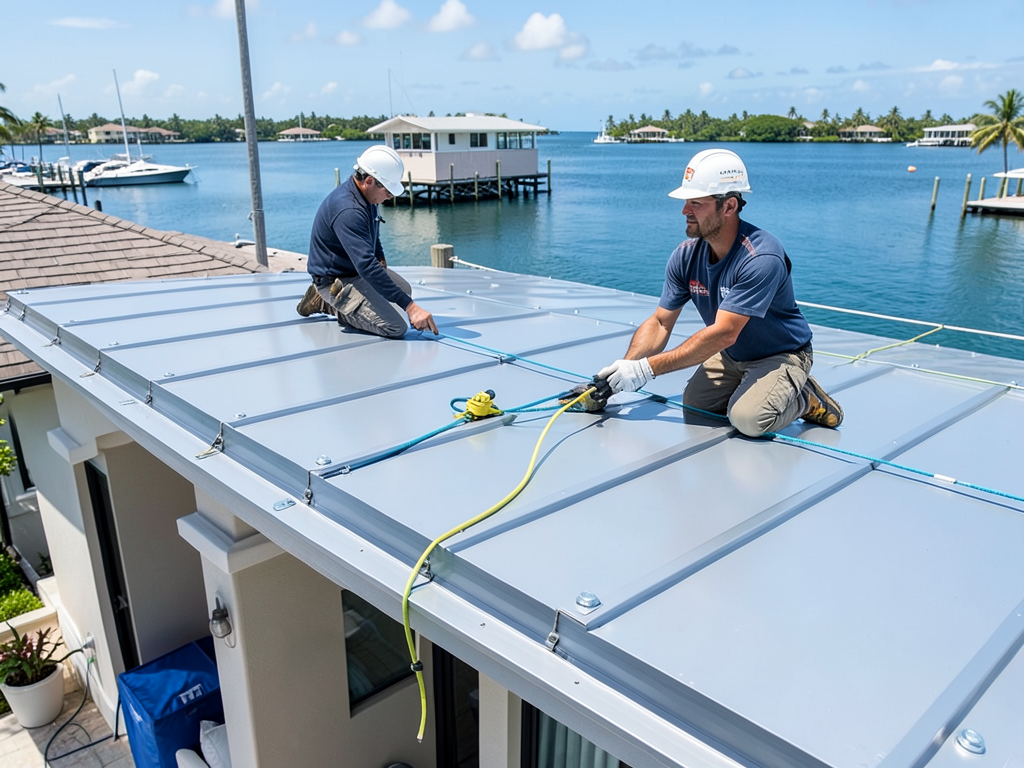
Star Island homeowners face a critical decision when choosing between aluminum and galvanized steel roofing. The salt spray from Biscayne Bay creates a corrosive environment that can destroy the wrong metal in just a few years.
Waterfront properties within 1,500 feet of the coast require materials that resist both salt corrosion and hurricane-force winds. Aluminum naturally resists salt spray without protective coatings, while galvanized steel needs thicker galvanization and regular maintenance to survive the same conditions. Protecting Your Home with Hurricane Rated Roofing Systems in Miami.
The Miami-Dade High Velocity Hurricane Zone (HVHZ) building code requires specific wind ratings and fastening systems for all roofing materials. Both aluminum and steel can meet these standards when properly installed, but their performance in saltwater exposure differs dramatically. Miami-Dade County HVHZ Building Code Requirements.
Cost represents another major factor. Aluminum typically costs 20-30% more upfront than galvanized steel, but its longer lifespan in coastal environments often provides better long-term value. Steel may require replacement or major repairs within 15-20 years in salt spray zones, while aluminum can last 40+ years with minimal maintenance. EPA Heat Island Effect Information.
Energy efficiency also varies between the two metals. Aluminum reflects more solar heat than steel, potentially reducing cooling costs in Miami’s hot climate. The right choice depends on your specific property location, budget, and long-term ownership plans. The Best Metal Roofing Options for Homes in Key Biscayne.
Material Properties and Basic Differences
Aluminum and galvanized steel have fundamentally different compositions that affect their performance in coastal environments. Understanding these differences helps explain why one material outperforms the other near saltwater.
Aluminum is a non-ferrous metal that naturally forms a protective oxide layer when exposed to air. This layer prevents further corrosion and makes aluminum highly resistant to saltwater damage without additional treatments.
Galvanized steel consists of carbon steel coated with zinc through a hot-dip galvanization process. The zinc layer provides initial corrosion protection, but this coating gradually wears away when exposed to salt spray, eventually exposing the steel underneath.
Weight differences between the materials affect installation and structural requirements. Aluminum weighs approximately 35% less than steel, reducing roof load and potentially eliminating the need for structural reinforcement in some buildings.
Thermal expansion rates also differ significantly. Aluminum expands and contracts more than steel when temperature changes occur. In Miami’s climate, this can create movement stress at fasteners and seams if not properly accounted for during installation.
Density affects dent resistance. Steel is harder and more resistant to impact damage from hail or falling branches. Aluminum, while lighter, can dent more easily under similar impacts.
Coastal Performance: The Salt Spray Factor
Salt spray represents the biggest threat to metal roofing in Star Island and other waterfront properties. The corrosive nature of saltwater can destroy improperly chosen materials within a decade. Roofing Cutler Bay.
Aluminum naturally resists salt spray due to its non-ferrous composition. The protective oxide layer that forms on aluminum surfaces prevents salt from penetrating and causing corrosion. This makes aluminum ideal for properties within the 1,500-foot coastal zone.
Galvanized steel requires careful consideration in salt spray environments. The zinc coating provides initial protection, but salt accelerates the breakdown of this coating. Steel within 1,500 feet of the coast needs thicker galvanization (G90 or higher) and may require additional protective coatings.. Read more about Why Your Gables by the Sea Property Needs Stainless Steel Roof Fasteners.
Corrosion rates vary by distance from the shoreline. Properties directly on the water experience the highest corrosion rates, while those 1,000-1,500 feet inland may see reduced but still significant corrosion compared to inland locations.
Maintenance requirements differ significantly between materials. Aluminum typically needs only occasional cleaning to maintain its protective oxide layer. Galvanized steel may require recoating or touch-up of damaged areas every 5-10 years in coastal environments.
Environmental factors accelerate corrosion. High humidity, frequent rainfall, and intense UV exposure in Miami combine to speed up the degradation of protective coatings on steel roofing.
Hurricane Resistance and Miami-Dade HVHZ Standards
Miami-Dade County enforces the strictest building codes in the nation for hurricane resistance. All roofing materials must meet High Velocity Hurricane Zone (HVHZ) standards to receive approval for installation.
Both aluminum and galvanized steel can achieve HVHZ compliance when properly engineered and installed. The key factors include panel thickness, fastening systems, and wind uplift resistance ratings.
Aluminum roofing typically uses 0.032-inch or 0.040-inch thickness for residential applications. These gauges provide adequate strength for HVHZ requirements when installed with proper clip systems and hurricane straps.
Galvanized steel commonly comes in 24-gauge or 26-gauge thicknesses. The heavier gauge provides superior impact resistance and wind uplift strength compared to aluminum of similar thickness.
Fastening systems make the critical difference in hurricane performance. Both materials require specific clip designs and screw patterns that have been tested for wind uplift resistance. The Miami-Dade NOA (Notice of Acceptance) system certifies specific products and installation methods.
Wind ratings for approved systems typically exceed 150 mph for both materials. However, the actual performance depends heavily on proper installation by certified contractors familiar with HVHZ requirements.
Secondary water barriers represent another HVHZ requirement. These underlayment systems prevent water intrusion if the primary roofing material fails during a storm. Both aluminum and steel installations must include these barriers.
Energy Efficiency in South Florida’s Climate
Miami’s intense sun and heat create unique energy challenges for buildings. The right roofing material can significantly impact cooling costs and indoor comfort.
Solar Reflectance Index (SRI) ratings measure how well roofing materials reflect solar heat. Aluminum typically achieves higher SRI ratings than galvanized steel, reflecting more heat away from the building.
Thermal emissivity affects how quickly materials release absorbed heat. Aluminum generally has better thermal emissivity than steel, allowing it to cool down faster after sunset and reduce heat transfer into the building.
Coating options influence energy performance. Both materials can receive reflective coatings that enhance their solar reflectance. Kynar 500 and Hylar 5000 coatings provide excellent UV protection and can be formulated in light colors that maximize heat reflection.
Air gap installation methods improve energy efficiency for both materials. Creating a ventilation space between the metal panels and the roof deck allows hot air to escape, reducing heat transfer into the building.
Color selection impacts energy performance. Lighter colors reflect more solar radiation than darker colors. White or light-colored metal roofing can reduce cooling costs by 20-30% compared to darker roofing materials.
Long-term energy savings should factor into material selection. The higher upfront cost of aluminum may be offset by lower cooling costs over the roof’s lifetime, especially in Miami’s hot climate.
Cost Analysis: Upfront Investment vs Long-Term Value
Initial material costs differ significantly between aluminum and galvanized steel roofing. Understanding the complete cost picture requires looking beyond the initial purchase price.
Aluminum roofing typically costs $8-12 per square foot installed, while galvanized steel ranges from $6-9 per square foot. The price difference reflects aluminum’s superior corrosion resistance and lighter weight.
Installation costs vary based on material weight and handling requirements. Aluminum’s lighter weight may reduce labor costs and eliminate the need for structural reinforcement in some buildings.
Maintenance expenses accumulate over time. Aluminum generally requires minimal maintenance beyond occasional cleaning, while galvanized steel may need recoating or repairs every 5-10 years in coastal environments. Professional Flat Roof Repair Services for Brickell Business Owners.
Replacement frequency affects lifetime costs. Steel roofing in salt spray zones may need replacement after 15-20 years, while aluminum can last 40+ years with proper installation and minimal maintenance.
Insurance considerations impact total cost of ownership. Some insurance companies offer premium discounts for hurricane-resistant roofing materials that meet HVHZ standards. Both materials can qualify, but aluminum’s superior corrosion resistance may provide additional benefits.
Energy savings represent another cost factor. Aluminum’s better heat reflection can reduce cooling costs by 15-25% annually in Miami’s climate, potentially offsetting its higher initial cost over time.
Property value considerations matter for long-term owners. High-quality metal roofing can increase home value and marketability, with aluminum’s longer lifespan potentially providing better returns on investment.
Summary Comparison Table
| Feature | Aluminum | Galvanized Steel |
|---|---|---|
| Initial Cost | $8-12/sq ft | $6-9/sq ft |
| Lifespan (Coastal) | 40+ years | 15-20 years |
| Salt Spray Resistance | Excellent (natural) | Fair (coating dependent) |
| Weight | 35% lighter | Standard |
| Wind Rating | 150+ mph (with proper install) | 150+ mph (with proper install) |
| Energy Efficiency | Superior (higher SRI) | Good (with reflective coating) |
| Maintenance | Minimal (cleaning only) | Regular (coating upkeep) |
| Impact Resistance | Fair (dents easier) | Excellent (harder surface) |
Installation Considerations for Star Island Properties
Star Island’s unique location and building characteristics require specific installation approaches for both aluminum and galvanized steel roofing systems.
Access limitations affect project planning. Star Island’s single bridge access and narrow streets may require special equipment and scheduling to transport materials and equipment to the job site.
Building height restrictions influence material selection. Some Star Island properties have height limitations that make aluminum’s lighter weight advantageous, as it may eliminate the need for additional structural support.
Noise considerations matter in this luxury community. Metal roofing can be noisy during rain events, so proper underlayment and insulation become important factors for homeowner satisfaction.
Architectural compatibility affects material choice. Star Island features diverse architectural styles from Mediterranean Revival to modern contemporary. Both materials offer various profiles and finishes to complement different design aesthetics.
Permitting requirements in Miami-Dade County add complexity to installation projects. HVHZ compliance requires specific engineering calculations, product certifications, and inspection approvals before installation begins.
Contractor selection becomes critical for successful installation. Not all roofing contractors have experience with HVHZ requirements and the specific challenges of waterfront installations. Look for contractors with Miami-Dade NOA certifications for your chosen material.
Timeline considerations affect project planning. Miami’s rainy season (May through October) can delay installation schedules. Planning projects during the drier winter months may reduce weather-related complications.
Environmental Impact and Sustainability
Both aluminum and galvanized steel offer environmental advantages compared to traditional roofing materials, but they differ in their sustainability profiles.
Aluminum boasts excellent recyclability, with approximately 75% of all aluminum ever produced still in use today. The material can be recycled indefinitely without losing its properties, making it highly sustainable.
Steel also offers good recyclability, with most steel products containing significant recycled content. However, the galvanization process adds complexity to recycling and may reduce the material’s overall sustainability compared to bare aluminum.
Energy production impacts vary between materials. Aluminum production requires significant energy input, but this impact is offset by the material’s long lifespan and recyclability. Steel production has improved in efficiency but still carries a substantial carbon footprint.
Transportation emissions differ due to weight variations. Aluminum’s lighter weight reduces fuel consumption during transportation, potentially lowering its overall carbon footprint despite higher production energy requirements.
Heat island effect reduction provides environmental benefits. Both materials can help reduce urban heat island effects when properly coated with reflective finishes, potentially lowering energy consumption in surrounding buildings.
End-of-life disposal considerations favor both materials over asphalt shingles. Metal roofing can be fully recycled, while asphalt shingles typically end up in landfills where they persist for hundreds of years.
Local environmental regulations in Miami-Dade County increasingly favor sustainable building materials. Both aluminum and steel qualify for various green building certifications, though aluminum’s superior recyclability may provide additional points in some rating systems.
Making the Right Choice for Your Waterfront Property
Selecting between aluminum and galvanized steel requires evaluating your specific property conditions, budget constraints, and long-term ownership plans.
Property proximity to saltwater determines the most critical factor. Homes within 500 feet of the shoreline should strongly consider aluminum due to its superior salt spray resistance. Properties 500-1,500 feet inland might find galvanized steel acceptable with proper maintenance.
Budget constraints influence the decision-making process. If upfront cost is the primary concern and you plan to sell within 10-15 years, galvanized steel might provide adequate performance. For long-term ownership, aluminum’s durability often justifies the higher initial investment.
Architectural style preferences affect material selection. Both materials offer various profiles and finishes, but aluminum provides more flexibility for custom colors and architectural details that complement specific design aesthetics.
Insurance requirements may dictate material choice. Some insurance companies in coastal areas require specific wind ratings or corrosion resistance levels that only certain aluminum products can achieve.
Maintenance willingness impacts long-term satisfaction. Aluminum requires minimal maintenance, making it ideal for owners who prefer low-maintenance solutions. Galvanized steel requires ongoing attention to maintain its protective coatings in coastal environments.
Environmental priorities influence material selection. Aluminum’s superior recyclability and potential for energy savings may appeal to environmentally conscious homeowners, while galvanized steel’s lower initial production impact might attract others. Why Homeowners in Coral Gables Choose Professional Tile Roof Installation.
Professional consultation provides valuable guidance. A qualified roofing contractor familiar with Miami-Dade HVHZ requirements can assess your specific property conditions and recommend the optimal material for your situation.
Frequently Asked Questions
Which material lasts longer in Miami’s coastal environment?
Aluminum typically lasts 40+ years in coastal environments, while galvanized steel usually needs replacement after 15-20 years when exposed to salt spray. Aluminum’s natural corrosion resistance makes it superior for waterfront properties.
Does aluminum cost significantly more than galvanized steel?
Yes, aluminum typically costs 20-30% more upfront than galvanized steel. However, aluminum’s longer lifespan and lower maintenance requirements often provide better long-term value despite the higher initial cost.
Can both materials meet Miami-Dade’s hurricane standards?
Both aluminum and galvanized steel can achieve HVHZ compliance when properly engineered and installed. The key factors include panel thickness, fastening systems, and wind uplift resistance ratings that meet Miami-Dade NOA requirements.
How does salt spray affect each material differently?
Salt spray accelerates corrosion in galvanized steel by breaking down its zinc coating over time. Aluminum naturally resists salt spray due to its non-ferrous composition and protective oxide layer that forms without additional treatments.
Which material is better for energy efficiency?
Aluminum typically provides better energy efficiency with higher Solar Reflectance Index ratings and better thermal emissivity. This can reduce cooling costs by 15-25% annually in Miami’s hot climate compared to darker or less reflective materials.
Protect Your Investment with Professional Installation
Choosing the right material represents only half the equation. Professional installation by certified contractors familiar with Miami-Dade HVHZ requirements ensures your investment performs as designed.
Improper installation can void warranties and compromise hurricane resistance regardless of material quality. Look for contractors with specific experience in waterfront metal roofing installations and current Miami-Dade NOA certifications.
Building code compliance requires engineering calculations, product certifications, and inspection approvals. Professional contractors handle these requirements and ensure your installation meets all local standards.
Quality installation includes proper underlayment, fastening systems, and secondary water barriers required by HVHZ standards. These components work together with your chosen material to provide complete protection.
Don’t let improper installation compromise your investment. Call (645) 231-4888 today to schedule your inspection and get expert recommendations for your Star Island waterfront property.
{
“@context”: “https://schema.org”,
“@type”: “BlogPosting”,
“headline”: “Aluminum vs Galvanized Steel (Choosing the right material for Star Island waterfront properties)”,
“description”: “Discover which metal roofing material resists Miami’s salt spray and hurricanes best. Compare aluminum vs galvanized steel for Star Island waterfront homes.”,
“wordCount”: 2444,
“datePublished”: “2026-06-04T11:58:00.000Z”,
“dateModified”: “2026-06-04T11:58:00.000Z”,
“inLanguage”: “en-US”,
“mainEntityOfPage”: {
“@type”: “WebPage”,
“@id”: “https://ironwoodroofingmiami.com”
},
“publisher”: {
“@type”: “LocalBusiness”,
“name”: “Ironwood Roofing Miami”,
“url”: “https://ironwoodroofingmiami.com”
},
“author”: {
“@type”: “Organization”,
“name”: “Ironwood Roofing Miami”,
“url”: “https://ironwoodroofingmiami.com”
},
“image”: {
“@type”: “ImageObject”,
“url”: “https://ironwoodroofingmiami.com/wp-content/uploads/2026/03/aluminum-vs-galvanized-steel-choosing-the-right-ma-1.png”
}
}
{
“@context”: “https://schema.org”,
“@type”: “RoofingContractor”,
“name”: “Ironwood Roofing Miami”,
“url”: “https://ironwoodroofingmiami.com”,
“address”: {
“@type”: “PostalAddress”,
“addressLocality”: “Miami”
},
“areaServed”: {
“@type”: “City”,
“name”: “Miami”
}
}
{
“@context”: “https://schema.org”,
“@type”: “FAQPage”,
“mainEntity”: [
{
“@type”: “Question”,
“name”: “Which material lasts longer in Miami’s coastal environment?”,
“acceptedAnswer”: {
“@type”: “Answer”,
“text”: “Aluminum typically lasts 40+ years in coastal environments, while galvanized steel usually needs replacement after 15-20 years when exposed to salt spray. Aluminum’s natural corrosion resistance makes it superior for waterfront properties.”
}
},
{
“@type”: “Question”,
“name”: “Does aluminum cost significantly more than galvanized steel?”,
“acceptedAnswer”: {
“@type”: “Answer”,
“text”: “Yes, aluminum typically costs 20-30% more upfront than galvanized steel. However, aluminum’s longer lifespan and lower maintenance requirements often provide better long-term value despite the higher initial cost.”
}
},
{
“@type”: “Question”,
“name”: “Can both materials meet Miami-Dade’s hurricane standards?”,
“acceptedAnswer”: {
“@type”: “Answer”,
“text”: “Both aluminum and galvanized steel can achieve HVHZ compliance when properly engineered and installed. The key factors include panel thickness, fastening systems, and wind uplift resistance ratings that meet Miami-Dade NOA requirements.”
}
},
{
“@type”: “Question”,
“name”: “How does salt spray affect each material differently?”,
“acceptedAnswer”: {
“@type”: “Answer”,
“text”: “Salt spray accelerates corrosion in galvanized steel by breaking down its zinc coating over time. Aluminum naturally resists salt spray due to its non-ferrous composition and protective oxide layer that forms without additional treatments.”
}
},
{
“@type”: “Question”,
“name”: “Which material is better for energy efficiency?”,
“acceptedAnswer”: {
“@type”: “Answer”,
“text”: “Aluminum typically provides better energy efficiency with higher Solar Reflectance Index ratings and better thermal emissivity. This can reduce cooling costs by 15-25% annually in Miami’s hot climate compared to darker or less reflective materials.”
}
}
]
}
{
“@context”: “https://schema.org”,
“@type”: “BreadcrumbList”,
“itemListElement”: [
{
“@type”: “ListItem”,
“position”: 1,
“name”: “Home”,
“item”: “https://ironwoodroofingmiami.com”
},
{
“@type”: “ListItem”,
“position”: 2,
“name”: “Blog”,
“item”: “https://ironwoodroofingmiami.com/blog”
},
{
“@type”: “ListItem”,
“position”: 3,
“name”: “Aluminum vs Galvanized Steel (Choosing the right material for Star Island waterfront properties)”
}
]
}
{
“@context”: “https://schema.org”,
“@type”: “Service”,
“serviceType”: “Roofing”,
“provider”: {
“@type”: “LocalBusiness”,
“name”: “Ironwood Roofing Miami”,
“url”: “https://ironwoodroofingmiami.com”
},
“areaServed”: {
“@type”: “City”,
“name”: “Miami”
},
“description”: “Discover which metal roofing material resists Miami’s salt spray and hurricanes best. Compare aluminum vs galvanized steel for Star Island waterfront homes.”
}