Managing Roof Maintenance for South Beach Condo Associations
South Beach condo associations face unique roofing challenges from salt air, hurricane winds, and tropical humidity. Effective maintenance isn’t just about preventing leaks—it’s about protecting property values, ensuring insurance compliance, and meeting Miami-Dade’s strict building codes. This guide covers everything your HOA board needs to know about keeping your high-rise roof safe and functional. Miami-Dade County Building Code Compliance.
Why Miami Beach Condos Require Unique Roofing Care
The barrier island environment creates conditions that accelerate roof deterioration. Salt spray from the Atlantic penetrates TPO membranes and corrodes metal flashing within months. The constant humidity fosters algae growth and wood rot in roof decks. Combined with the High Velocity Hurricane Zone (HVHZ) wind requirements, standard maintenance protocols simply don’t work here. The Best Metal Roofing Options for Homes in Key Biscayne.
Most South Beach buildings use modified bitumen or TPO systems on low-slope roofs, with metal coping and perimeter edge metal exposed to salt air. These materials expand and contract dramatically with Miami’s heat island effect, creating stress at seams and fasteners. Without proper maintenance, small issues become major failures during the first tropical storm.. Read more about Why Your South Miami Roof Needs a Professional Inspection Every Year.
Key Challenges: Salt Air, Humidity, and High-Velocity Hurricane Zones (HVHZ)
Salt air corrosion affects every component above the roofline. Aluminum coping deteriorates within 5-7 years in South Beach, while galvanized steel flashings pit and perforate. The Miami-Dade Notice of Acceptance (NOA) requires all materials to pass ASTM B117 salt spray testing for at least 1,000 hours.
Humidity creates a perfect environment for moisture intrusion. Modified bitumen seams lift when trapped moisture vaporizes under Miami’s intense sun. TPO membranes develop microscopic cracks that expand with thermal cycling. These failures often occur at expansion joints and around HVAC curbs where movement is greatest.
The HVHZ requirements mandate specific fastening patterns, uplift resistance ratings, and secondary water barriers. Miami-Dade Building Code Section 1521 requires all re-roofing projects to include a secondary water barrier unless the existing system qualifies for a layover. This adds significant cost but provides essential protection. Roofing Cutler Bay.
Essential Maintenance Checklist for Miami Beach Property Managers
Regular inspections prevent costly emergency repairs. Property managers should conduct visual checks quarterly and schedule professional inspections twice yearly—before hurricane season and after the rainy season. Professional Flat Roof Repair Services for Brickell Business Owners.
- Roof Surface Examination
Walk the roof perimeter checking for ponding water, membrane blisters, and seam separation. Look for white chalky residue on TPO surfaces indicating UV degradation.
- Flashing and Coping Inspection
Check all metal components for rust, pitting, or separation from the substrate. Pay special attention to expansion joints which often fail first.
- Drainage System Assessment
Clear all scuppers and internal drains of debris. Ensure downspouts direct water away from the building foundation. Check for signs of ponding that indicates slope issues.
- HVAC and Penetration Seals
Inspect all roof penetrations including HVAC curbs, vent stacks, and electrical conduits. Replace cracked or deteriorated sealant around these critical points.
- Fastener and Attachment Verification
Check that all mechanical fasteners remain secure. Look for missing or backed-out screws, especially near roof edges where uplift forces are strongest.
Document all findings with photos and measurements. This maintenance history proves due diligence to insurance companies and helps track deterioration patterns over time. Finding a Reliable Roof Repair Company in Coconut Grove.
Florida Building Code Compliance for High-Rise Roofs
Miami-Dade’s building code exceeds state requirements due to hurricane exposure. All roofing materials must carry a Notice of Acceptance (NOA) from Miami-Dade County. This certification ensures materials have passed rigorous wind uplift and impact testing. Protecting Your Home with Hurricane Rated Roofing Systems in Miami.
Florida Building Code Section 1521.3 requires secondary water barriers for all residential re-roofing projects. While this primarily applies to single-family homes, condo associations should consider this protection for occupied units below roof areas. Florida Building Code Information.
ASCE 7-16 wind load calculations determine specific fastening requirements based on building height and location. South Beach buildings face Category 5 hurricane wind speeds exceeding 180 mph. This necessitates enhanced attachment methods and reinforced perimeter edge metal.
Building Code Section 1511 mandates specific fire ratings for roofing assemblies. Most South Beach condos require Class A fire-rated systems due to density and height. Modified bitumen and TPO systems typically meet these requirements when installed with proper underlayment.
Long-term ROI: Extending the Life of TPO and Modified Bitumen Systems
Proactive maintenance can double the service life of commercial roofing systems. A well-maintained TPO roof typically lasts 25-30 years in Miami versus 12-15 years without maintenance. Modified bitumen systems can reach 35-40 years with proper care versus 15-20 years otherwise.
Cost comparison shows significant savings. Annual maintenance costs average $0.10-$0.15 per square foot. Emergency repairs after storm damage often exceed $2.00 per square foot. Complete replacement costs $5.00-$8.00 per square foot, making prevention economically essential.
Energy efficiency improves with maintenance. Clean, reflective roof surfaces reduce cooling costs by 15-20% in Miami’s climate. Algae growth and dirt accumulation can increase energy usage significantly. Regular cleaning maintains the roof’s solar reflectance index (SRI) rating.
Insurance premium reductions often offset maintenance costs. Many insurers offer 10-15% discounts for documented maintenance programs and hurricane mitigation features. Some policies require proof of regular inspections to maintain coverage.
Scheduling Your Bi-Annual Preventive Inspection
Timing matters for roof inspections. Schedule the first inspection in early May before hurricane season begins June 1st. This allows time to address any issues before peak storm season. The second inspection should occur in late October after the rainy season ends.
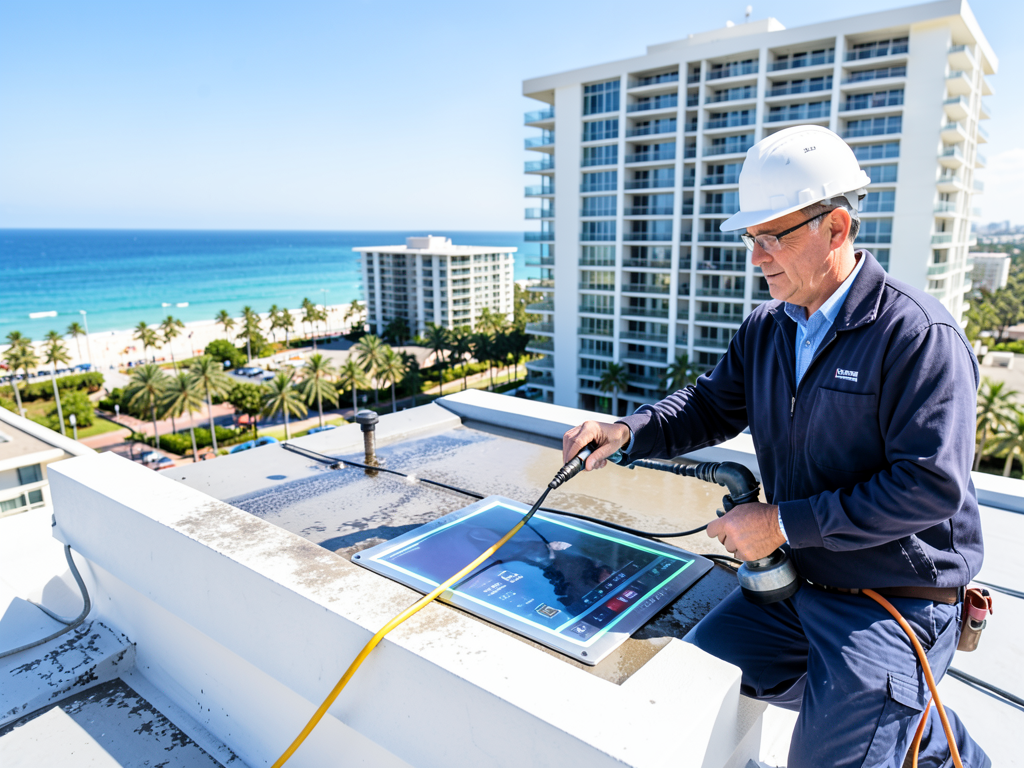
Professional inspections include thermal imaging to detect moisture intrusion not visible to the naked eye. Infrared cameras identify wet insulation and hidden leaks. Core sampling verifies deck conditions and confirms moisture levels in the roofing assembly.
Detailed reports should include specific recommendations with priority rankings. Critical issues threatening building integrity require immediate attention. Recommended repairs can be scheduled during optimal weather conditions. Future maintenance items help with long-term budgeting.
Maintain detailed records of all inspections, repairs, and maintenance activities. These documents prove due diligence to insurance companies, assist with Milestone Inspections required by Florida Senate Bill 4-D, and help track roof condition over time.
Call (645) 231-4888 today to schedule your professional roof inspection. Our team understands the unique challenges of South Beach condo maintenance and can help protect your building investment.
Frequently Asked Questions
How often should South Beach condo roofs be inspected?
Professional inspections should occur twice yearly—before hurricane season in May and after the rainy season in October. Quarterly visual checks by property management staff help identify developing issues between professional inspections.
What maintenance tasks can condo associations handle themselves?
Property managers can clear debris from scuppers and drains, check for visible damage after storms, and monitor for ponding water. However, professional contractors should handle sealant replacement, fastener checks, and any repairs to maintain warranty coverage.
How does salt air affect different roofing materials?
Salt air accelerates corrosion of metal components, causes UV degradation of membrane surfaces, and promotes algae growth on all roofing types. Modified bitumen shows less UV degradation but more seam separation. TPO resists algae but can become brittle from salt exposure.
What insurance benefits come from regular roof maintenance?
Documented maintenance programs often qualify for 10-15% premium discounts. Insurance companies may require proof of regular inspections to maintain coverage. Maintenance records also strengthen claims for wind or water damage by proving due diligence.
How do Milestone Inspections affect roof maintenance schedules?
Florida’s Milestone Inspection law requires structural inspections for buildings 30 years and older. Roofs must be accessible for these inspections, and maintenance records help demonstrate the roof’s condition. Poor maintenance can trigger more extensive inspections or required repairs.
Ready to protect your South Beach condo investment? Pick up the phone and call (645) 231-4888 before the next storm hits. Our team provides comprehensive inspections, maintenance, and repairs specifically designed for Miami Beach’s unique coastal environment.
Don’t wait for emergency repairs. Contact us today to learn how our maintenance programs can extend your roof’s life, reduce insurance costs, and ensure compliance with all Miami-Dade building codes.
{
“@context”: “https://schema.org”,
“@type”: “BlogPosting”,
“headline”: “Managing Roof Maintenance for South Beach Condo Associations”,
“description”: “Expert roof maintenance for South Beach condos. Learn HVHZ compliance, salt-air protection, and hurricane prep to extend roof life and reduce insurance costs.”,
“wordCount”: 1344,
“datePublished”: “2026-02-28T14:17:00.000Z”,
“dateModified”: “2026-02-28T14:17:00.000Z”,
“inLanguage”: “en-US”,
“mainEntityOfPage”: {
“@type”: “WebPage”,
“@id”: “https://ironwoodroofingmiami.com”
},
“publisher”: {
“@type”: “LocalBusiness”,
“name”: “Ironwood Roofing Miami”,
“url”: “https://ironwoodroofingmiami.com”
},
“author”: {
“@type”: “Organization”,
“name”: “Ironwood Roofing Miami”,
“url”: “https://ironwoodroofingmiami.com”
},
“image”: {
“@type”: “ImageObject”,
“url”: “https://ironwoodroofingmiami.com/wp-content/uploads/2026/03/managing-roof-maintenance-for-south-beach-condo-as-1.png”
}
}
{
“@context”: “https://schema.org”,
“@type”: “RoofingContractor”,
“name”: “Ironwood Roofing Miami”,
“url”: “https://ironwoodroofingmiami.com”,
“address”: {
“@type”: “PostalAddress”,
“addressLocality”: “Miami”
},
“areaServed”: {
“@type”: “City”,
“name”: “Miami”
}
}
{
“@context”: “https://schema.org”,
“@type”: “FAQPage”,
“mainEntity”: [
{
“@type”: “Question”,
“name”: “How often should South Beach condo roofs be inspected?”,
“acceptedAnswer”: {
“@type”: “Answer”,
“text”: “Professional inspections should occur twice yearly—before hurricane season in May and after the rainy season in October. Quarterly visual checks by property management staff help identify developing issues between professional inspections.”
}
},
{
“@type”: “Question”,
“name”: “What maintenance tasks can condo associations handle themselves?”,
“acceptedAnswer”: {
“@type”: “Answer”,
“text”: “Property managers can clear debris from scuppers and drains, check for visible damage after storms, and monitor for ponding water. However, professional contractors should handle sealant replacement, fastener checks, and any repairs to maintain warranty coverage.”
}
},
{
“@type”: “Question”,
“name”: “How does salt air affect different roofing materials?”,
“acceptedAnswer”: {
“@type”: “Answer”,
“text”: “Salt air accelerates corrosion of metal components, causes UV degradation of membrane surfaces, and promotes algae growth on all roofing types. Modified bitumen shows less UV degradation but more seam separation. TPO resists algae but can become brittle from salt exposure.”
}
},
{
“@type”: “Question”,
“name”: “What insurance benefits come from regular roof maintenance?”,
“acceptedAnswer”: {
“@type”: “Answer”,
“text”: “Documented maintenance programs often qualify for 10-15% premium discounts. Insurance companies may require proof of regular inspections to maintain coverage. Maintenance records also strengthen claims for wind or water damage by proving due diligence.”
}
}
]
}
{
“@context”: “https://schema.org”,
“@type”: “HowTo”,
“name”: “Roof Maintenance Inspection Steps”,
“step”: [
{
“@type”: “HowToStep”,
“position”: 1,
“name”: “Roof Surface Examination”,
“text”: “Walk the roof perimeter checking for ponding water, membrane blisters, and seam separation. Look for white chalky residue on TPO surfaces indicating UV degradation.”
},
{
“@type”: “HowToStep”,
“position”: 2,
“name”: “Flashing and Coping Inspection”,
“text”: “Check all metal components for rust, pitting, or separation from the substrate. Pay special attention to expansion joints which often fail first.”
},
{
“@type”: “HowToStep”,
“position”: 3,
“name”: “Drainage System Assessment”,
“text”: “Clear all scuppers and internal drains of debris. Ensure downspouts direct water away from the building foundation. Check for signs of ponding that indicates slope issues.”
},
{
“@type”: “HowToStep”,
“position”: 4,
“name”: “HVAC and Penetration Seals”,
“text”: “Inspect all roof penetrations including HVAC curbs, vent stacks, and electrical conduits. Replace cracked or deteriorated sealant around these critical points.”
},
{
“@type”: “HowToStep”,
“position”: 5,
“name”: “Fastener and Attachment Verification”,
“text”: “Check that all mechanical fasteners remain secure. Look for missing or backed-out screws, especially near roof edges where uplift forces are strongest.”
}
],
“image”: “https://ironwoodroofingmiami.com/wp-content/uploads/2026/03/managing-roof-maintenance-for-south-beach-condo-as-1.png”
}
{
“@context”: “https://schema.org”,
“@type”: “BreadcrumbList”,
“itemListElement”: [
{
“@type”: “ListItem”,
“position”: 1,
“name”: “Home”,
“item”: “https://ironwoodroofingmiami.com”
},
{
“@type”: “ListItem”,
“position”: 2,
“name”: “Blog”,
“item”: “https://ironwoodroofingmiami.com/blog”
},
{
“@type”: “ListItem”,
“position”: 3,
“name”: “Managing Roof Maintenance for South Beach Condo Associations”
}
]
}
{
“@context”: “https://schema.org”,
“@type”: “Service”,
“serviceType”: “Roofing”,
“provider”: {
“@type”: “LocalBusiness”,
“name”: “Ironwood Roofing Miami”,
“url”: “https://ironwoodroofingmiami.com”
},
“areaServed”: {
“@type”: “City”,
“name”: “Miami”
},
“description”: “Expert roof maintenance for South Beach condos. Learn HVHZ compliance, salt-air protection, and hurricane prep to extend roof life and reduce insurance costs.”
}